LaBonte Construction is honored to be nominated again as a finalist in the annual Shepherd Express Best of Milwaukee Awards. We rely solely on word of mouth for clients to find us, and awards like these help our company continue to grow and validates the hard work of our employees and subcontractors.
We would appreciate it if you would take a moment to vote for us and your other favorite businesses. Our nominations are under the “Home Improvement” category. You must vote in at least 5 categories for your ballot to be valid.
We are finalists in the following categories:
Best Basement/Rec Room Remodeler
Best Bathroom Remodeler
Best Closet Designer
Best Home Builder
Best Home Remodeling Contractor
Best Kitchen Remodeler
Our subcontractors, friends, and coworkers were nominated under architect (HB Designs), plumber (Budiac Plumbing Inc.), and Farm-to-Table Restaurant (Morel).
Under the home improvements tab, you will find our nominations. Shepherd Express will not send you emails if you check the box saying you do not want any. You may get an email to verify you are a real email address if you have not voted prior.
We really appreciate your support, and if you are not already our customer, we look forward to working with you in the future.
Sincerely,
JEFF, Dave, and the L/C Team
Appliances For Your Next Kitchen Remodel
There are few things better than a home-cooked meal. For some it can bring about feelings of nostalgia, and for others it’s simply an enjoyable time with friends and family. Choosing the right appliances for your next kitchen remodel can ensure your kitchen functions and makes cooking enjoyable.
Stoves
There are two main types of stoves that our clients select in their kitchen remodel: cooktop and range.
Cooktop
A cooktop omits the oven portion of a range and drops into the counter. Generally, the knobs for the burners are on the top of the counter, rather than on the front like a traditional range. This is an option many of our clients select when they want to give their kitchen a modern look.
Range
A range is a cooktop and oven all in one unit. A range has the burners on the top and an oven below. Usually, the controls for the burners and oven are on the front as to not get in the way of the pots and pans while cooking. However, certain models will have the controls on the top, and others may have a combination. Ranges have long been the traditional option and allow you to manage the oven and cooktop in the same appliance.
A range in a Glendale kitchen remodel / LaBonte Construction
Many of our clients prefer to have a range that has more functionality than just the oven and burners. We often use Wolf ranges in a kitchen remodel. For those who want more advanced features, Wolf offers ranges with infrared griddles, French tops, and charbroilers, allowing you versatility in cooking without additional appliances or pans.
Depending on the amount of cooking you like to do, or the size of your family, be sure to select the right size range for your kitchen remodel. Below is a chart showing the typical range dimensions.
Type
Overall Height (most models 36”)
Width (can vary by +/- 0.5”)
Depth (excluding oven handle)
Apartment Sized
34-44”
20-24”
24-26”
Standard – Freestanding
46-49”
30”
24-28”
Standard – Slide In
36-38”
30”
24-28”
Professional
35-40”
36-48”
26-31”
Induction
On an induction cooktop, you place on top of a coil of copper wire with an alternating electric current passing through it. This results in a magnetic field that induces an electrical current within the pot or pan. This electrical current is what heats the cookware, and the contents within.
Induction cooktops give your kitchen a clean and modern look because the top looks like a piece of glass that is almost flush with the countertop. They are also much more efficient than a traditional gas stove. The food cooked on an induction cooktop receives 90% of the heat generated, as opposed to only 40-55% for gas.
Many clients select an induction cooktop because they give the user an incredible amount of control when heating sauces. Induction can also boil water twice as fast when compared to other appliances. Induction cooking also decreases the risk of burns and kitchen fires, because there is no open flame.
Before deciding to purchase an induction cooktop, clients who are unfamiliar with this method of cooking may want to purchase an inexpensive countertop model on Amazon. It is important to note that not all types of cookware are compatible with induction cooktops. Cast iron, enameled cast iron, and many types of stainless-steel cookware ARE induction compatible. Many of our clients choose induction for their kitchen remodel because it is the safest, sleekest and fastest option.
Electric
Electric cooktops became popular as replacements for wood or coal stoves because they require less labor to operate and maintain. The first electric stove was invented in 1859, but it wasn’t until the 1930’s that they became widely used. Switches and dials on an electric cooktop control the burners, which allow you to select the desired level of heat. Electric appliances can take longer to heat up and cool down than gas or induction. Electric cooktops have long been the norm in kitchens across the world, but as induction cooking becomes increasingly popular, their usage has started to dwindle.
Gas
Gas cooktops have long been the preferred choice among professional chefs and those who love to cook. These cooktops produce a flame from natural gas or propane, allowing you to physically see the heat being generated. As mentioned before, they are not the most efficient stove option, but many chefs agree that gas stoves are the best option due to their responsiveness and usability with a variety of cookware. Typically, gas stoves offer a more cost-effective option when compared to electric or induction stoves.
Range Hoods
Although a range hood is a code requirement in many other states, there is no such requirement in Wisconsin. However, most of our clients opt to have a range hood installed in their kitchen remodeling project. Range hoods remove the warm air and grease created by the cooktop or oven. Although, many range hoods are the same size as your range, if your kitchen has the space we recommend a range hood slightly larger than your range. This allows your range hood to have maximum coverage over your range.
Many of our clients opt to have their cooktop or oven installed in their kitchen island. However, a range hood over an island can be an eyesore. Recently, manufacturers have come up with a way to combat this issue by integrating the range hood into the ceiling. This creates a more open feel in your kitchen.
On the left of the photo, an example of painted range hood to match the rest of the decor in a kitchen remodel in Whitefish Bay, WI / LaBonte Construction / Peabody’s Interiors
If you do not opt to buy a range hood that is from the same manufacturer as your stove, popular custom options can be fabricated from plaster, wood, metal or tile.
Range Hood Insert
A range hood insert is a kitchen exhaust fan that fits inside and powers a range hood. Most residential inserts are between 28” and 60” and typically pull between 600 and 1200 cubic feet per minute (CFM).
When choosing a range hood insert you need to determine the size of your range hood. The range insert should be two inches smaller than the range hood to adequately fit inside the range hood. If you have the space, we suggest a larger hood insert as they remove smoke and grease much faster.
Ovens
Ovens are one of the most integral parts of any kitchen. Whether your an avid baker, or simply like to toss in a frozen pizza, selecting the right oven for your kitchen remodel is important.
A range oven in a kitchen remodel in Bayside, WI / LaBonte Construction
Double Ovens
For those who love to bake, or bake on a large scale, we suggest selecting a double oven for your kitchen remodel. A double oven has two separate cooking compartments that can be set to different temperatures and times.
Double ovens can be either integrated into a range, or into the wall. If you elect to have them installed in the wall they are stacked on top of each other. If you opt to have double ovens in your range, the two ovens will be side-by-side. For those who select a 48” double range, one oven will be smaller than the other. For those who select a 60” double range, the ovens will be of equal size.
Convection
Conventional ovens can have pockets of air that are warmer or cooler resulting in food that’s unevenly cooked. Convection ovens however, use fans to blow the heat throughout the oven, creating a consistent temperature in the oven. This allows the food to cook evenly, and can cook the food up to 25 percent faster than a conventional oven. When using a convection oven, it is important to be careful because cook times and temperatures may differ from the recipe.
Convection Steam Ovens
Steam ovens look like a microwave oven, however, instead of using a heating element to cook your food, a steam oven boils water and injects the steam into the oven. Steam ovens are popular with people who want to keep more nutrients in the food, use less oil, and create dishes that are moist and have better color. Moist air conducts heats better than dry air and makes cooking with steam more efficient.
There are two different ways to provide water to the steam oven, a refillable water reservoir (similar to a Keurig), or a plumbed water line directly to the unit. If you opt for a steam oven, we recommend the plumbed option in your kitchen remodel as this will help you avoid the hassle of having to continually refill the water tank. One of the initial drawbacks of the steam oven was that you were not be able to get crispy, browned results. However, manufacturers rectified this by adding convection to the steam ovens. This can allow your food to be moist and soft on the inside, while having a crispy, browned exterior.
Pizza Ovens
One of the more unique options our clients select is adding a wood fired pizza oven to their kitchen remodel. While using a conventional oven to make pizza works fine, those who want to make Neapolitan pizza require a specialty oven to achieve the necessary temperatures for this style of pizza. Installing one of these ovens in your next kitchen remodel can impress guests as well as give you the best pizza in the neighborhood. Additionally, pizza ovens can be installed outdoors as part of an outdoor kitchen.
Microwaves
The first commercially available microwave was built in 1947 and cost $5,000 ($61,500 when adjusted for inflation). However, microwaves did not become ubiquitous until the 1970s. Since then, microwaves have become a mainstay of every home kitchen. While you can go to the store and buy a microwave, many of our clients elect to have them built into their kitchen remodeling project.
A range and drawer-style microwave in a kitchen remodel in Whitefish Bay, WI / LaBonte Construction
One of the more popular options to save money is to have the microwave built into the range hood. This allows you save space with a two-in-one functionality. Another option our clients choose is to have a microwave drawer. Microwave drawers are microwaves that open like a drawer, rather than having a hinged door. They are installed in your lower cabinetry, similar to a dishwasher. While more expensive, microwave drawers are great when looking to save space, hide your microwave, and for use by children.
Refrigerators
The first electric refrigerators for home and domestic use were invented in 1913 and consisted of units mounted on top of an ice box. Technology has advanced tremendously since then and now refrigerators are not just commonplace, but a design choice. When selecting a refrigerator for your kitchen remodel, there are many styles to choose from.
Integrated Refrigerator
Integrated refrigerators are built into the kitchen housing and designed to completely blend with the kitchen cabinetry. They are completely flush with the counter depth, making a seamless design that seems to disappear in the kitchen. The result of this design is subtle and sleek.
A panel-ready integrated French door refrigerator in a kitchen remodel in Whitefish Bay, WI / LaBonte Construction / Laura Jorgensen Design LLC
Built-In Refrigerator
Built-in refrigerators are built into the kitchen housing just like integrated refrigerators, however the built-in refrigerator protrudes a few inches beyond the cabinetry. These are not flush with the cabinet depth. Flush doors and handles versus protruding doors and handles is the key difference between integrated and built-in refrigerators.
Door Styles
Whether you opt for an integrated or built-in refrigerator, there are many different door styles to choose from.
Top-Freezer And Bottom-Freezer
Two of the most common refrigerator door styles are the top-freezer and bottom-freezer. If you consistently use the freezer, the top-freezer refrigerator would be a great choice as you won’t have to constantly bend down to get what you need. For those who use the freezer less often, a bottom freezer refrigerator may be your preferred option.
Side-By-Side
A side-by-side has the refrigerator on one side, and a freezer on the other. By having two doors, a side-by-side refrigerator can save space allowing two people to work in the kitchen simultaneously. You are still able to retain the same capacity as larger refrigerators. Many of these refrigerators also come with built-in ice makers and water dispensers.
Separate Units
Many clients who are looking to maximize the capacity for their refrigerators and freezers opt for separate units to be installed next to each other. They are larger that single unit refrigerators and freezers and provide more storage space for food; perfect for big families, or those who wish to stock up on food and drink.
Under-Counter Refrigerator Drawers
As the name suggests, these are refrigerators that a drawers installed in your under-counter cabinetry. This appliance is particularly useful for those who need extra food storage space, or want the convince of having a refrigerator closer to their cooking appliances.
Beverage Cooler
If you wish to install a bar in your home remodel, or an additional storage space for beverages, consider a beverage cooler. They hold a variety of drinks; anything from water to beer. They are generally installed in the kitchen cabinetry below your countertops. A beverage cooler allows you to store drinks in a separate unit, allowing you more space in your fridge for other items.
If a beverage cooler peaks your interest, consider selecting one from U-Line, a Wisconsin company.
Wine Refrigerator
Wine refrigerators can be stand-alone, or built in to your kitchen cabinetry. They offer extra storage space for your wines, leaving more room in your refrigerator to store other food items.
Dishwashers
There are some people who still prefer to wash their dishes by hand, but the majority of people prefer to use a dishwasher. Traditionally, dishwashers are installed next to the sink. Conventional dishwashers contain a door that is pulled downwards, and the racks inside are pulled out. However, some of our clients opt for the drawer dishwasher.
The drawer dishwasher operates similarly to the drawer microwave and can look seamless when installed with panel fronts. They can be used more often, and reduce the noise when compared to a conventional dishwasher. Drawer dishwashers also have the ability to include two separate compartments, allowing you to do multiple loads simultaneously.
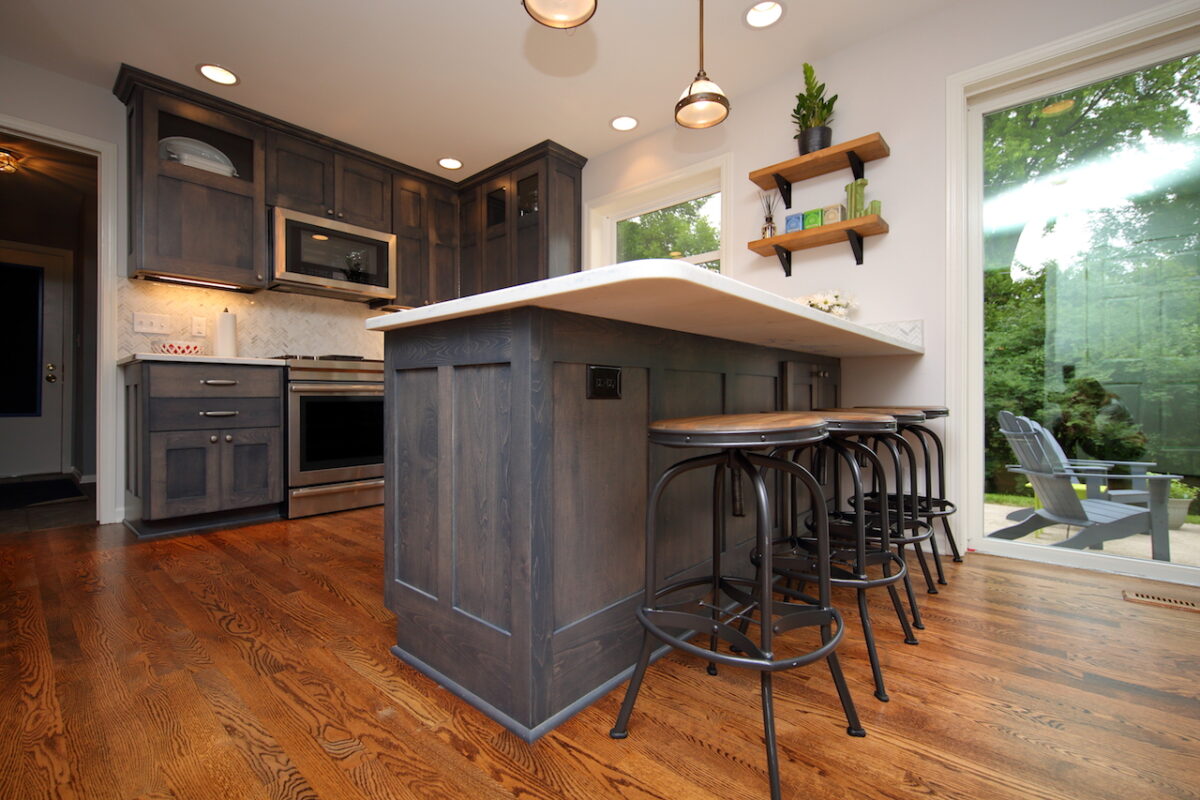
An additional consideration when selecting a dishwasher is that your kitchen island should be a minimum of 42” from the countertops. This allows you to be able to pull out dishwasher, refrigerator and oven doors without being in danger of hitting the island.
Drying Cycles
Originally, dishwashers only washed the dishes. Most models today now come with a drying function. Depending on the model, the drying cycle will work one of two ways.
Heat drying: This dries your dishes using forced hot air, turning the moisture into steam. This mode will add about thirty minutes to the runtime, increasing energy consumption by at least fifteen percent. Because of this, many manufactures have been phasing out the heat drying cycle.
Condensation drying: This rinses the dishes in hot water at the end of the cleaning cycle. Condensation then forms on the cooler surface of the stainless steel interior, effectively pulling water off the dishes and sending it down the drain.
Other Considerations
The Working Triangle
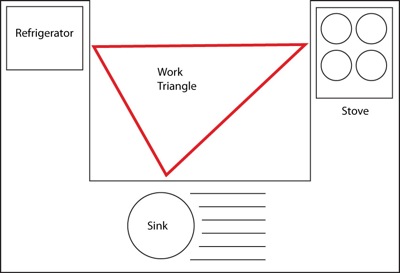
The working triangle is a principle of kitchen design that helps create efficiency by establishing clear traffic lanes and efficiency of movement. The triangle is used to connect your cooktop, sink and refrigerator. This design allows a cook to reach their cooking, cleaning, and food storage area easily. It also provides enough space between the appliances to avoid crowding. It’s important to note that the working triangle is a guideline, not a rule. If you have a smaller kitchen it may not be possible to follow the working triangle guidelines. The general guidelines for the working triangle are as follows:
The sum of the three sides of the triangle should not exceed 26 feet
Each leg of the triangle should measure between four and nine feet
No side of the triangle should cut through and island or peninsula by more than 12 inches
No major traffic patterns should cross through the triangle
Source: Wikipedia
Panel Ready
Selecting the right appliances for your kitchen remodel is important, but sometimes their finish may not match the rest of your kitchen. Consider opting for panel ready appliances. These allow a custom panel to be installed on the front of the appliance that matches the rest of your cabinetry. Appliance finishes often go in and out of style, and panel ready options provide a classic look that will look refined for years to come.
Different Finishes
Traditionally, the common colors for appliances have been white, black, stainless steel and biscuit. More recently, however, many appliance manufacturers are making appliances with a wider variety of finishing options. For those looking to add extra character to their kitchen appliances, consider a bold color choice. Lacanche offers high-end ranges with a plethora of color options and trims.
Unique Appliances
If you want to add luxury and capability to your kitchen, adding a rotisserie from La Cornue can set your kitchen apart. If you’re a fan of coffee, Miele offers a built-in coffee machine that fits into your kitchen cabinetry, or into your bedroom closet, giving you access to your coffee first thing in the morning. Serious chefs may consider adding a standalone broiler to bring restaurant capability to your home kitchen.
AGA Cookers
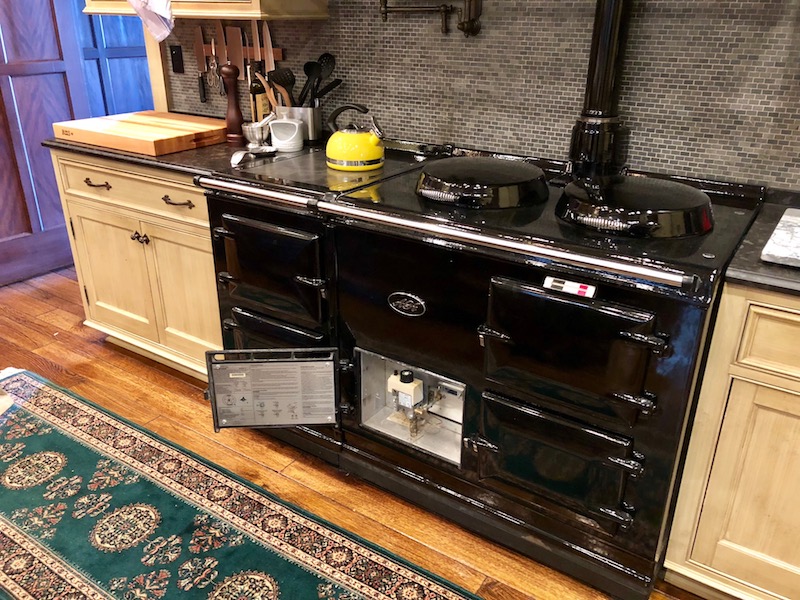
An AGA cooker is a unique choice for those who want a traditional English-style kitchen. AGA cookers are made of cast iron, and use radiant heat to seal the food, which locks in the moisture and flavor. AGA cookers contain multiple ovens within the unit including a roasting oven, a baking oven and a simmering oven. However, one of the biggest benefits to AGA cookers is that they are more than just a cooker.
An AGA cooker used in a kitchen on the Lower East Side of Milwaukee, WI
An AGA cooker is used to heat the water and radiators in many homes. Typically, AGA cookers are left running 24/7 which can significantly reduce energy costs. While it may not sound like leaving it on all day will reduce energy costs, it actually uses less energy, because the AGA can be used to replace radiators, a tumble dryer, an electric kettle and a toaster.
Teppanyaki Grills
Serious Japanese food aficionados may consider adding a teppanyaki grill to their kitchen remodeling project. Teppanyaki grills have become popular in hibachi restaurants, and are available for home use. Teppanyaki grills are flattop grills that allow you to set different temperatures to different points on the grill. This gives you the ability to cook and prepare multiple ingredients simultaneously.
Create the Best Kitchen for Your Home
Having the right appliances for your kitchen can ensure your kitchen functions and is an enjoyable space to cook. At LaBonte Construction we have done numerous kitchen remodels, and have a wealth of experience to ensure that every part of your kitchen looks and functions in the way you desire. Contact us today to learn more about using our expert services for your next kitchen remodel.
10 Inexpensive Upgrades To Make Your Home Remodeling Project Feel Luxurious
Renovating your home can be costly and comes with many decisions. Hiring a qualified home remodeling contractor is essential to a successful project. Incorporating these ten tips into your next remodeling project can make your space feel luxurious and reduce the impact on your building budget.
Adding Ceiling Detail
During a home remodeling project, adding visual interest to the ceiling can set your home apart from others. Commonly, remodeling clients request coffered, tray and coved ceilings. These details can affordably make a statement in living room, dining room and kitchen remodels. While we often think about adding details to walls, ceilings can be even more dramatic. Adding detail to a ceiling can sometimes be less expensive because there is only one ceiling versus four walls.
Coffered Ceilings
Also known as caisson ceilings, coffered ceilings date back to the Ancient Romans. Many designers and architects will tell you they make your room feel larger by drawing your eye upwards. Coffered ceilings take the form of square, octagonal, or rectangular sunken boxes in the ceiling. The least expensive way to add a coffered ceiling detail is to do so with rough framing and drywall. More commonly, we create coffered ceilings in home remodeling projects by building a grid of wooden box beams with applied moldings.
Tray Ceilings
Tray ceilings are similar to coffered ceilings, but are a single shape and typically the least expensive of the ceiling details. This ceiling detail usually follows the contour of the room, as well as having the center of the ceiling raised up several inches from the perimeter. Additionally, this detail gives the appearance of an upside down tray, hence the name.
Coved Ceilings
An example of a coved ceiling in a Milwaukee area home
Coved ceiling were commonplace prior to 1930, when many of Milwaukee’s historic homes were built. This ornamental detail was usually used in the public areas of a home like the living room or dining room, but is also seen in bathrooms in more stately homes. With CNC technology, we can now purchase kits to assist in getting the perfect ceiling without the expense of cutting it by hand. This detail is best left to professionals with access to specialty flexible drywall.
Upgraded Switches
Upgrading the switches in your home can have a huge impact. Most of your guests interact with your home with their eyes, but when they interact with their hands, it’s often to use a switch. Upgrading the switches can turn an eyesore into a noteworthy detail.
Air Switch
In the kitchen, our remodeling clients frequently opt for an air switch. An air switch is a countertop-mounted pressure switch that activates your garbage disposal. By moving the switch to the countertop, there are fewer visual distractions in a tile or stone backsplash.
Push Button Switches
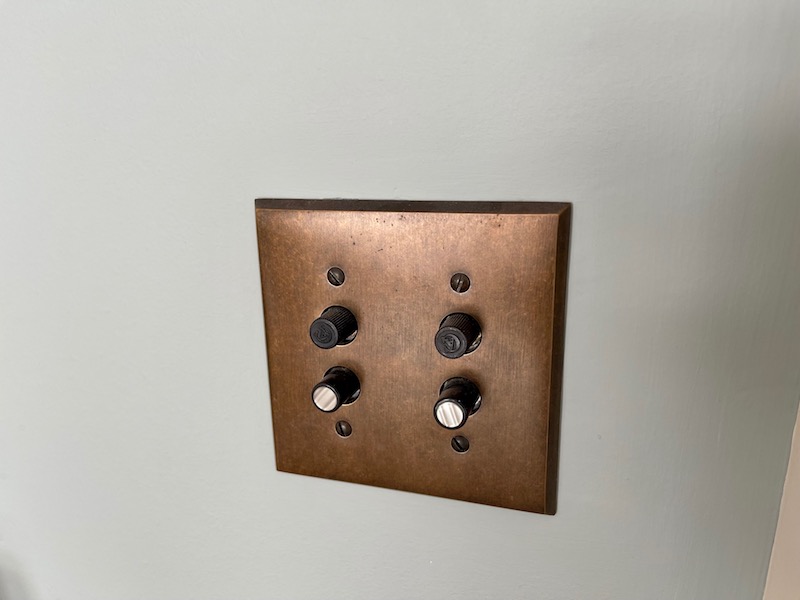
Push button dimmer switches in an Eastside Milwaukee home.
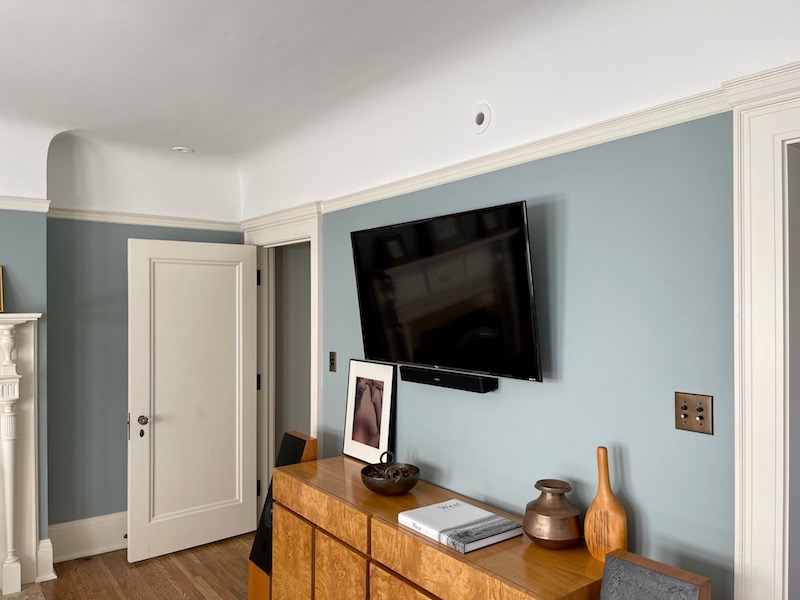
Reproduction push button switches are a great addition to old homes and to your historic home restoration project. These switches have the look of an original switch, coupled with the functionality and safety of a modern dimmer. This relatively inexpensive upgrade would be a great addition to your next remodeling project. If your budget does not allow for retrofitting for all of your switches, consider doing the rooms that guests most often see.
Dimmer Switches
Dimmer switches, and now Wi-Fi enabled smart switches allow our remodeling clients to create a mood with lighting. Having the flexibly to control your lighting beyond on/off can affect your mood, help with security, as well as make your space feel more luxurious.
If you want to hide your electrical controls to focus on your wallpaper, try a switch from Forbes & Lomax. While expensive, using this switch in a dining or powder room can have a big impact while not requiring the entire house to be re-switched.
Pocket Doors
The older and more sophisticated cousin of the barn door, pocket doors sometimes get a bad name because they can be finicky if not installed by a professional remodeling contractor. Pocket doors are a self-storing door system where the door hides inside of the wall when not in use. Additionally, using a quality track system that features smooth rollers and a quiet close system ensures function for generations to come.
Pocket doors are great for small spaces like a powder room or a closet where a swinging door could interfere with the space or traffic patterns. The only place where this door system can create problems is where plumbing, HVAC, or electrical systems interfere inside the wall. When installing a pocket door, we suggest using only solid core doors.
Upgrade Moldings
Adding moldings to a house makes a huge difference. Defining spaces, adding elegance, and making a space look historically correct all contribute to the functionality as well as the beauty of a home.
Crown Molding
Crown moldings are a great addition to your home. We install crown molding between the wall and the ceiling. Most clients want to add crown molding to their kitchen cabinets, common areas, and master bedroom. Off-the-shelf moldings can be made to look like custom moldings by stacking moldings to create an additional profile. This common method uses a baseboard in combination with a crown molding profile to create a larger and more complex design.
Chair Rail
Chair rail is a molding that can make a simple space feel more elegant, but is often installed incorrectly. A professional home remodeling contractor can help you get the proportion right. Historically, builders positioned chair walls lower on the wall to make the room look and feel taller. Many people assume that the rule for a chair rail is that it should be 36 inches off the ground, however this is not always the case. A good rule of thumb is that the chair rail should be about 1/5 of the room height, usually somewhere between 28-32 inches.
Wainscoting
Wainscoting is a molding applied to the walls that extend partway up a wall’s face. This molding dates back to the 1300’s and can be a great way to guard your walls from scuffs and scratches while adding a classic look to the room. Wainscoting can also create a feeling of height within the room. Traditionally, most manufactures make wainscoting from solid wood, but these days they also make it from milled plywood, plastic and medium-density fiberboard (MDF).
Wider baseboard and casing are great replacements for builder grade moldings that came with the house. Adding larger moldings can give a home a feeling of quality and history. Make sure to consult your builder before deciding on oversized moldings. Moving light switches and outlets may oftentimes be needed to accommodate the new millwork package.
Painting Vents, Grills And Light Trims
The need for HVAC systems, recessed can lights and bath fans creates eyesores. One of the easiest ways to hide these is to have them painted to match the wall or ceiling they are attaching to. Painting these vents, covers and trims is typically a cost-effective way to seamlessly integrate them with the rest of the wall or ceiling. Our qualified painters prepare these plastic and metal surfaces, then apply paint that will help them vanish.
Sound Deadening Insulation
Soundproofing is a very complex topic in construction science and best left to expert builders. However, there are some basic steps which can be cost-effective and make a huge difference. Insulating walls between bedrooms and other rooms helps kids sleep when adults want to entertain later at night. Adding insulation between bathrooms and common areas can confine the sound of running water to the bathroom.
Art Lighting
An example of art lighting in a home in an Eastside Milwaukee home
Art lighting is usually reserved for galleries and very expensive homes, but if the wall is open, it is not expensive to add. By adding an outlet connected to a switch, you can highlight your favorite painting or your kid’s latest creation. Some specialty art lights even incorporate a hook to hang your painting from.
Adding Shutters
Adding shutters to the windows in your home remodeling project is a great, cost-effective way to add curb appeal to your home. While shutters were originally made for functionality, these days they are more often an aesthetic choice. When adding shutters, it’s important that the shutters you select should combine to fit the entire width of the window, so when closed, they fit the window shape. Shutters can add depth and character to your windows as well as give your home a classy, elegant feel. Some of the main types of shutters include:
Louvered
Flat Panels
Raised Panels
Board & Batten
Insulated Garage Door
According to HGTV, many homes have a garage that occupies up to thirty percent of the façade of the home. With such a large surface area, it is important to have the highest quality door you can afford. Upgrading from a single-layer door to an insulated door can increase the R-Value of your door by 4-15+. Even if there is no heating in your attached garage, the residual heat from your home will linger much longer with the addition of a new, properly installed garage door. Not only will this heat help melt the snow off of your car in the cold Milwaukee winters, but also makes going to work on a cold, dark winter morning a little more tolerable.
Adding Wallpaper
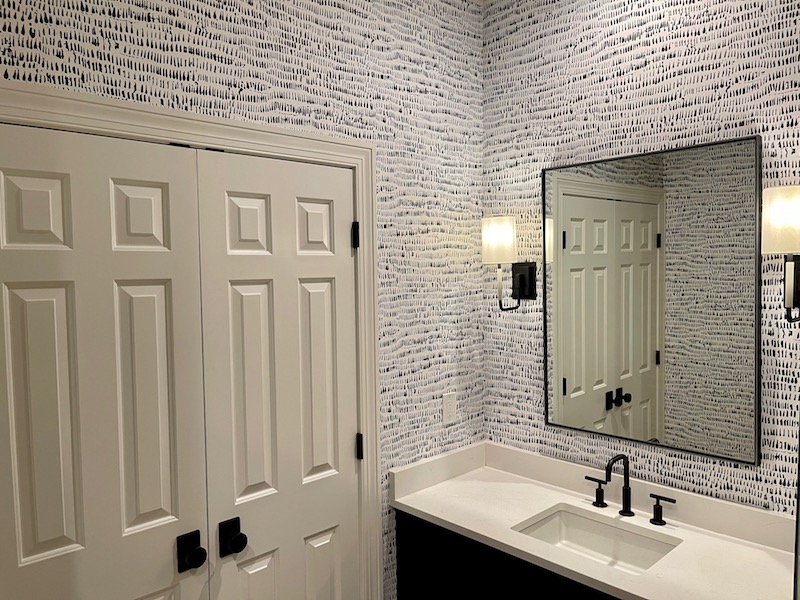
Wallpaper in a Milwaukee area bathroom
Beautiful wallpaper can be prohibitively expensive, but if you are remodeling a small space like a powder room, you can use an expensive paper for big impact without a huge price tag. Picking the right wallpaper can be a challenge best left to the professionals. However, if you want to pick your own, we recommend keeping the following rules of thumb in mind:
Price and quality are usually directly correlated in the wallpaper world
Handmade wallpaper should only be hung by the most experienced installers
Stripes and vertical patterns can help a room feel taller
Ceilings can be wallpapered too
Small-scale patters make a room feel larger
Walls must be free of imperfections for a seamless installation.
Upgrade Your Home with LaBonte Construction
Remodeling your home can be expensive, but with an experienced contractor and careful selections, you can get more for your money. Contacting LaBonte Construction allows you to take advantage of our decades of home building experience to incorporate these, as well as other cost-effective upgrades into your next remodeling project.
10 Different Types Of Countertops For Your Kitchen Remodel
Selecting a countertop for your kitchen remodel not only impacts the aesthetic of your space, but also affects your budget and the way you cook. Called benchtops in Europe, countertops occupy one of the largest surface areas of any material in your kitchen. Most of the different types of countertops we offer our clients when doing a kitchen remodel can be measured on the Mohs scale. This ranks the hardness of a mineral from one to ten, with talc being the softest and diamonds being the hardest. Understanding how your countertops will wear can help you decide which material is best suited for your kitchen remodeling project.
Many of the countertops used in a kitchen remodel are a stone of some type. There are several different edge profiles that can be routed into the stone to make it look more traditional, while others create a more modern aesthetic. Most commonly, our clients request an eased edge. We can also seamlessly laminate another piece of stone to the bottom of the slab to make the countertops appear thicker.
Granite
Derived from the Latin word ‘granum’, granite is an igneous rock formed by the cooling of magma approximately 300 million years ago. It is a composite of many minerals including quartz, and is harvested from stone beneath the earth’s surface. It has been in use as a building material since the time of the Egyptians. Granite also forms famous landmarks, such as Mount Rushmore. It naturally occurs all over the world, but is commonly quarried for countertops in the USA, China, and Brazil.
When remodeling your kitchen, granite prices range from some of the least expensive solid surface options, to some of the most expensive. Granite can have all of the same edge finishing profiles as other stones and the surface is most popularly polished. Granite can also be installed honed or leathered.
Mohs Rating: 6-8
Pros
Cons
Heat resistant
Must be done professionally
Can be one of the least expensive of the stones
Imperfections can be unappealing and cause waste
Thousands of color choices
Natural stone can have naturally occurring weak spots, causing cracks
Seen by many as a luxury product
Cannot cut directly on the stone
Low maintenance
Requires sealing
Laminate
While working at Westinghouse, Herbert Faber and Daniel O’Conor invented Formica® laminate. They filed for a patent on their laminated plastic with phenolic resins in February of 1913. After leaving Westinghouse, the company manufactured their product for uses in consumer electronics. By the 1920s, patterns to mimicked stone and wood were developed. The use of Formica® for countertops became popular after WW2.
Laminate countertops are produced by laminating layers of paper together using resins, heat and pressure to form a single semi-rigid plastic sheet. These sheets are then glued onto a medium density fiberboard (MDF) core in the shape of the countertop using contact adhesive.
At LaBonte Construction, we use Formica® countertops most often in mid-century modern kitchen remodels. Additionally, we us Formica® in basement laundry rooms when a client wants to save money.
Mohs Rating: N/A
Pros
Cons
Least expensive option
Edges can delaminate
DIY or carpenter install
Not easily repaired
Many color options
Seams cannot be hidden
Stain resistant and easy to maintain
Seen as a budget option during resale
Integrated sinks available from some fabricators
Quartz
Unseating granite as the most popular countertop installed during kitchen remodels is quartz. Quartz is a manmade material that gives the appearance of natural stone, without the maintenance. These countertops are primarily made of ground quartz mixed with a polyester resin and pigments. Some of the more exotic looking quartz countertops include glass and metallic flakes. These can add visual interest and movement to the slabs.
A quartz countertop used in a kitchen remodel by LaBonte Construction
Unlike other stone countertops, quartz does not need to be sealed and comes in larger, more uniform slabs. When quartz first came to market, many complained about the lack of colors and the inability to hone the surface. The latest generations of quartz have solved this issue. They not only offer the ability to have a honed finish in as many colors as natural stone, but also much longer pieces. This has helped accommodate today’s larger kitchen islands.
Mohs Rating: 7-8
Pros
Cons
No sealing required
Expensive
Uniform in size, veining and color
Some brands do not offer a honed finish
Resists stains, etching and heat
Heavy when compared to some of the other engineered products
Most realistic of the engineered products
Concrete
A perennial choice of the DIY crowd and interior designers looking for a brutalist design in their kitchen remodel, concrete is often an overlooked option. Concrete is very versatile when used as a countertop. By etching, stamping, acid-staining, adding other materials such as glass, changing the size of the aggregate or by the way the final product is sanded, one would not recognize it as the boring gray slab in the backyard.
Concrete countertops can be poured in place, or fabricated off-site and delivered. By pouring the tops in place, a seamless installation can be achieved. Also appealing to some clients, is the ability to mold in the sink in the same material, although this can be a weak point. You should talk to a qualified kitchen remodeling contractor about the need to build a support system for this type of installation.
Mohs Rating: 5-7
Pros
Cons
Unique look
Can crack
DIY friendly
As, or more expensive as other solid surface options if professionally fabricated
Sink can be integrated
Can be messy if cast in place
Many textures and colors can be achieved
Requires regular sealing
Scratch and heat resistant
Can seem cold in some spaces
Tile
This is one of the least expensive and most DIY-friendly options. Tile countertops took over the kitchen remodeling world in the 1980s and into the 1990s. Tile became popular as it was a way to express your creativity. Size, shape, color, price, and layout are the only limiting factors when picking a tile countertop. While not as common anymore, there are still instances where tile countertops are specified in a kitchen remodel.
Mohs Rating: N/A
Pros
Cons
Affordable
Uneven surface can cause spills
As many styles as there are colors
Grout joints can harbor bacteria and stain
DIY friendly
Is not as prestigious as solid surface counterparts, even if it is the same material
Materials are widely available
Is more delicate than many solid surface options
Soapstone
First discovered by Native Americans, soapstone is a metamorphic rock made of talc and other minerals. Mined in the Appalachian Mountains, soapstone comes in a variety of shades and colors. Most commonly it comes in dark gray, green, or black with veins of whites of grays. In kitchen remodeling, soapstone is almost always sold with a honed surface.
In addition to being used in kitchen remodeling, soapstone is commonly used to make sinks or to line fireplaces in old homes. Today, soapstone is a great choice for bars where wine is served and lemons are cut because of its natural acid resistance.
Soapstone takes on a patina over time and will require periodic applications of mineral oil. Scratches can be removed by sanding the countertop.
Mohs Rating: 2.5-5
Pros
Cons
Stain resistant
Must be oiled to keep appearance
Superficial scratches can be buffed out
Surface is somewhat delicate and scratches easily compared to harder stone
Offers historically accurate look
Color can change over time, impacting original design
Beautiful, dark color
Marble
Marble is metamorphic rock formed millions of years ago by limestone being put under pressure. A popular choice amongst the ancient Greeks and Romans, it was used as a building material because of it’s aesthetics. Although marble is a soft stone, some of these Greek and Roman marble structures still stand over 2,000 years later. Other historical uses of marble include the Taj Mahal in India and the cladding of some Egyptian Pyramids.
A marble countertop on a kitchen island in Whitefish Bay / LaBonte Construction / HB Designs
Marble is a soft stone, but does not retain heat. It was popular a building material because marble can create a cooling effect in warm climates. Seen as one of the most exotic and expensive kitchen countertop options, it is popular in high-end bathroom and kitchen remodeling.
Mohs Rating: 3-5
Pros
Cons
Seen as an ultra-premium material
Expensive
Can be finished in multiple different finishes
Softer than some other solid surface options
Natural veining creates one-of-a-kind look
Can be scratched or stained
Requires sealing
Corian®
Donald Slocum’s invention, a combination of acrylic polymer and alumina trihydrate, Corian® is a name-brand solid surface material that comes in over 100 colors. It is manufactured in Buffalo, NY by the industrial giant DuPont. Corian® comes in three thicknesses: ¼”, ½”, and ¾”, and the color is uniform throughout the material. Obviously, the thicker the material, the more durable and ridged the countertop is. The material was reformulated in 2013 in an effort to revive the once ubiquitous brand. This reformulation created deeper, darker colors in addition to adding more resistance to abrasions.
Mohs Rating: 2
Pros
Cons
Stain resistant
Can be as expensive as natural stone options
Damage can be buffed out
Seen by some as dated, or for commercial use
Uniform
Seams are nearly invisible
Many color options
Sink can be integrated
Butcher Block
No longer relegated to the farm, butcher block countertops have become increasingly popular in kitchen remodeling. Butcher block countertops can be made from any species of wood and are composed of strips of wood glued together. Available grain orientations include: edge grain (most common), face grain and end grain. While most other countertops can dull knives, butcher block tops are great for cutting directly on. This is as long as you do not mind the character caused by knives.
Butcher block kitchen countertops should not have finish on them if they are used for food prep. These coatings can encourage bacteria growth trapped in the scratches and imperfections. Using a food grade butcher block conditioner will be required at least once every six months. Also, take special considerations around sinks. Untreated wood does not do well in constantly wet environments like a sink area.
Mohs Rating: N/A
Pros
Cons
Inexpensive for some woods
Some woods can be expensive
Can be sanded to restore appearance
Seams are hard to hide
Creates a warm look
Scratches and stains easily
Lasts indefinitely if cared for correctly
Not always food safe
Easy to find with most big box stores now carrying them
Must be oiled to avoid cracking and discoloration
Metal
While typically found in commercial kitchens, metal countertops have become more popular in American kitchen remodels. Most commonly the metals used are stainless steel, pewter, copper or zinc. While most people think of these metals for range hoods or appliances, metals can make great countertops. Except for stainless steel, all of these metals will oxidize, forming a beautiful patina.
Stainless steel is the most common of the metal countertops. Usually used by designers and homeowners to create a modern look, stainless steel offers unparalleled durability. Homeowners should understand that there will be superficial scratches in the surface from use, but many love the worry-free nature of this hearty material. Cleaning with soap and water is the only maintenance this kitchen countertop should need.
Zinc is often seen as the cladding on oyster bars, but has made its way into residential kitchens. Zinc develops a blueish-grey patina. Since the metal is soft, different edge profiles can be bent into the metal.
Copper has long been used for plumbing fixtures, but a copper countertop can be functional and beautiful. After installation, the bright rose gold color usually turns a dark brown with hints of green. Though uncommon, some wish to maintain the surface in its original color by polishing with a product like Bar Keepers Friend to remove the patina. As a bonus, copper naturally inhibits germs with E. coli, with the germs only surviving for about four hours on the surface.
Pewter is an alloy of tin and is popular in French restaurants and those looking to bring a French flair to their kitchen remodel. With a grey patina, pewter is a timeless and elegant metal option that is soft enough to press decorative edge details into.
Mohs Rating: N/A
Pros
Cons
Strong
Hard to find a fabricator for some residential projects
Easy to clean
Scratches easily
Food safe
Noisy
Picking the right countertop for your kitchen remodel can be intimidating. To help you decide, we suggest weighing the pros and cons of each countertop type, looking at inspiration pictures from Houzz, and by contacting a qualified kitchen remodeling company like LaBonte Construction.
6 Considerations When Selecting A Bath Fan
The standard bath fan is necessary in most homes, and they are essential in the function of your home’s ventilation system. Showers and baths create steam. If the steam is not expelled it can cause damages to paint and wallpaper, and in extreme situations, encourage mold. Hiring a qualified home remodeling contractor like LaBonte Construction can ensure that the correct fan is used for your next bathroom remodeling project.
While a bath fan’s most important function is removing moisture from the air, they also remove smells from the bathroom. We look at six considerations when selecting a bath fan for your bathroom remodeling project.
Bathroom Size
Fans are sized by the rate by which they expel air from your home. This measurement is specified in cubic feet per minute (CFM). The lower the CFM rating, the less air the fan moves. It is almost always better to oversize a bath fan than to undersize it.
To specify which fan is appropriate for your space, architects and home remodelers use several rules of thumb or calculations. The most simple rule of thumb is one CFM per square foot of room area.
A typical bathroom in Milwaukee is five by eight feet, or forty square feet. This bathroom would require at least a forty CFM fan. More complex suggestions are made by the Home Ventilation Institute (HVI), who certify bath fans, among other ventilation products. The HVI suggests exchanging the bathroom air a minimum of eight times per hour, and they provide a calculation for this based on cubic feet. If we use the same five by eight bathroom with a common nine foot tall ceiling, you come up with a measurement of 320 cu. ft.
EXAMPLE:
360 cubic feet x 8 air changes per hour = 2,880 Cubic Feet per hour
To Convert to CFM
2,880 per hour / 60 minutes = 48 CFM minimum
For large bathrooms, we suggest calculating based on fixtures:
Toilet: 50 CFM
Shower or Bathtub: 50 CFM
Jetted Tub: 100 CFM
EXAMPLE:
A bathroom that has a shower, bathtub and toilet:
50 CFM + 50 CFM + 50 CFM = 150 CFM minimum
Bath Fan Installation
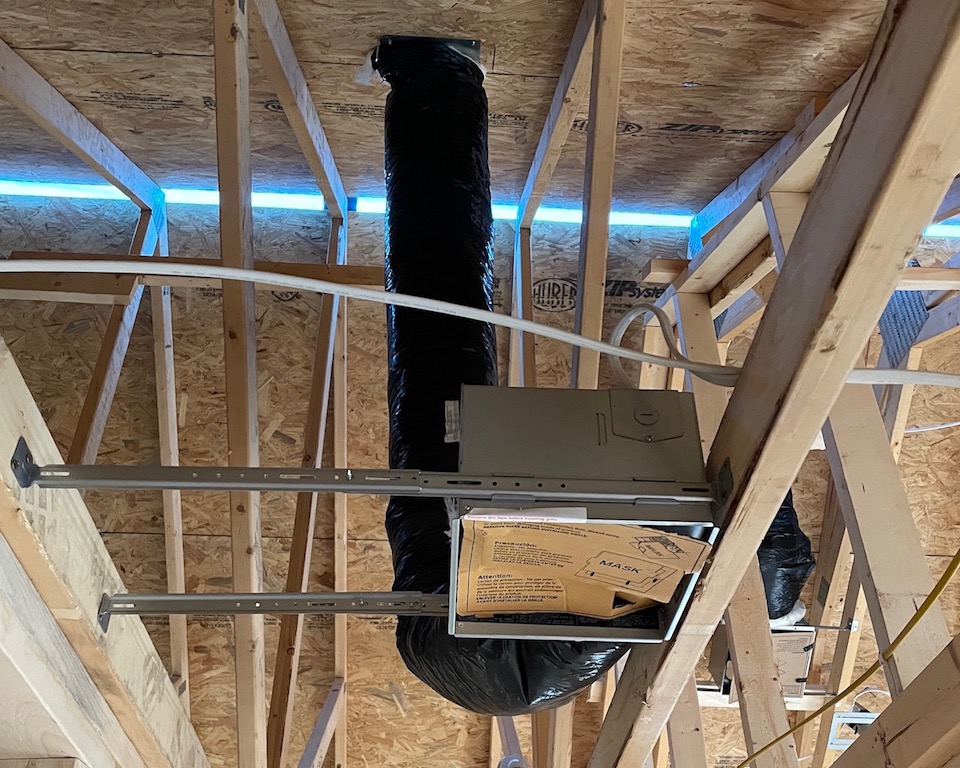
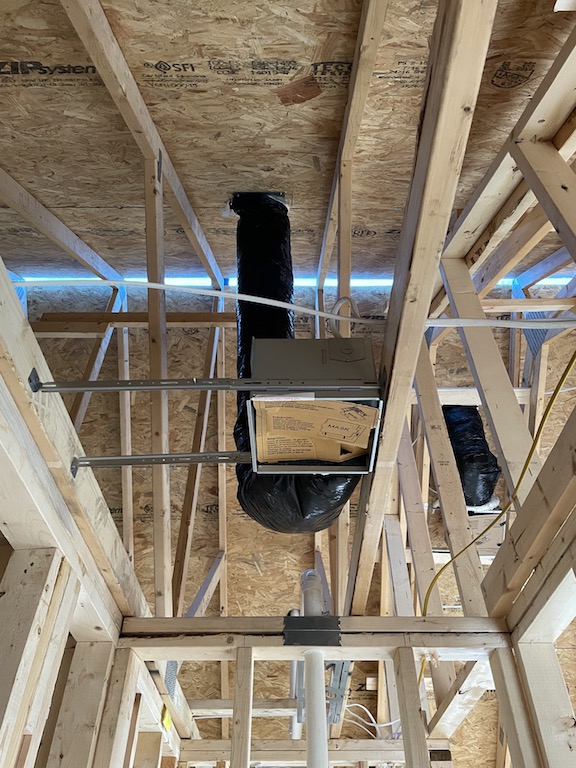
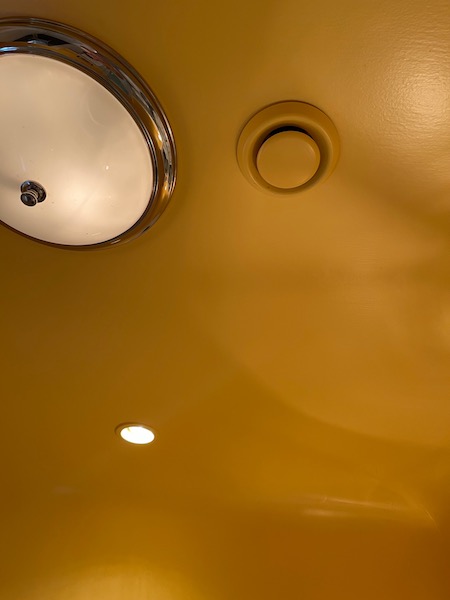
A bath fan ducted to the roof of a home remodeling project in Whitefish Bay | LaBonte ConstructionA Panasonic exhaust fan painted to match the ceiling
Most bath fans are mounted on the ceiling, but some are mounted on the wall. Fans should be ducted to the outside. Most commonly, home remodelers use a vent through the roof. Some handymen, DIYers, or unqualified builders could vent your bath fan directly into your attic, which is wrong and can cause moisture problems.
If your bath can not be vented though the sidewall of your home and it passes through an unconditioned space (e.g. attic), the exhaust piping must be insulated.
While some fans are automatic, most require a switch. In commercial settings, and in homes where someone may forget to turn on the fan while using the bathroom, an occupancy sensor or wiring the fan to turn on with the light might make sense.
Bath fans in the ceiling can be an eyesore. We encourage our clients who do not have a white ceiling to consider having their bath fan grill painted by our staff during the remodeling process, in order to match the fan to the ceiling.
Noise Level
One of the main reasons our clients cite not using their bathroom fan is because of noise. Manufactures have worked hard to address this issue by improving the fan bearings, increasing the fan sizes to lower the RPMs while still moving the same amount of air, and by adding additional soundproofing features to the fan housing.
The noise of a bath fan is measured in sones. The lower the sone value, the less volume the fan produces. Sones are not a measurement like decibels, but rather, how sound is sensed. Unlike decibels which are logarithmic, sones are linear.
Sones
Decibels
Sound Equivalent
1
28
Whisper
2
37.99
Quiet Library
3
43.84
Desktop Computer
4
47.99
Quiet Suburb
5
51.21
Conversation
6
53.83
Refrigerator
Most of the bath fans our clients select are considered quiet or ultra-quiet, having a sone rating of two or less.
Efficiency
Big families can have a bath fan run for hours on end. Fortunately, bath fans have become significantly more energy-efficient in the last ten years. Many of the Energy Star fans we install are seventy percent more efficient than traditional non-rated equivalents. Choosing to use a timer or occupancy sensor for your fan can further increase the efficiency by ensuring the fan is only in use when necessary.
Formfactor
Fans are traditionally ceiling mounted between studs with a white plastic cover. Some have lights, and some do not. Most high-efficiency fans are taller, requiring a minimum of 2×6 ceiling joists to accommodate their housing. Historically, the quieter or stronger the fan, the larger the blades and plastic shroud covering it.
There have been many improvements and innovations in the past few years. Companies like Broan® have come out with their model 744, which combines a recessed can light and a bath fan into one. This hybrid fan/light draws air from around the bulb by having a hole in the back of the can light trim.
An intake for an inline bathroom exhaust fan
Some clients want to avoid a large plastic cover on their ceiling and opt for an inline bath fan, which has a smaller ceiling intake and mounts the fan remotely. The benefit of an inline bath fan is that the fan can be mounted anywhere between the intake and the outlet. This allows for installations where power may be easier to access, where the fan can be easily serviced, in situations where a large fan will not fit in the joist cavity, and in installations where multiple exhaust points can be combined with only one outlet through the roof or side of the home.
A fan is part of every bathroom remodeling project we complete at LaBonte Construction. Entrusting your home to our staff, who have years of residential construction experience means your bath fan will be properly sized and have the features your family needs to enjoy your bathroom for years to come. Please contact us to discuss your bathroom remodeling project.
Make Your Next Home Remodeling Project A Greenhouse
Gardeners looking to extend their season, start seeds or those who want to create an indoor oasis may consider a greenhouse as their next home remodeling project. Greenhouses provide a great place to grow your plants, and can offer some other surprising uses as well. Whether you’re an avid gardener, or just a lover of nature, greenhouses can add life, warmth and comfort to your home.
A Brief History of Greenhouses
The idea of growing plants in a controlled environment has existed since Roman times. Roman emperor Tiberius ate a cucumber-like vegetable every day. Needing to make sure their emperor was kept happy, Roman gardeners constructed an artificial garden in order to ensure the emperor had his preferred meal. This garden was certainly not a modern greenhouse, but it is one of the first examples in history of temperature controlled gardening.
The first known description of a heated greenhouse comes from Sanga Yorok, a Korean cookbook from 1459 compiled by a royal physician of the Joseon dynasty. It contains detailed instructions on constructing a greenhouse to grow vegetables, flowers and fruit within an artificially heated environment. They used ondol, a traditional Korean underfloor heating system, to help heat the greenhouse. Cob walls were used to retain heat, and semi-transparent oiled hanji windows were used to allow light into the greenhouse whilst providing protection from the outside environment.
The “Golden Age” of greenhouses took place in Victorian England. Members of the wealthy upper class constructed large and lavish greenhouses. They did this to compete with each other and flaunt their wealth. Those greenhouses followed the same models used by the Koreans, but on a much grander scale.
Modern, at-home greenhouses first proliferated in the 1960s, in large part due to the introduction of wider sheets of polyethylene film, which offered greater protection to greenhouse windows. This wider film allowed small greenhouse owners to create a better and more consistent climate at home.
Freestanding vs. Attached
When deciding what kind of greenhouse you want for your home consider usage, lighting and available space. If you are an avid gardener, you may want to consider a freestanding greenhouse. They can be any size, shape or style and you are only limited by your imagination. They can also be expanded if you find that your initial greenhouse was not big enough. Freestanding greenhouses should be located facing east or west to maximize the light, and given Wisconsin’s winters, be sure the location you choose avoids harsh winter winds.
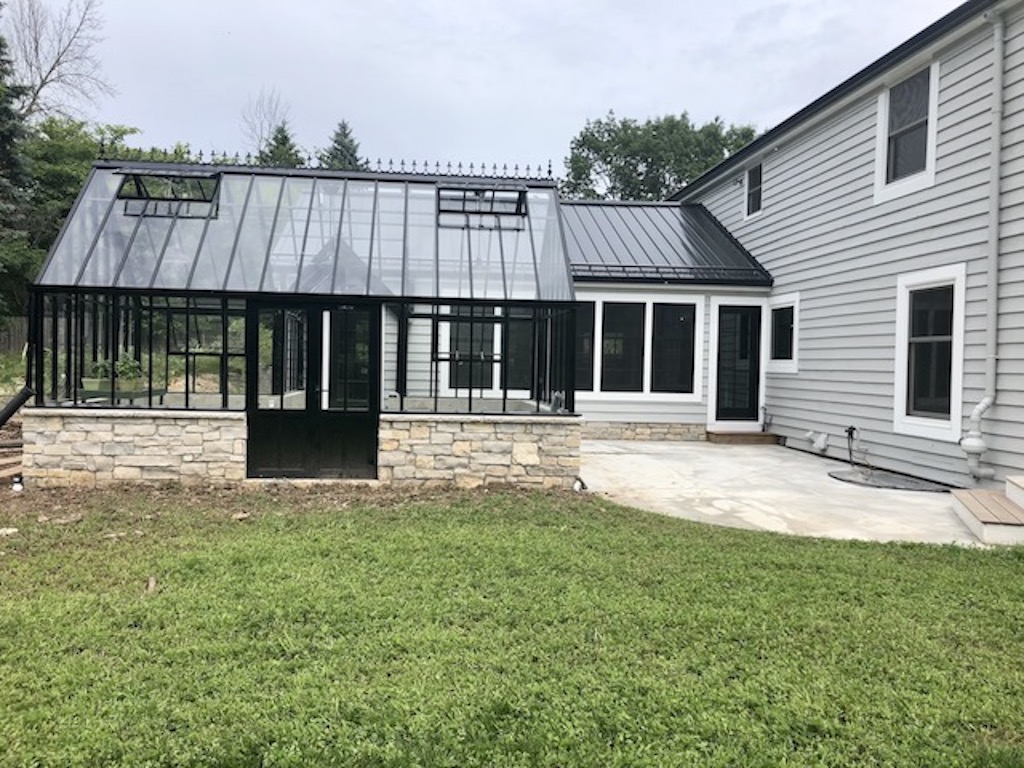
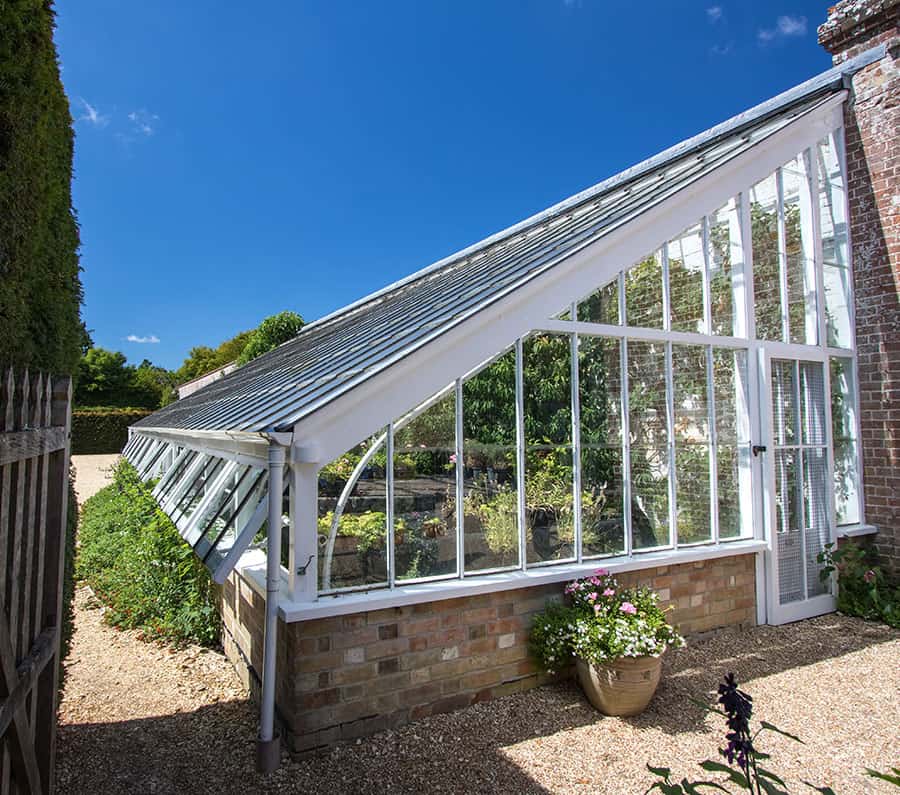
Attached greenhouses are easily accessible as they are attached to your home, or another structure. This makes connecting water and power to your greenhouse easier. Attached greenhouses retain more heat than freestanding greenhouses because there is less exposure to the outside elements. Attached greenhouses can provide health benefits because they naturally add humidity to your home during the winter, helping alleviate dry skin and other ailments related to dry air.
An example of an attached greenhouse / Source: Off Grid World
Starting From The Bottom
Once you have picked a style of greenhouse, then construction can begin. Choosing the right foundation for your greenhouse is very important. The foundation contributes to the greenhouse’s ability to retain heat and humidity. There are many different types of foundation to choose from, however, we recommend concrete. This is an ideal choice as concrete provides a permanent and level surface for your greenhouse.
The DIY method for building a greenhouse is generally anchoring a metal frame into the soil, but this can create problems. It is harder to clean a greenhouse that doesn’t have a solid foundation, and framed or hoop greenhouses are not permanent structures and are therefore susceptible to numerous structural problems. The concrete foundations we install provide structural integrity, and can be clad in stone, stucco and many other materials to achieve the desired look. At LaBonte Construction, the greenhouses we install are of heirloom quality and built to last a lifetime.
Heating
Maintaining the proper heating for your greenhouse is a must. There are several ways this can be done:
Hotbeds – Hotbeds are raised beds that you can install in your greenhouse. Fill the beds with layers of decomposing straw and manure (or other organic material) and top that with a thin layer of growing soil. You can then plant your seeds in the growing soil, and the natural warmth from the layers will give your plants a safe space to grow.
Hot Water Heating – If manure isn’t your thing, a hot water heating system may be the way to go. It is a little trickier to install so this should be left to the professionals. For this option, you will need hot water plumbing that is attached to the plant beds in your greenhouse. If you want an eco-friendly option, you can install solar panels to heat the water.
Radiant Heating – Radiant heating systems work by radiating heat from a hot surface to cooler surroundings. This piping is installed under the greenhouses foundation and connects with your home’s boiler to heat your greenhouse from the ground-up.
Rustic Heater – This one is probably the easiest to do yourself. If you have a small greenhouse, simply place a candle (or candles) below a ceramic plant pot. This essentially creates a tiny space heater for your greenhouse.
Heating With Livestock – Keeping chickens in a part of your greenhouse, or in an attached coup, can naturally warm the greenhouse. The body heat the chickens produce, as well as the heat from their manure, can be quite effective in keeping your greenhouse warm during the colder months.
Humidity
Humidity is another key component of a well-maintained greenhouse. Ideally, the humidity in a greenhouse should be above fifty percent. While this number can be easily achieved and maintained during spring and summer, Wisconsin’s winters provide a tricky challenge. Thankfully, there are a few ways to keep your greenhouse humid during harsh Wisconsin winters.
The simplest way to add humidity is by placing buckets of water in your greenhouse. When the greenhouse warms, the water evaporates, increasing humidity. You can also use your mister to keep the plants moist. Although these are simple, DIY methods, they can be time consuming. We recommend avoiding this problem by having an automatic window and temperature control system included upon installation of your greenhouse. It is just one of the many accessories that can help your greenhouse flourish.
Greenhouse Accessories
Greenhouses can take a lot of time and energy to operate. There are many different accessories and products you can use to keep your greenhouse running smoothly with less physical effort. One of our favorite options for a greenhouse is the self-cleaning glass from Hartley Botanic. This self-cleaning glass has a special coating that reacts with the UV rays from the sun to break down organic matter. Then water, or rainwater, runs down the glass to wash away the loosened dirt. Self-cleaning glass can save you a lot of time and energy when it comes to cleaning your greenhouse.
Another beneficial accessory that you can opt for in your greenhouse is a partition. This is an internal glass wall that separates your greenhouse into different areas, allowing for different climates in separate areas.
Victorian roller blinds can help regulate the internal temperature of your greenhouse. Roller blinds protect your plants from sunlight damage and can provide an attractive environment while working in your greenhouse.
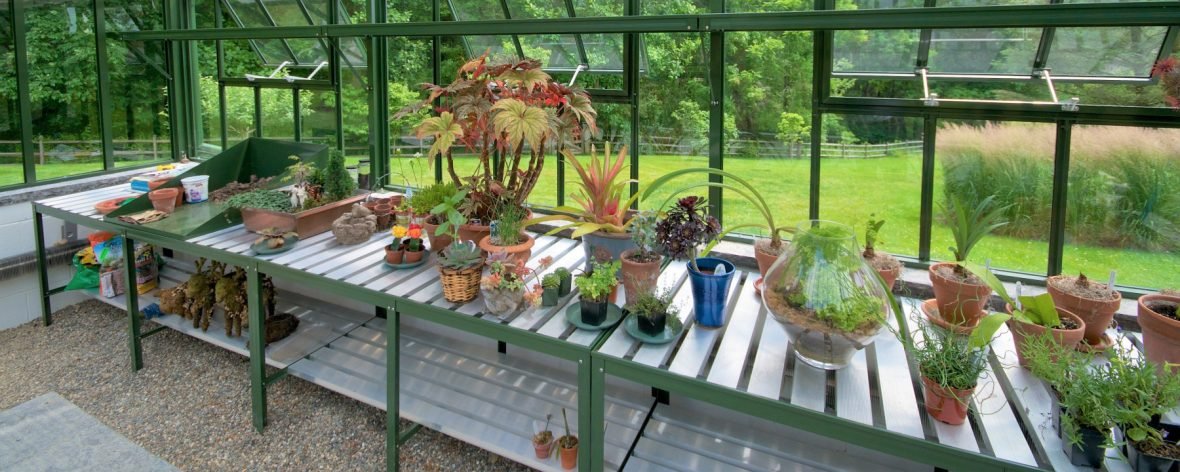
Shelving is another key component of a greenhouse. We prefer aluminum, staged shelving as it provides strength and allows for more space within the greenhouse.
By including some, or all of the aforementioned accessories, you can ensure that your greenhouse is of the highest quality for you and your plants.
Other Uses For Your Greenhouse
If your greenhouse has year-round heating and plumbing, it can be used as an “outdoor” dining area. Granted you will still be inside, but the combination of warmth and greenery can give you the feeling of being outside in nature. Additionally, greenhouses can be used as a lively studio space for those who enjoy painting, playing music, or doing any other hobby in an outdoor environment. If you miss being outdoors during Wisconsin winters, your greenhouse can provide a small oasis.
Final Thoughts
Adding or remodeling a greenhouse can be a great way to add warmth, and a touch of the outdoors to your home. Whether you’re looking to attach a greenhouse to your home, or add a detached greenhouse, LaBonte Construction can help. Please contact our home remodeling team with any questions regarding adding a greenhouse as your next home remodeling project.
Types Of Lumber Used In Home Remodeling
While the framework of a home is not visible, it is possibly the most important part of your home. Having the right framing for your home or home remodeling project can lead to lower energy costs and an overall stronger home. At LaBonte Construction we use the highest quality lumber to ensure your home is sound.
There are many different types of lumber that we use use when framing a home. Certain lumber types are more beneficial for the interior of a home, while others are used on the exterior.
Dimensional Lumber
Dimensional lumber is most commonly used for the framing of a home or home remodeling project. While everyone has heard of a 2×4, these are not its actual dimensions. In fact, none of the different nominal sizes of lumber are the size for which they are named.
Nominal Size
Actual Size
2 x 4
1 1/2” x 3 1/2”
2 x 6
1 1/2” x 5 1/2”
2 x 8
1 1/2” x 7 1/4”
2 x 10
1 1/2” x 9 1/4”
2 x 12
1 1/2” x 11 1/4”
Spruce-Pine-Fur (SPF)
SPF refers to dimensional lumber that comes from coniferous trees in North America. SPF are softwoods, and the most widely-used dimensional lumber in the framing process. Although they are called softwoods, they are very stiff and strong for their weight. Douglas fir is amongst the hardest and heaviest of the softwoods commercially available in North America. SPF wood takes paint easily and holds nails extremely well, making it among the most popular dimensional lumber choices in construction.
Pressure Treated
Pressure treated lumber is a dimensional lumber that has undergone a chemical process to make it more durable and less susceptible to decay, mold, infestation and water damage. At LaBonte Construction we generally use this lumber on the exterior of a home due to its resistive properties. It can also be used for decks, fences or docks.
Cedar
We commonly use cedar for exterior trim. It has long been a popular choice in the construction industry due to its natural beauty and strength. Cedar is also rot resistant which makes it a good option for the exterior of your home. Cedar is milled to have a smooth side and a rough side, offering the ability to create different looks.
Trusses
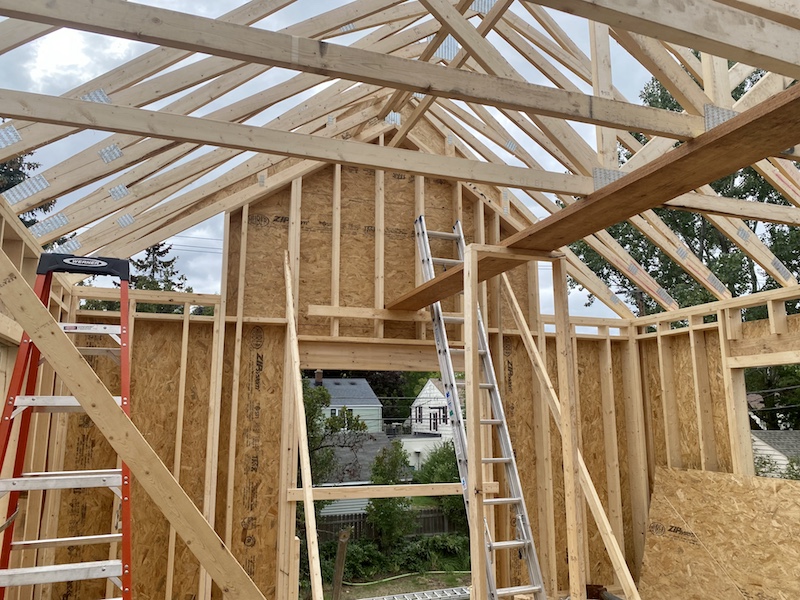
A trussed roof used in a home remodeling project in Whitefish Bay / LaBonte Construction
Another use of dimensional lumber is that they can be made into trusses. Trusses can add more stability to the roof or floor of your home when compared to traditional stick-framing methods.
Trussed roofs can provide more solidity and stability to your roof than a traditional stick-framed roof. With a trussed roof you may lose storage space, but it can be an optimal trade-off if that extra space isn’t needed. Alternatively, you can opt for a storage truss, which as the name suggests, allows for more storage space.
Trusses can also be used in the framing of a home’s floor, which can increase the floor’s strength. Due to their design, floor trusses allow for more room to run HVAC systems and plumbing, decreasing mechanical costs.
Engineered Lumber
SCL: LSL, PSL, LVL
Structural composite lumber (SCL) is a term that is used to describe a family of engineered wood products. SCL provides numerous advantages over traditional lumber, including increased strength, stability and resistance to moisture. SCL traditionally consists of three products: Laminated Strand Lumber (LSL), Parallel Strand Lumber (PSL), and Laminated Veneer Lumber (LVL).
Laminated Strand Lumber (LSL) is made from flaked wood strands and is typically a more cost-effective option when compared to other engineered woods. LSL is generally not as strong as PSL or LVL, but it is still quite effective. LSL is great for kitchens and bathrooms because it is naturally straight. If you have a modern home where straight edges and 90º angles are important, this is a great option. It is also perfect for kitchens, making it easier to hang cabinets by avoiding the need to scribe cabinets to the wall.
Parallel Stand Lumber (PSL) is made from veneers that have been laid into long, parallel strands and bonded together. These are typically used in beams where a larger degree of strength is required. Another benefit to PSL beams is that they can be finished or stained if you want them to be exposed in your home.
Laminated Veneer Lumber (LVL) is manufactured similarly to PSL. These are used similarly to PSL beams as well, but they can be fabricated in a narrower width, allowing them to be used in smaller spaces where PSL beams would not be possible.
Glue Laminated Timber
Commonly referred to as glulam, glue laminated timber is a timber that has been bonded with waterproof adhesives. This timber can be fabricated to meet any size, giving it more versatility when compared to SCL. Glulam is often used in high, exposed areas of a building or home due to its beauty. Due to the way it is manufactured, glulams can be fabricated into unique shapes, allowing for a wide variety of uses. Glulam can be great option for customers looking to include a high ceiling in their home remodeling project.
TStud™
The TStud™ is a innovative new product in the use of dimensional lumber in a home.
TStud™ is the same exact dimensions and made from the same lumber as a traditional 2×6, but because it is made from two perpendicular 2×3 boards, the gap in between the boards allows for insulation to be applied. In some cases, insulation may be built directly into the TStud™ before its arrival to the job site. The pre-insulated boards have an R-value of twenty, while a traditional 2×6 has an R-value of five. This increase in efficiency reduces thermal bridging, allowing your HVAC system and other applicants to not work as hard. This can reduce your energy costs as well as your carbon footprint.
TJI® Joists
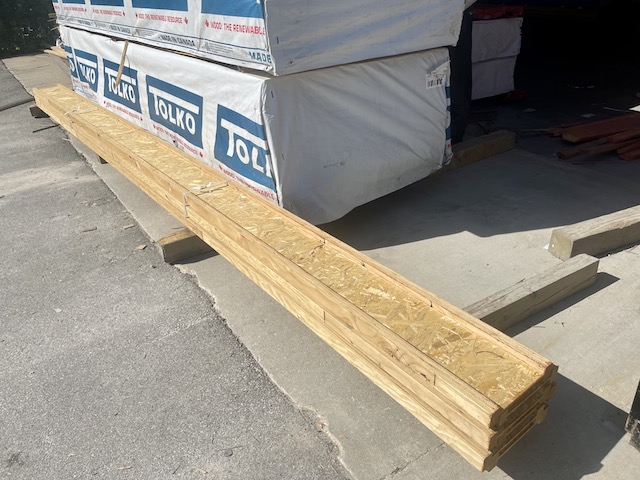
TJI® joists ready for the job site
A product of Weyerhaeuser, TJI® joists are great when looking for a high-performance floor in your home remodeling project. TJI® joists are lightweight and come in longer lengths than traditional floor joists, which makes for a quicker install. These joists can be easily drilled and cut to allow for plumbing and HVAC to pass through undisturbed. Because TJI® joists are longer than standard floor joists, they can accommodate more unique floor plans. They are also extremely stable which can help them resist warping, twisting and shrinking that can lead to squeaky floors.
Metal Studs
While homes are traditionally built with a wood frame, you can also opt for a metal frame. If you’ve ever seen a commercial building under construction, you’ve probably seen the exposed metal framework. There are several reasons why these buildings opt for metal studs over traditional wood framing:
Moisture and humidity do not make metal studs warp or rot
Highly durable and able to withstand severe weather
They can be termite resistant and eliminate the need for pest control
Steel studs are a green product because steel can be recycled
Metal studs do not emit volatile organic compounds (VOCs)
Sometimes available during lumber shortages or during price instability
While metal studs are typically used in the construction of commercial buildings, they can also be used in building a new home or a home remodeling project.
Sheet Goods
Sheet goods are the panels used in floor, wall and roof assemblies of a home or commercial construction. These or panels are attached to the already-installed lumber framing of the structure. Sheet goods are used so that other materials may be applied to it, such as insulation, siding, roofing or flooring. There are different materials used in the manufacturing of sheet goods, with each holding their own unique advantages.
AdvanTech®
AdvanTech® is our first choice subflooring sheet good at LaBonte Construction. It possess moisture protection throughout the entire panel and is precisely engineered to ensure that every panel fits together easily. Because it is resistant to moisture, there is less impact from weather exposure during the framing process.
AdvanTech® subflooring used in a home remodeling project in Whitefish Bay / LaBonte Construction
Because of the way it is manufactured, AdvanTech® possesses more wood than other types of sub-flooring materials like OSB or plywood, which gives it more strength when compared to those other materials. It allows you to use hardwood flooring in your home remodeling project, whereas you should not use hardwood flooring with OSB. Using the AdvanTech® subfloor material, combined with their subfloor adhesive, we are able to help eliminate floor squeaks and help with sound suppression and provides a strong factory warrantee.
When it comes to subfloor panel sizes of AdvanTech®, it only comes in 4’ x 8’ boards. These boards are thicker than OSB or plywood and the minimum size used is 19/32”, with the thickest boards being 1 1/8”.
OSB
Oriented strand board (OSB) is the most commonly-used sheet good today because of its price when compared to plywood. OSB is also denser than plywood, which makes it less permeable to vapors, which can result in a slightly better-insulated home. OSB most commonly takes the form of a 4’x8′ sheet and ranges in thickness from 5/16” to 1-1/8”.
Plywood
Plywood has long been the traditional sheet good used in construction. Since the introduction of OSB, the use of plywood has declined. However, there are still many benefits to using plywood. Plywood holds a significant advantage over OSB when it comes to moisture. When plywood gets wet it tends to swell; when plywood dries out, it can return to its original dimensions. Plywood also dries out quicker than OSB, which can result in little-to-no defects to the floor or roof. There are two additional common treatments of plywood we use in the remodeling process: pressure-treated and fire-rated.
Pressure-treated plywood is plywood that has undergone a chemical treatment to make it less susceptible to rot, insect infestation, mold and water damage. This allows the plywood to maintain structural rigidity and avoid some of the common issues associated with untreated lumber.
Fired rated plywood is specially treated with chemicals as well, but these chemicals provide a physical barrier to the spread of flame. The wood chars but does not oxidize, which can significantly reduce the spread of a fire.
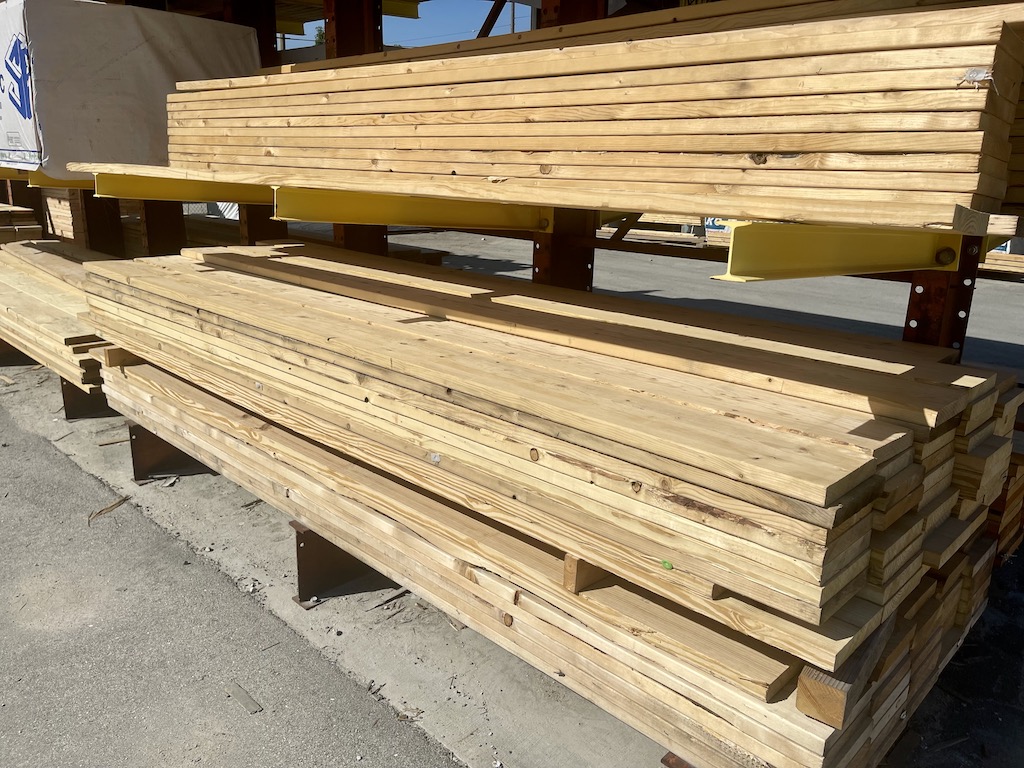
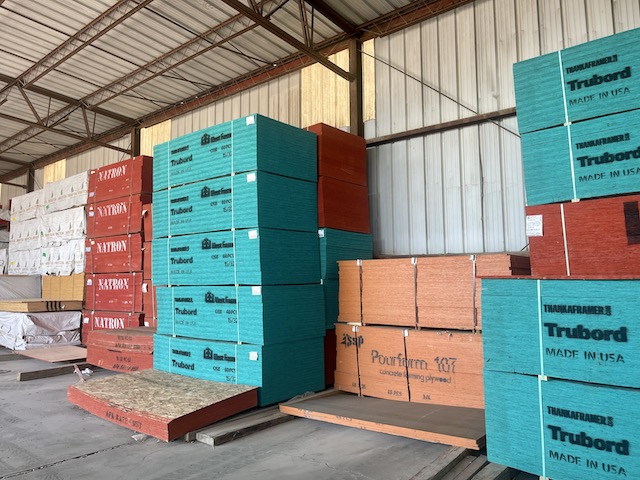
OSB and plywood boards at a lumber yard
ZIP System® And ZIP System® R-Sheathing
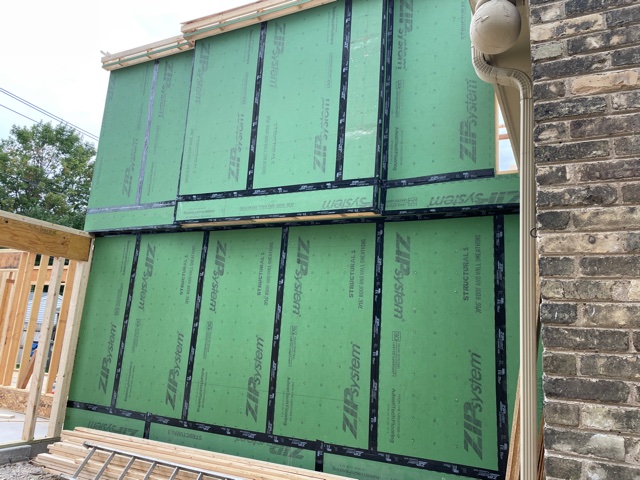
ZIP System® sheathing is a favorite of ours at LaBonte Construction. Another product of Huberwood, ZIP System® sheathing provides a continuous air barrier for your home as well as thermal resistance. One of the biggest benefits to ZIP System® sheathing is that it is water resistant. This water resistant air barrier is built directly into the product, so there is no need for extra protection. Another great benefit is that it allows for numerous types of wall claddings including brick, siding, stucco or cedar shingles. ZIP System® sheathing eliminates the need for housewrap.
Standard ZIP sheathing in a home remodeling project in Whitefish Bay / LaBonte Construction
ZIP System® R-Sheathing is a step up in efficiency from the standard ZIP System® sheathing. R-sheathing has all of the same components as the standard ZIP System® sheathing, but it also includes a layer of foam insulation bonded to the interior. By providing this added layer of insulation, your home can remain warmer during our frigid Milwaukee winters. R-sheathing includes exterior water, air and thermal management properties all in one product. By having this installed in your home remodeling project, you can help reduce your energy costs.
Find the Best Lumber for Your Home Remodel
Having the right type of lumber for each part of your home remodeling project can help give your home rigidity and structural integrity. Along with saving on energy costs, it can add peace of mind knowing that your home remodeling project is solid. Please contact us at LaBonte Construction to discuss the best type of framing for your new home or home remodeling project.
Insulation Options For Your Home Remodeling Project
There are many different types of insulation to consider when remodeling your home. From the most common, to the most effective, we will take a look at some of the different types of insulation we use in the home remodeling process.
Remodeling With Fiberglass Insulation
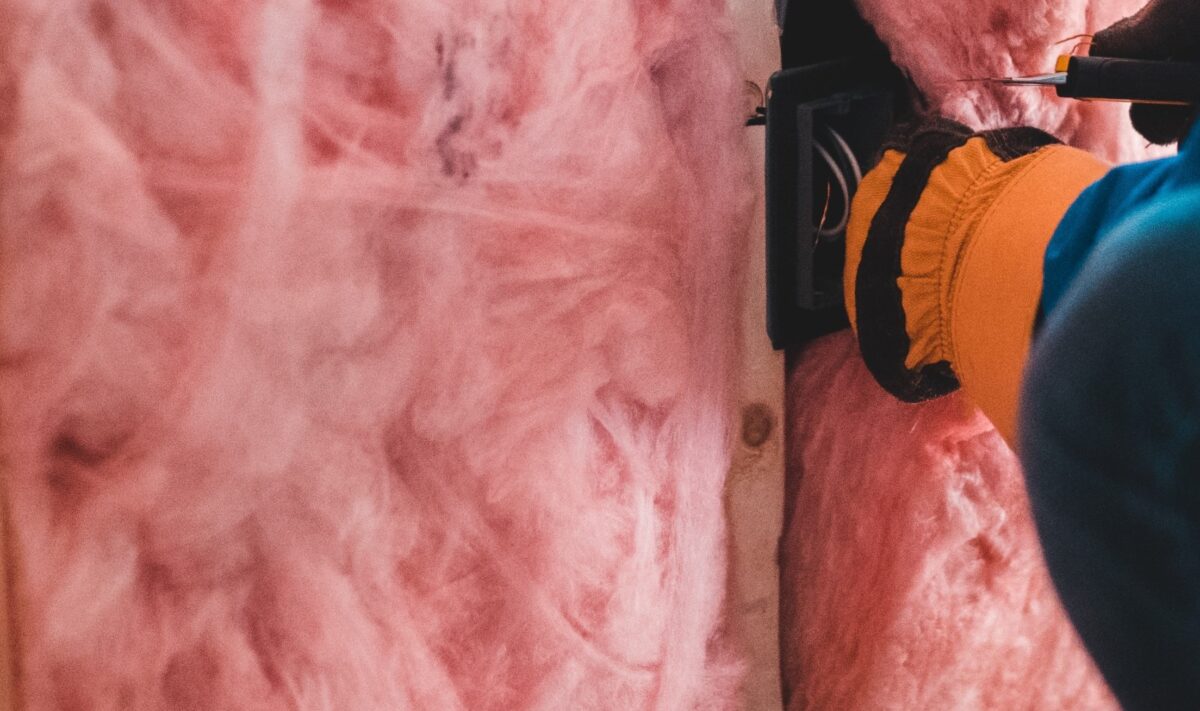
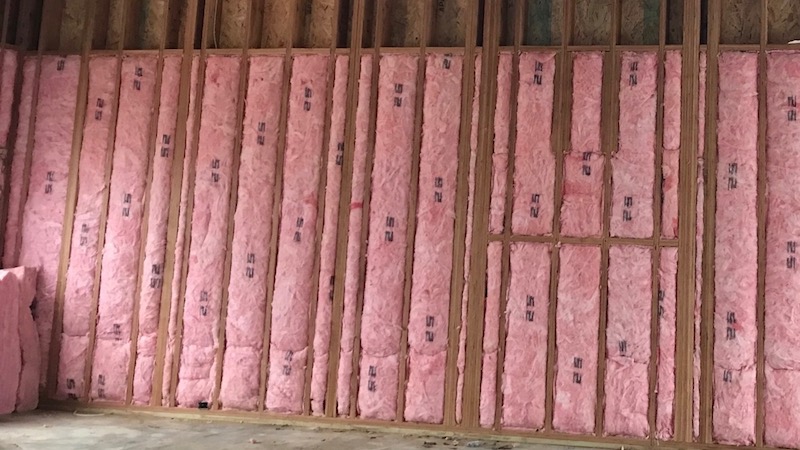
Fiberglass is the most common insulation material used today. It is the material LaBonte Construction uses most when insulating a home or home addition. Made from fine glass fibers, fiberglass insulation generally takes the form of batts, rolls and loose-fill. Fiberglass batts are also quickly installed, which provides our clients with a cost-effective option. Common fiberglass insulation brands include Owens Corning or Johns Manville. Fiberglass insulation meets code by having adequate thermal properties and can even provide some acoustic dampening.
Fiberglass insulation in a residential sport court in Whitefish Bay, WI
There are several benefits to using fiberglass insulation. It is the most cost-effective, most readily available, it meets code and it is easy to work with. Fiberglass insulation comes in all off the necessary joist spacing sizes, R-Values and facings which makes it easy to find the right option. Because it contains sand and recycled glass, fiberglass insulation is naturally noncombustible.
Remodeling With Spray Foam Insulation
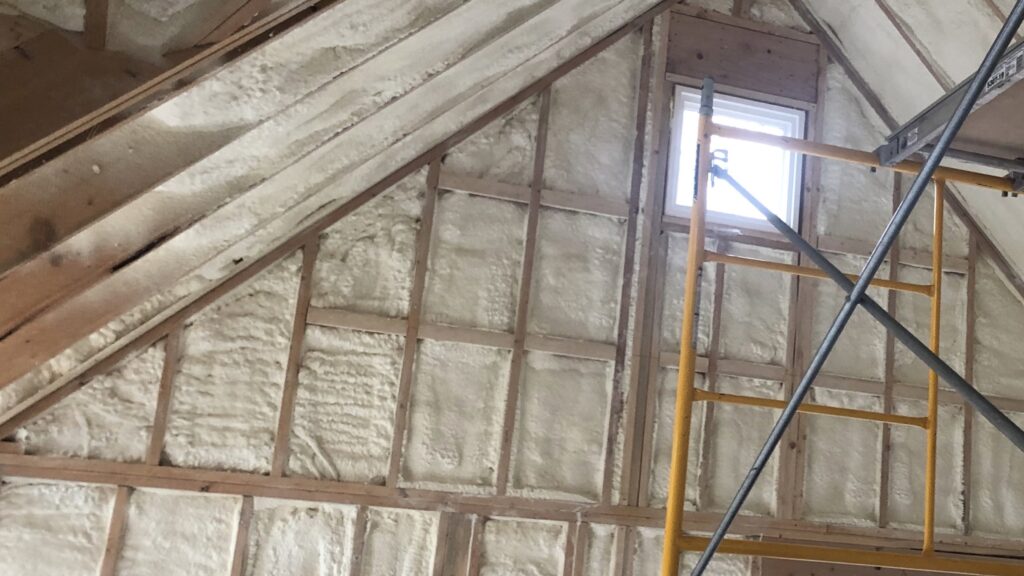
The second most common type of insulation we use in the remodeling process is spray foam. Spray foam insulation is used to seal wall, floor and ceiling cavities against air movement. If applied correctly, spray foam never loses its shape over time. It will not compress, sag nor settle. The foam is made from organic chemical compounds derived from petroleum extracts. Although that may sound dangerous, it is considered environmentally safe and one of our favorite options for maximum efficiency.
Spray foam insulation can help reduce high energy bills because the foam prevents air leakage. It can also helps prevent ice dams, which can be an issue for some Wisconsinites. The reduced airflow that spray foam creates helps prevent drafts and cold floors. A tighter envelope can lead to a more energy-efficient home.
There are two main types of spray foam insulation: Closed Cell and Open Cell.
Closed Cell
Closed cell spray foam insulation creates an air seal within the home and provides continuous insulation. We use closed cell foam regularly at LaBonte Construction, and Johns Manville Corbond III® is one of the most common closed cell options we use. It can be applied to open cavities of new homes, existing homes, pole barns and commercial buildings. Closed cell foam is durable, and can be left exposed without worrying about damage to the foam. It is unique in that it does not require a roof to be vented during the remodeling process, and the entire home envelope can be sealed which creates a tighter home.
Closed cell foam is waterproof and limits air leakage where it is installed. Closed cell foam’s higher R-Value per inch of thickness makes it a great option in older homes that have shallow joist cavities. This may not allow for traditional insulation to achieve code without additional furring and carpentry, which may be costly and reduce precious ceiling height.
Open Cell
Open cell spray foam insulation is generally applied to open cavities in any structure. Just like closed cell foam insulation it creates an air seal and provides continuous insulation. It is most commonly used in new homes, existing homes and pole barns. Open cell foam is light, pliable and can expand up to 100 times in volume to fill every crack and crevice where it is sprayed.
Homes naturally shift and settle over time, and open cell insulation will move with the structure without cracking or pulling away from the studs. Unlike closed cell insulation, open cell foam allows moisture to move through it, but it does not soak up or retain the moisture. Because of its composition, open cell foam can dry if the building envelope is properly engineered.
Mineral Wool: A Favorite Of LaBonte Construction
Mineral wool, sometimes referred to as stone wool or ROCKWOOL®, has been around for decades with a proven track record. First patented in the United States by John Player in 1870, mineral wool was first commercially produced in Germany in 1871. It wasn’t until the 1970’s that mineral wool became a common insulation option. Mineral wool is widely used in Canada and Europe, but saw a decline in its usage in the United States over the past thirty years. However, more recently, mineral wool has made a comeback in the U.S., and is now a favorite choice of ours.
Mineral wool is made by melting down basalt stone and recycled slag from steel mills, which is then spun into fiber and formed into batts or boards. It is a terrific option for damp spaces and exterior uses, and it also has greater health benefits when compared to other options.
Mineral wool is also denser than other types of insulation which makes it effective for soundproofing. It is fire resistant and is often used as fire stopping around holes and pipes between floors during remodeling projects. Like open cell foam, mineral wool does not absorb water which discourages the growth of mold and mildew. Containing up to seventy percent recycled materials, mineral wool is an eco-friendly option. Mineral wool also possesses a higher R-value per inch compared to that of traditional fiberglass insulation, making for a warmer home.
Denim Insulation
Denim insulation is not the most widely-used insulation but is one of the highest quality options. Made of scraps and clippings that come from the manufacturing of denim clothing, this insulation is extremely sustainable as it contains around eighty-five percent recycled materials. Its natural cotton fibers are also one hundred percent recyclable at the end of the insulation’s usable life. Manufacturing denim insulation requires much less energy than traditional fiberglass insulation, and is considered an efficient manufacturing process.
As well as being an eco-friendly alternative, denim insulation provides better acoustic dampening when compared to other insulations. Denim insulation can provide up to thirty percent better sound dampening than traditional insulation, making for a quieter home. It also contains no volatile organic compounds (VOC) or formaldehyde, which can contaminate a home’s indoor air. Denim insulation is treated with an EPA-registered fungal inhibitor which protects it from mold, mildew and pests. The insulation is also treated with an EPA-approved borate solution that makes it flame resistant.
AeroBarrier
If you’re looking to insulate your home without having to take apart walls, AeroBarrier is a great option. AeroBarrier can seal air leaks in your home up to ½” in size. Using a blower door, the space is pressurized. From there, a computer controls the rest, including the temperature, pressure, humidity and the distribution of the sealant. Another perk of AeroBarrier is that you can see the results in real time as the blower door test improves.
After the sealing process, work can resume within thirty minutes. The overall process (pre-sealing, preparation, setup/seal/breakdown, cover removal, post test and additional cleanup) takes anywhere from 14-22 hours, depending on the size of the space you are getting air sealed. AeroBarrier is best used in new construction and whole home remodeling projects.
Interior vs. Exterior Insulation
Interior
Interior insulation is required by code, therefore choosing the right option for your home is important. One of the perks in searching for the right interior insulation for your home is that there are many different kinds, so finding the right option shouldn’t be too difficult.
Insulating interior walls can reduce sound transfer from room to room. Interior insulation also helps prevent mold and mildew from building within the walls. Finding the right interior insulation for your home can also help you reduce your energy costs. If less heat escapes from your home you can expect your energy bills to drop.
Exterior
Having exterior insulation in your home is extremely helpful. At LaBonte Construction, we advocate the use of ZIP R-sheathing for your exterior insulation. ZIP R-sheathing is the easiest way a client can add exterior insulation during a remodeling project. The biggest benefit to ZIP R-Sheathing is that it is extremely effective at preventing thermal bridging. It is also handy if you live somewhere noisy, as a ZIP R-sheathing can help dampen some of the outside noise.
ZIP sheathing in a home in Whitefish Bay / LaBonte Construction
Whether building, remodeling or adding an addition to a home, look to use exterior insulation whenever possible. Installation can be tricky, and is best left to the professionals.
R-Value Requirements
Each type of insulation is assigned an R-value. An R-value is the measure of an insulation’s ability to resist heat traveling through it. The higher the R-value, the better the insulating performance and resistance to heat loss. In the United States (and its territories) there are eight different zones that are used to determine the required R-value for insulation.
R-value map from the Department of Energy
Below are the R-value requirements from the Uniform Dwelling Code (UDC) for different parts of a structure in Zone Six (Milwaukee County’s Zone):
Attics: R49-R60
2×4 Walls: R13-R15
2×6 Walls: R19-R21
Floors and Crawl Spaces: R25-R30
Final Thoughts
Insulation is a key part of the building and remodeling process. Finding the right insulation for your home can make your home more comfortable. Please contact us at LaBonte Construction to discuss a remodeling project incorporating the best insulation practices.
10 Ways To Make Your Bathroom Remodel Feel Luxurious
At LaBonte Construction, we focus on delivering the highest quality remodeling projects to our clients. Even if you do not have an unlimited budget, incorporating some of these ideas into your bathroom remodel can be a cost effective way to make your bathroom stand out.
Adding Upgraded Angle Stops and P-Traps
Angle stops are the valves that act as the shutoff for each of the fixtures in your bathroom. Traditionally, there is one located on the supply to your toilet. There is also one on both the hot, and cold sides of your sink’s faucet. If you have a standalone bidet, there would also be an angle stop on the supply line to that fixture. Usually, production builders would install the least expensive stop code allowed. These stops would require several turns to close. These valves often omit quality brass internals in favor of plastics for cost saving measures.
At LaBonte Construction, our standard is a solid brass quarter turn valve. This angle stop requires you turn it 45 degrees from on to off, and also gives the handle a better chance of not failing over time. It is vital that these valves work years later to avoid flooding when you have a leaking faucet, or to avoid draining the water lines of the entire home during routine maintenance.
P-Traps
As another cost saving measure, builders use a PVC P-Trap to connect the sink drain to the waste lines in the wall. Although we think these are fine for the inside of a vanity where they will not be seen, they are ugly and can cheapen your space when exposed. A pedestal or console sink does not do a great job of hiding the pipes under the sink. We recommend considering other options to make your bathroom remodel look more refined.
Our standard inclusions are great for vanities, but designers and clients often appreciate using upgraded, decorative angle stops and P-Traps in their projects. These plumbing upgrades are most common on toilets and sinks, where valves are visible and can be appreciated. Not only are several styles of handle offered, but also all of the popular finishes. This allows our remodeling clients to match the angle stop to the finish of their plumbing fixtures.
Make sure to let us know you want upgraded stops at the beginning of your project because the builder needs to install the plumbing in a way that allows for these upgraded valves. To complete the look, our plumbers will utilize hard-piped supply lines and premium escutcheons around the pipes.
Custom Medicine Cabinets
LaBonte Construction’s cabinet shop can fabricate a medicine cabinet to match your space. Stacked moldings with butt hinges and a hand-brushed oil finish can give your bathroom an old-world feel. Other clients may desire a modern look and have us fabricate something like a sleek walnut frame. Choosing between a flat or beveled mirror can also make a big impact. While usually not a large portion of the budget, the mirror takes up a lot of the total surface area in your bathroom remodeling project. Quality execution is essential when tying the space together, as well as providing the perfect place to store your toiletries.
Painting Light Fixtures and Fans
When trying to achieve the most luxurious feel for your bathroom remodel, we suggest getting rid of white eyesores on the ceiling (unless your ceiling is white). Usually, it is easy and inexpensive to paint the plastic trims around can lights and bath fan covers. Our qualified painters prepare these plastic and metal surfaces, then apply paint that will help the electrical fixtures vanish into the ceiling in a stylish way.
Upgrading Light Switches
Upgrading light switches is one of the least expensive ways to add luxury to your bathroom remodel. It can have a big impact on the way you enjoy you newly remodeled space. In a bathroom that is meant to look historic, we recommend reproduction push-button light switches. They look like the originals, but increase safety and include the ability to add a dimmer function.
If your bathroom is more modern or high-tech, you can select a smart switch that allows for smart phone and home automation integration, programmable moods, and can even control the shades.
Others prefer an industrial or masculine look, and opt for a machined-metal light switch like the offerings from Buster & Punch. Adding decorative or sleek switch plate covers that match the finishes in the bathroom can complete the look, and turn an eyesore into a focal point.
If you are remodeling your bathroom and want the switches to disappear, it might be worth investing in a solution like the offerings from TRUFIG or Forbes & Lomax.
Using an Oriental Rug
Most people use a bath mat that coordinates with their towels in their newly remodeled bathroom. There is nothing wrong with that. If you are looking for the perfect bath mat, we love the offerings from Waterworks. You might, however, be missing an opportunity to express yourself and add visual interest to your new space. Oriental rugs in bathrooms have been popular for years and can add color to the monochrome bathrooms so many remodeling clients request.
It is a popular belief that Oriental and Persian Rugs are very expensive, and in many cases that’s true. However, size is a major factor in the price of many of these rugs. Your new master bathroom gives you the opportunity to buy a luxury item in a smaller size. Oriental rugs may not be a good option for your living room where your kids or pets might destroy them, but may be a worthwhile investment for your bathroom.
If the local rug galleries do not have a rug you love, we have had success buying them at auction in Chicago, at resale stores and at local estate sales. Buying your bathroom rug this way can involve a little more knowledge, and will likely require coordinating the cleaning of your new rug. Additionally, your new rug should have a pad so you do not slip. Please make sure to check with the tile manufacturer if your floor has a temperamental natural stone in order to avoid staining from dye bleed or materials in the pad.
Adding Custom Shades
While we are not usually involved in the selection of window treatments as a remodeling contractor, we do assist with coordinating the installation of specialty shades and blinds. In addition to adding beauty through another texture and material, bathrooms benefit tremendously from harnessing and controlling natural light. The right lighting can positively affect your mood, help you while you shave or put on your makeup, and present your newly remodeled bathroom in the best light.
For privacy, many of our clients select plantation shutters or top-down bottom-up blinds. Clients with an interest in home automation can tie their blinds to their lighting scenes. With the touch of a button or by schedule, they can open and close their blinds to suit their needs.
Heated Towel Racks
Much like a heated floor, a heated towel rack is a luxury some can’t live without during our cold Milwaukee winters. There are three types of towel racks we install: electric, central/hydronic, and dual-fuel. Electric towel racks use a heating element that is on a timer or a switch to heat the towels. A central or hydronic towel rack is hooked up to your home’s boiler and can act as an additional heat source in your bathroom, often requiring no additional energy. A dual-fuel towel rack is connected to your boiler and is supplemented by an electric element when the boiler system is not on.
Upgrade Your Baseboards
Most homes in the U.S. have a 3.25” painted wood baseboard. In some applications, this type of baseboard fits with the style of your home, but in others, a taller or more ornate option would better fit the bill. Together with the client or designer, we can work to select a more significant baseboard, mill a custom baseboard in our shop, expertly install a tile baseboard to match your bathroom tile, or combine several stock molding profiles from a lumber supplier to create a one of a kind stacked baseboard.
Add Decorative Cabinet Hardware
Decorative hardware can be subtle or make a statement. When well executed, hardware can tie a bathroom together and have a huge visual impact. Often described as “jewelry for your cabinets”, decorative hardware comes in all shapes and sizes. When compared to a kitchen, bathrooms usually require fewer pulls and knobs which allow many of our clients to splurge without impacting their budget while having us install something really special. With the variety of shapes, sizes and price points, most of our remodeling clients find hardware is a great place to inject their personality into their bathroom remodel.
Heated Tile Floors
One of the most popular upgrades clients request are heated tile floors. There is nothing worse in a cold Midwestern winter than getting up early and stepping onto a chilly floor. Luckily, you do not need a boiler to have heated floors. There are several manufacturers of electric in-floor heating. We work closely with the architect, suppliers and HVAC contractors to make sure we specify the correct system to provide safe, reliable underfloor heating for the life of your bathroom.
Our current favorite system not only warms the floor, but also provides uncoupling, load support and vapor management for the most solid tile installation possible. These in-floor heating systems can be put on a schedule like a traditional thermostat, and some can also be connected to home automation systems.
Finishing Touches
LaBonte Construction has focused on high quality remodeling since our founding in 2006. Our motto is “Home is in the details”, and in no place is this more evident than in the details we incorporate into our client’s bathrooms. When designing and budgeting for your next bathroom project or addition, it is important to onboard the builder at the early planning stages. This allows you to make sure you have an accurate budget, but also take advantage of our years of experience. We have done hundreds of bathroom projects and can help you create the heirloom quality space of your dreams.
Source: Southern Living Idea House 2016 / Photo Credit: Laurey W. Glenn
Learning about a Southern tradition that has made its way to our Milwaukee remodeling projects
Blue porch ceilings are a Southern tradition in the United States, but they are becoming increasingly popular all over the world, including in our Milwaukee remodeling market. A blue porch ceiling can be a great pop of color when you are remodeling the exterior of your home. They can also enhance curb appeal and create a sophisticated and calming entryway.
Piazza blue, or “Haint” blue is a soft, blue-green paint color first documented in antebellum plantations in the early 1800s. It is thought to have quickly spread to coastal communities in Georgia and South Carolina. Not only would ceilings be painted blue, but also shutters, porches and windows. This southern staple has inspired designers and homeowners to iterate on this tradition. It has now become common to use many shades of blue to enhance exteriors all across the country. The following historical context might help you consider ditching your brown beaded porch ceiling in favor of a cool blue.
Why Porch Ceilings Were Traditionally Painted Blue
Descendants of African slaves brought to Charleston, SC in the 1500s, the Gullah people have a strong belief in mysticism. The word haints translates to “wandering spirits”, which the Gullah people believe can do harm to the living. A blue porch ceiling was believed to ward off the evil spirits by creating the illusion of water, which the spirits cannot traverse. This is where the famous Southern blue gets its unique name.
Blue painted porch ceilings were a tradition often found on relative’s homes.
There is speculation that haint blue was merely a design choice which points to why blues are becoming popular with today’s design-savvy remodeling clients.
Ceiling blue imitates the color of the sky so that at night, or on a dark day, the glow of the porch light gives the feeling of being under a clear sky on a beautiful day. When the sun sets early, it never hurts to give the impression of a longer day.
Some believe the blue color confuses insects such as spiders and wasps, as well as birds who mistake the ceiling for the sky and in turn seek other overhangs under which to build their homes. Antique paints were mixed with lye, a metal hydroxide commonly associated with traditional soap production, which is a natural bug repellent. The use of lye in milk paints points to the paint and not the color having this effect on wildlife.
Blue is a soothing color that cools and evokes calm.
Popular Blues For Your Porch Remodeling Project
Reproducing the perfect “Haint” blue can be difficult and it is prudent to test a few colors instead of making your choice from a color deck. As with any paint color, the lighting, sun exposure, substrate, sheen, paint age, application method, reflection of surrounding landscape and decor can all affect the perceived color that you loved at the store.
A color chart showing some of our favorite haint blues / LaBonte Construction
We suggest trying a few samples on your remodeled porch before selecting a color. After you have selected the color, it is important to pick the right sheen. Most commonly we see clients select a satin or eggshell finish, but those with an older home and significant flaws in their wood may select a flat, or matte finish to hide imperfections.
A few tools we use in the painting process
10 Steps For The Application Of Your Favorite Haint Blue Paint
While most of our clients elect to have their blue ceiling painted by us as part of a larger or whole house remodeling project, the method we use can be employed by a careful weekend warrior.
Decide if a latex, or an oil based paint is right for your application. When we build a new porch or are repainting a recently added porch, we usually opt for a latex paint. If the ceiling is metal, currently stained, or if the beaded ceiling is a species of wood like cedar that leaches tannins, we recommend an oil paint.
Clean the surface. If there was a grill or something else which caused grease or soot to build up, washing the surface with TSP or another similar cleaner will be necessary for proper paint adhesion.
Scrape any lose paint or finish off with a carbine scraper. Many of the homes we work on are old, so please be sure to follow lead-safe practices so young kids do not get sick.
Replace or add nails to any sagging beaded ceiling panels or where the original fastener is rusting.
Patch any new nail holes with wood filler recommended for outdoor restoration work.
Sand all nail holes and rough areas down to a 120 grit sandpaper. Although counterintuitive, when preparing a surface for painting such as woodwork or cabinets, we do not recommend sanding past 120 grit. The slightly rougher surface promotes good paint adhesion.
Caulk any cracks and seams with a long-life paintable siliconized acrylic latex sealant. We like Power House by Sherwin-Williams which has a rated lifespan of 60 years!
Prime the scraped areas. Oftentimes on old projects where there are several layers of paint, the scraping process will remove large chunks of paint. To fill these, we use a “high build” primer. Our favorite is XIM PEEL BOND by RUST-OLEUM, which is produced right here in Wisconsin! We often apply more than one layer to achieve a level surface. To make the primer as effective as possible, the paint store can add tint to the primer which reduces the number of finish coats needed for coverage when changing colors.
To achieve a classic look, we often start with a roller and back brush the grooves, but the final coat of paint should be done exclusively with a brush to achieve the old southern look this color scheme deserves.
Apply at least two finish coats over the primer until you achieve the desired build for effect and longevity.
Adding exterior blue accents during your remodeling project can add curb appeal, connect you to American history, or brighten up your outdoor living areas. If you would like to incorporate a fun color into your next exterior remodeling project, please contact us to discuss your options.



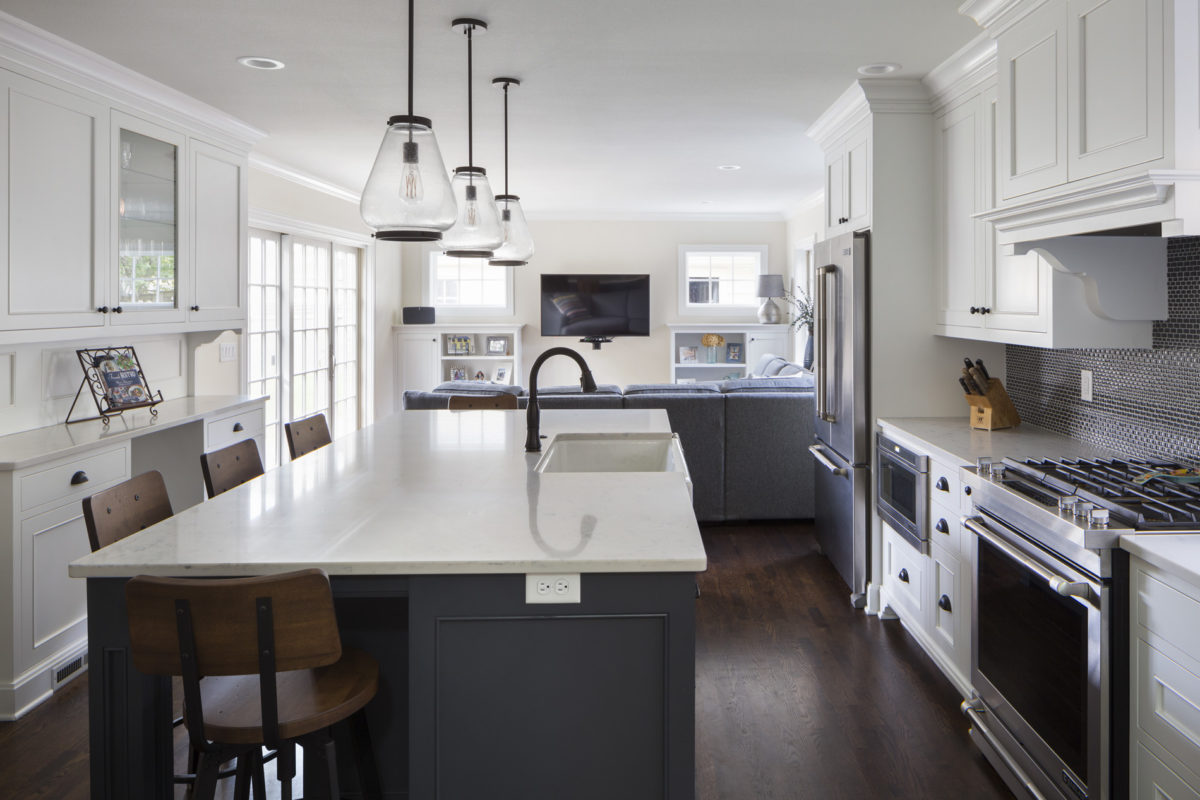
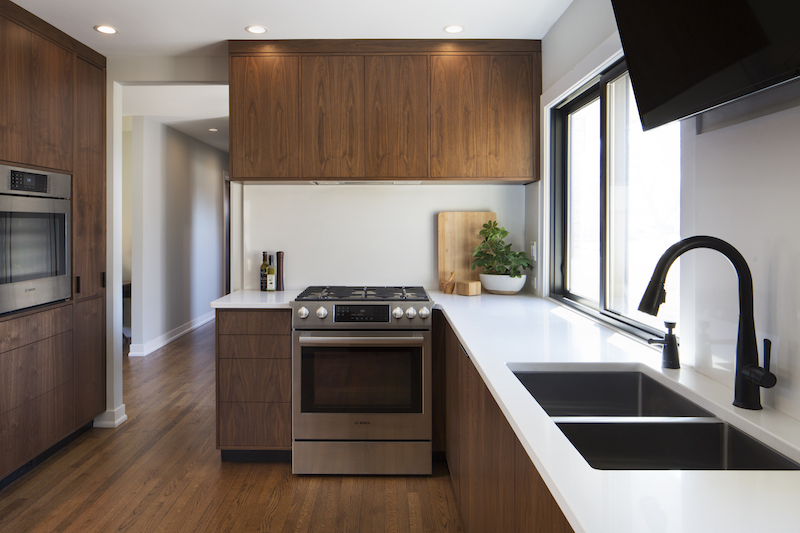
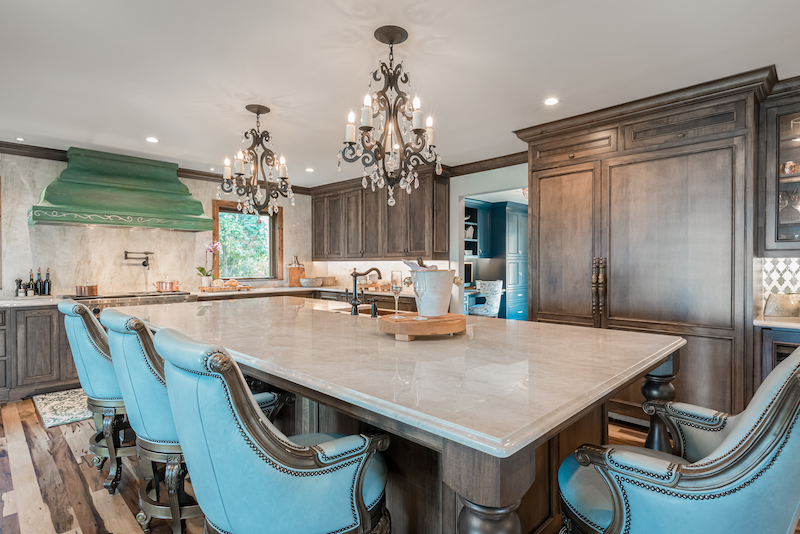
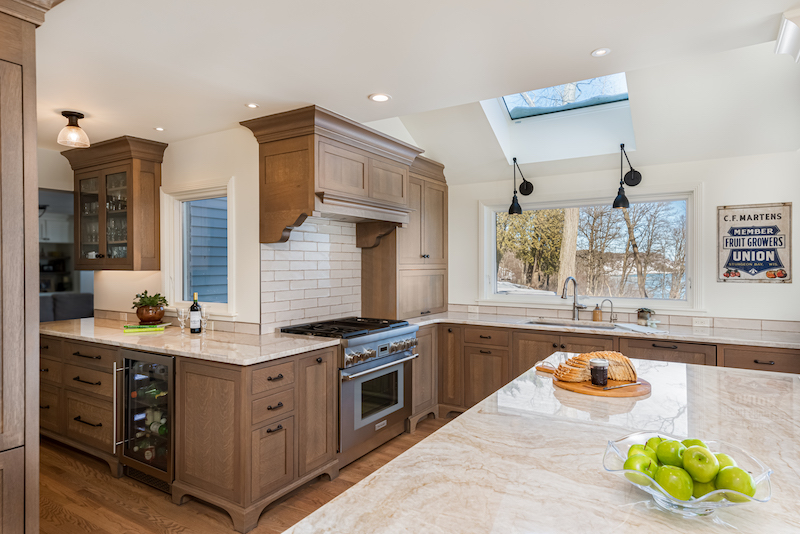
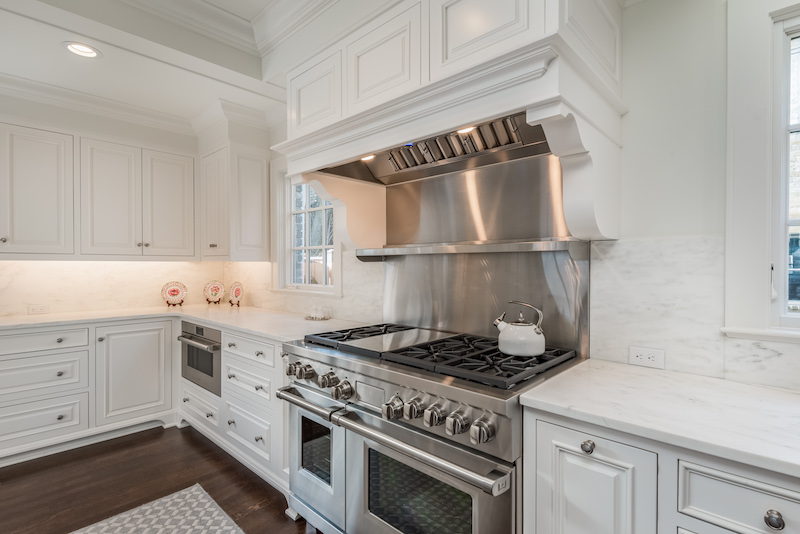
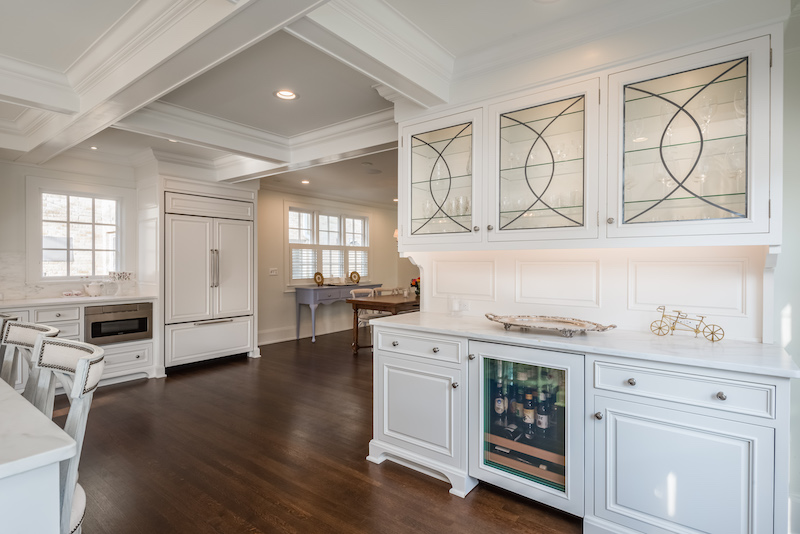
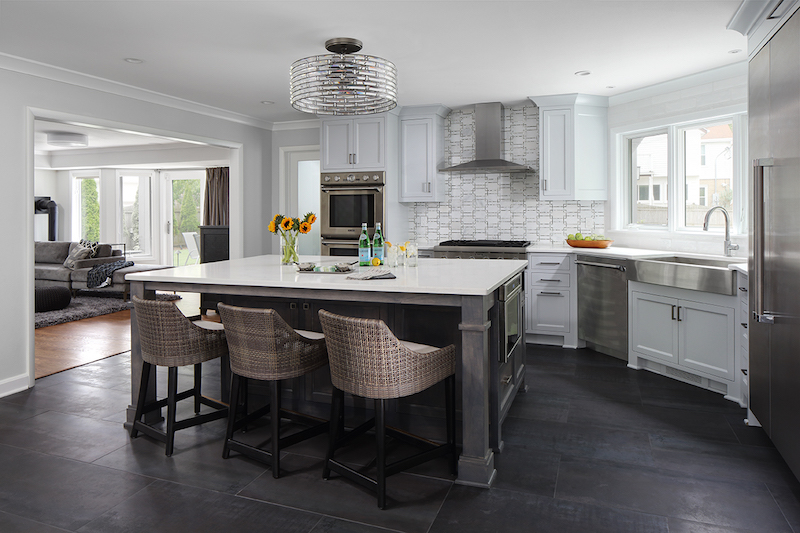 The
The