Adding a Dormer to Your Home

Adding a dormer can be one of the best home remodeling projects for adding value to your house. Attractively designed dormers increase the appeal of your home from the outside. And they create more living space, natural light, and functionality on the inside.

A dormer can transform a dark, stale attic room into a vibrant, well-ventilated living space for hobbies and activities. Or a calming area for reading, meditating, or sleeping.

A dormer is a structure built out from the plane of a sloped roof, often including a window. The dormer has its own roof, siding, and sometimes even gutters integrated with the home’s existing elements.

A dormer—named after the Latin term “dormitorium” (a place for sleeping)—is often used to convert an attic space into a bedroom.

Adding a Dormer: Dormer Styles

Many of the following dormer styles are derived from roof styles. See our recent article on common roof types and more detailed discussion on roofing designs and materials.
Gable Dormer for Home Remodel Milwaukee

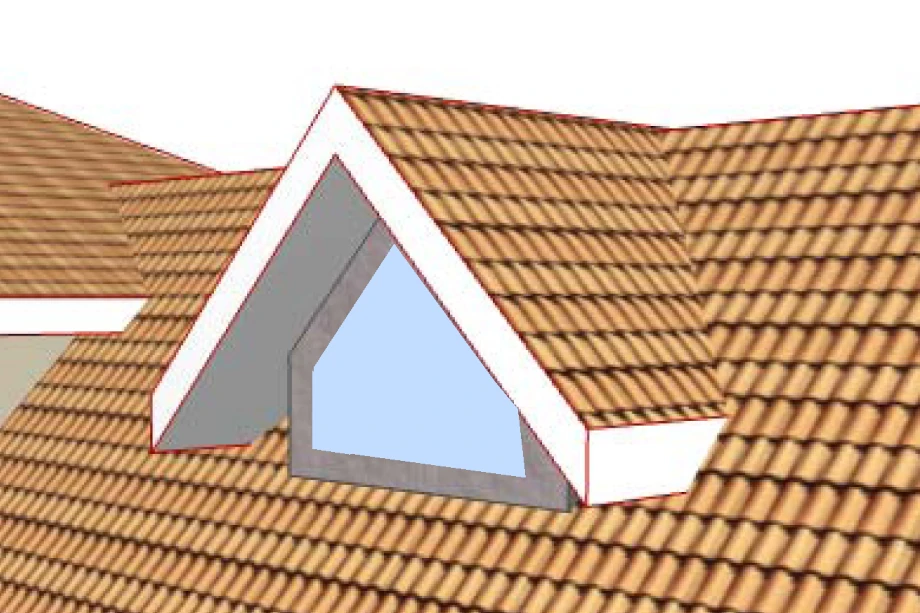
Gable dormer / Wikimedia Commons

Gable dormer

The most common style of dormer window, it features a gable—a triangular roof with slopes of equal pitch—over the window. Often found on Cape Cod and Colonial homes, they naturally complement the common gable roof.

Gable dormers are typically built along the slanted sides of the main roof, called eaves.

Gable dormers give the home a colonial revival look, with the windows emerging from the roof and adding character to what may be a flat, dark surface on the front of the house.

Shed dormer

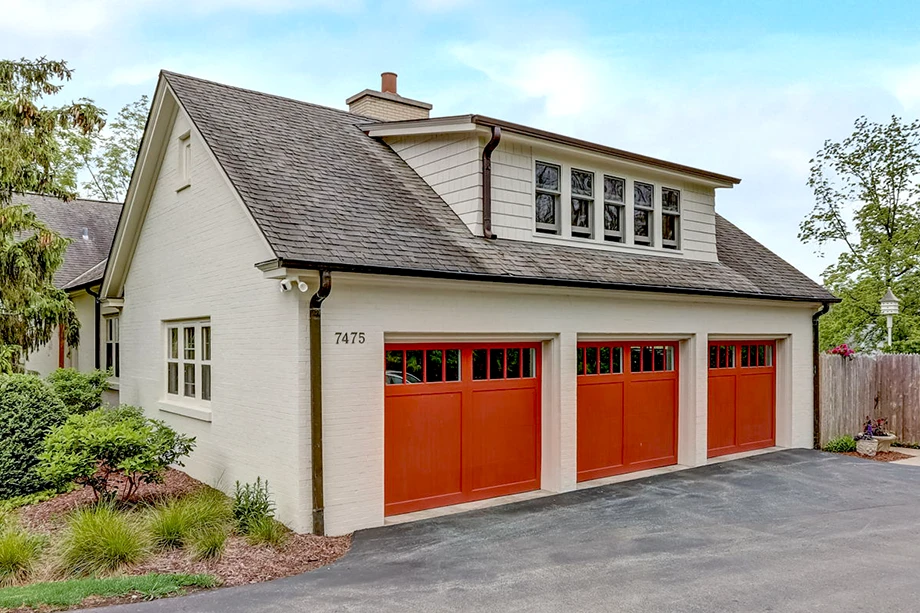
The shed dormer (see featured image above) has a single roof panel sloped in the same direction as main roof, but with a much shallower pitch. It is typically used with Craftsman and Contemporary architecture.

This simple design is a great choice for increasing total floor space, when adding bedrooms or other large living spaces.
Hip Dormer for Remodeled Home

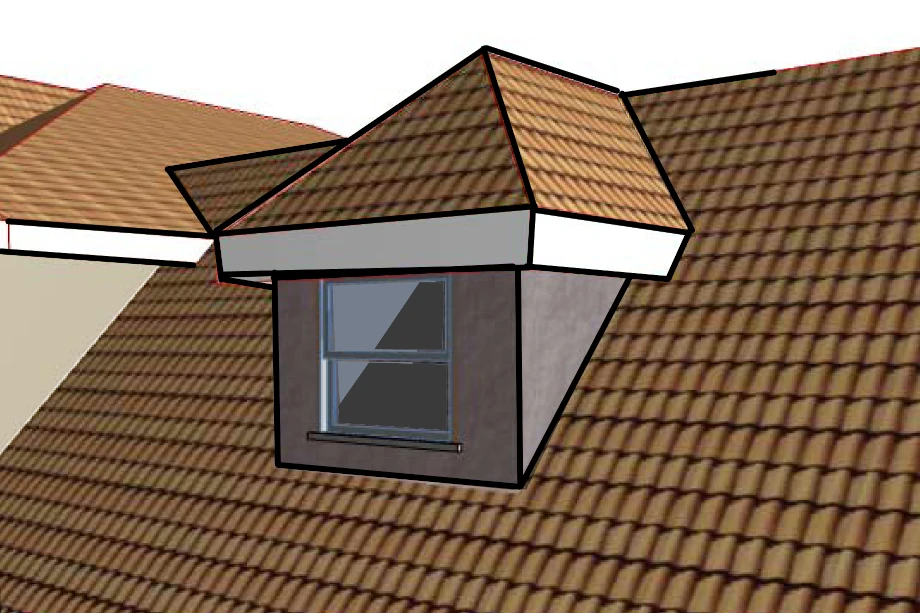
Hip dormer / Wikimedia Commons

Hip dormer

A hip dormer features three roof planes—one on each side and a third parallel to the front of the dormer. Like in a hip roof, all three planes slope upward and meet at a common point at the peak.

Gambrel dormer

The roof on a gambrel dormer features a gable at the peak of the roof, but then descends into two steeper roof slopes on the sides of the roof. This gives the gambrel dormer a barn-like look.

Eyebrow dormer

An eyebrow dormer roof features a gently curved wave that extends over the window. With no vertical wall sides, it can give the impression of an eye peering out from under a hooded lid.

Bonnet dormer

A bonnet dormer has a curved roof and vertical walls on each side of the window. Arch-top windows are commonly installed in bonnet dormers to match the bonnet’s arch.

Wall dormer

Rather than emerging entirely from within the existing roof, a wall dormer is an extension of the exterior wall below. The siding on the main part of the house continues up into the dormer, making the front of the dormer flush with the front of the house.

The roof and sides of a wall dormer can be styled in any of the ways discussed above.

Lucarne dormer

Inspired by those found on Gothic cathedrals, residential lucarne dormers are typically tall and very narrow. Most feature gable roofs above the windows.

Adding a Dormer: Things to keep in mind

Not a DIY project
Dormer Addition for River Hills Home Remodel
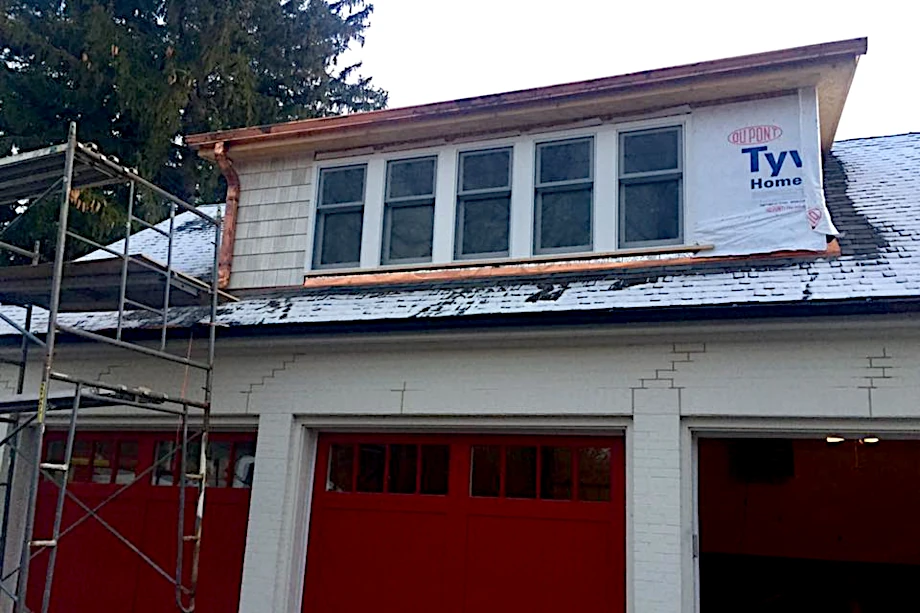
The River Hills dormer project in progress / LaBonte Construction.

Adding a dormer to your home is a huge undertaking. It involves altering structural components and installing watertight seals. If these tasks are done improperly, it can lead to unsafe living conditions and costly repairs down the road.

Make sure your house can accommodate a dormer

Depending on the type of structural roof framing in your home, adding dormers may prove difficult. Request a visit from the experienced contractors at LaBonte Construction to discuss the feasibility of a dormer addition project.

You may need to install additional structural framing in order to support new dormers, which will significantly add to the overall cost.

If an inspection reveals that you need a new roof, integrate both projects together. You may have to replace the roof regardless of its condition, based on the scope of the dormer project.

The last thing you want to do is add a dormer to your home and then deal with leaking in your new home addition. Instead, get an inspector to check out the roof before starting on a dormer addition.

With any dormer house additions, it will take the expertise of a home remodeling team to be sure that your home’s structure stays strong and unwavering. While it can be a luxury to add usable square footage to your home, you want to do it in a safe and sensible way.

Draining

When you place an entire structure on the eave of your roof, you may run into drainage issues.

You may need to install a gutter or other drain assistance to ensure that the roof stays in good condition and is free from any debris or buildup if water gets trapped up there. Talk with your contractor about the obstacles that a dormer addition may pose to roof drainage.

Increased Leak Risk

Like chimneys, dormers penetrate the main roof, which means there’s a greater likelihood of leaks. Flashing—a method of interweaving shingles and sheet metal—reduces the risk of leaks. But increased vulnerability to leaks remains.

Permits

Depending on the number of construction or remodeling projects in your area, you may face delays when obtaining permits. An experienced contractor will secure the correct permits and ensure that your project proceeds safely and efficiently.

Cost

How much does it cost to install a dormer house addition? The truth is that it could range anywhere from $20,000 – $30,000. Here are some factors that go into a dormer house addition cost:

  • Square footage.
  • Type and quantity of dormer windows.
  • Reinforcement of existing structure.
  • Finishing remodeling costs.
  • Roof replacement.

Once you have considered all the details that will come up during a dormer house addition, you can be prepared to expect the unexpected when construction starts.

Increase Your Home’s Value with a Dormer Addition

According to Angi.com, (formerly Angie’s List), most dormer additions will provide a return-on-investment of about 40% due to the increase in usable space.

If it’s time for adding a dormer to your home, contact us at LaBonte Construction.

We were voted Best of Milwaukee 2024 by Shepherd Express readers in the Home Remodeling, Basement/Rec Room Remodeler, Bathroom Remodeler, and Kitchen Remodeler categories.

Considerations for Remodeling a Condo

As a condo owner, you enjoy most of the same freedoms as an owner of a traditional house. But when remodeling a condo, you may realize that certain parts of your home don’t belong to you.

Your homeowner’s association (HOA) may respect the privacy and autonomy of each condo and its occupants. But it also must ensure the integrity of the entire structure, for the benefit of all residents.

So some items within your unit—like plumbing and electrical systems—are shared among multiple units, and considered common property.

Remodeling a condo: Know what you can and cannot do

The first step to renovating a condo is understanding the rules established by your HOA. Following their guidelines—usually called Covenants, Conditions and Restrictions (CC&Rs)—is essential during any remodeling project.

In addition to structural integrity, HOAs are sensitive to one of the most common owner complaints: noise. Minimizing noise guides many HOA policies.

For example, you may want to replace old carpeting with nice, new hardwood or laminate flooring. It’s a popular upgrade for improving quality of life and increasing resale value. But you may also have to install insulated padding beneath the floor to deaden the clicking of your high heels.

As home improvement website The Spruce points out, some municipalities require permits for renovating a condo. For example, the City of Minneapolis requires a permit for condo owners to replace carpet with any kind of hard flooring.

Projects requiring HOA approval

Condo Remodel from Wisconsin Contractors

When remodeling a condo, the following items are structurally significant for the entire building, so any alterations generally require HOA approval.

  • Interior or exterior walls
  • Structural floor
  • Ceilings
  • Columns
  • Finish flooring
  • Plumbing
  • Electrical
  • Aesthetic changes to the exterior

Projects not requiring HOA approval

Although you should always verify with your HOA, it is likely that the following items will not require approval.

  • Interior painting
  • Crown molding
  • Replacing baseboards
  • Replacing or repairing door and window casings
  • Replacement of light fixtures, outlets, and switches
  • Replacement of shower, bath, or sink fixtures
  • New floors that are the same type as the old floor
  • Built-in cabinets and new kitchen cabinets

The type of condominium you live in may influence what kind of updates you can make. If your home is considered a site condo, townhome, or planned unit development, you may have more freedom in renovating.

Some CC&Rs may require permits or formal approvals before any type of work can begin. If in doubt, find out!

Remodeling a condo: Know when and where you can do it

The CC&Rs may have specific guidelines for what days of the week and times of day renovation work can be done. Rules may also govern the hours during which materials can be delivered to the building. They may also specify certain entrances, elevators, and hallways.

Not checking on these logistical details in advance can cause massive headaches later when trying to schedule deliveries or appointments.

Measure first, move second

In addition to knowing which doors and elevators you can use, it’s important to measure their dimensions first. You don’t want to haul a large drywall panel to your condo’s elevator before you realize it doesn’t fit.

Stay in your neighbors’ good graces

Home Remodeling Regulations in Wisconsin

Cultivate and maintain a good relationship with your neighbors before you begin your remodeling project. Asking them about their experience with remodeling may give you valuable insight while also building a rapport—and their trust.

That positive relationship may be valuable if the access panel for your bathtub’s plumbing is in your neighbor’s bedroom.

And even if the access panel is within your own condo, the plumber may need to shut off the water. Will that affect your neighbor’s water supply?

Remodeling a condo: Give yourself a long timeline

Given all the requirements your CC&Rs may have, and the time required to secure the approvals and permits, it’s important to have a flexible timeline. Carefully estimate how long you think everything will take—and then add at least two months.

Be flexible

Some owners enter a project with very specific ideas about the finished product. They may have their heart set on a particular fixture or a specific type of faucet.

However, being open to suggestions from experienced professionals—or a creative friend or neighbor—may guide your project in exciting, unexpected directions. A cost savings here may create a new opportunity there.

Also, if you’re planning extensive renovations, you may want to find a place for you and your family to stay during the process.

When to consider hiring a contractor

Even if you think you can renovate a condo yourself, the job presents some unique challenges that hiring a contractor can solve:

  • Navigating your HOA’s regulations can be nerve-wracking. Let a professional contractor review your CC&Rs with you to ensure the renovations are within regulations.
  • In a condo, the space is limited, finite, and shared. An experienced contractor specializes in maximizing space and working within the restrictions of multi-family housing.
  • CC&Rs often limit renovation work to normal weekday business hours, to minimize noise on evenings and weekends. Rather than choose between your first-shift job and your renovation, you may want to hire a contractor instead.

When you’re ready to begin remodeling a condo, please contact us at LaBonte Construction.

We were voted Best of Milwaukee 2024 by Shepherd Express readers in the Home Remodeling, Basement/Rec Room Remodeler, Bathroom Remodeler, and Kitchen Remodeler categories.

Types of Bathtubs

Our guide to different types of bathtubs will help you make the best choice for your bathroom remodel.

In a busy family home, bathtubs must be versatile. They can be a luxurious, peaceful retreat from the world after a long day. Or a chaotic washing station for energetic kids or anxious dogs. Or anything in between.

Types of bathtubs

Alcove or Recessed Tub

Alcove Bathtub in Milwaukee Home Remodel
Alcove bathtub. / LaBonte Construction.

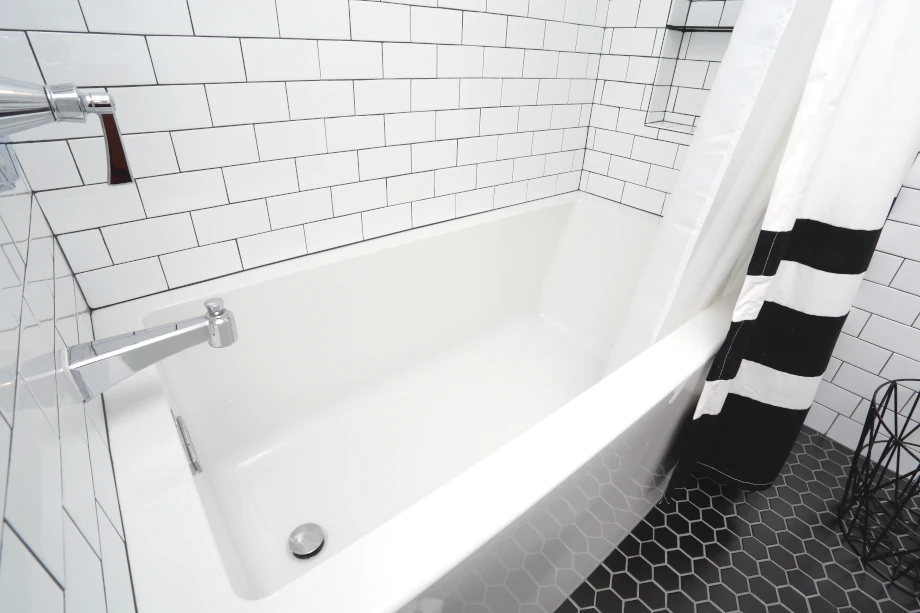
Alcove or recessed tubs are the most common in U.S. homes and generally include a shower. Surrounded by walls on three sides, they are the most space efficient of all tubs.

They often fit into a nook built just for the tub. Or in smaller bathrooms, they may run the entire width of the room.

They’re cost-effective and available in many styles. The standard length for an alcove tub is 60 inches, but they can range from 53 to 72 inches.

Corner Bathtubs

Corner bathtubs generally emphasize relaxation and self-care over practicality. Triangular or rounded in shape, corner tubs are larger than alcove tubs and less often paired with a shower.

They are a great option for relaxation, and many can accommodate multiple users.

Downsides include higher cost, more water use, and a longer filling time.

Drop-in Tub

types of bathtub: drop-in
A drop-in tub in a basement bathroom remodel / LaBonte Construction.

A drop-in tub is mounted into a pre-built deck that surrounds it.

This tub is often positioned in the bathroom similarly to the alcove or corner tubs. But you can customize the appearance of the deck to match the rest of your bathroom.

Additionally, the surfaces around the tub provide built-in storage space for bottles, soaps, and other accessories.

Undermount tub

A variation on the drop-in, the undermount bathtub is mounted beneath the deck that surrounds it, so there is no lip along the edge of the tub.

It’s like the difference between the top mount and undermount sinks we discussed in our guide to kitchen sinks.

The uninterrupted surface can create an elegant, spa-like appeal that is inviting, yet practical.

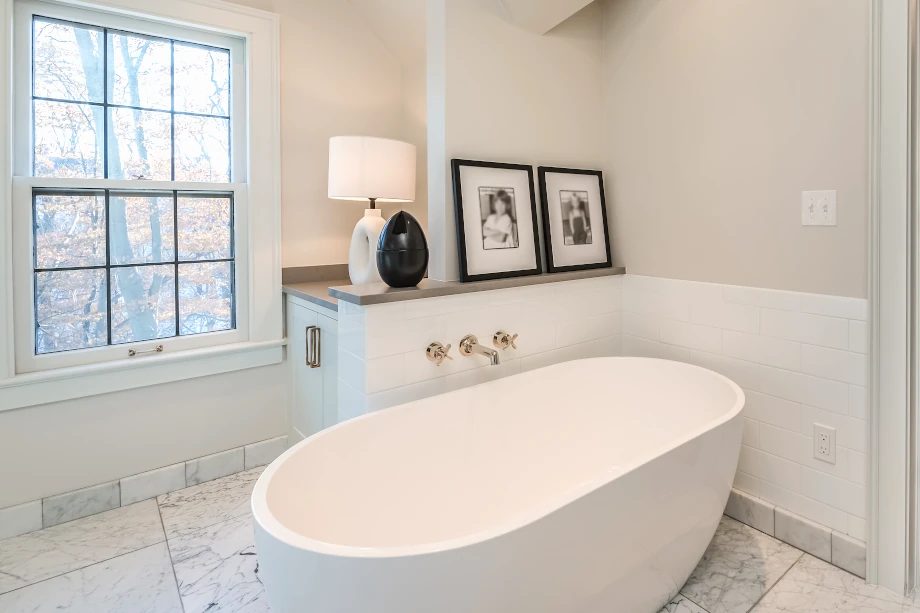
Freestanding Tub

Freestanding tubs can be placed anywhere in a bathroom, especially when installed with freestanding faucets. But many homeowners choose to mount the faucets on an adjoining wall.

With both modern and antique designs available, freestanding tubs are often the focal point of the room.

They’re the best choice for a deep soak.

Popular freestanding tub designs include single ended, single slipper, double ended (see featured image above), double slipper, clawfoot, pedestal/skirted, and Japanese soaking,

Walk-in Tub

People with limited motility or trouble balancing may choose a walk-in tub. A safe alternative to traditional step-over bathtubs, most feature built-in seats and grab bars for stability.

Walk-in tubs combine the convenience of easy access with the therapeutic advantage of full immersion for pain relief.

Walk-in tubs can be installed within the space of most existing bathtubs.

Because the door extends down to the bottom of the tub, users should be prepared to wait until the tub empties fully before exiting.

Jetted Tub

types of bathtubs: jetted tub bathroom remodel
Jetted alcove bathtub. / LaBonte Construction.

Any style of tub discussed so far can be available as a jetted tub. Like a hot tub, they have jets that massage and soothe sore muscles.

There are two types of jetted bathtubs: whirlpool and air bathtubs.

Whirlpool

The best-known style, whirlpool baths have jets that shoot streams of water, providing targeted hydro-massage for muscle pain and strain.

Air

Air jets shoot compressed air to create a bubbling sensation that is more relaxing than therapeutic.

Jetted tubs are more expensive and difficult to install, and they’re harder to clean. The pipes of a whirlpool tub should be flushed multiple times with powerful cleaners.

Each jet should be manually scrubbed with strong-bristle brushes. It’s important to choose the right cleaners to avoid damaging the whirlpool parts.

Common bathtub materials

Acrylic

Many bathtubs are made from layers of acrylic vacuum-formed over molded fiberglass sheets.

  • At a modest price-point, acrylic is the most popular bathtub material for homeowners.
  • It’s lightweight, easy to install, easy to clean and available in many shapes, styles, and colors.
  • Modern acrylic finishes are less prone to scratching and discoloration.
  • Acrylic can last up to 15 years when well-maintained.

Fiberglass

Fiberglass bathtubs are made of molded fiberglass sheets with a top layer of gel coat.

  • Low-cost and are easily installed.
  • Prone to scratches, cracks and fading but is also reparable.

Con

  • Fiberglass can feel thin and can flex or crack under too much pressure.

Porcelain-enameled cast iron or steel

Metal-based tubs are coated with a thick layer of enamel.

  • Porcelain enamel is extremely durable; tubs are resistant to chips, scratches and dents.
  • Glossy finish can withstand most common household chemicals, making them easy to clean.
  • Layer of cast iron or steel helps the tub retain heat better than acrylic or fiberglass bathtubs.

Con

  • Cast iron is heavy, requiring extra floor support and professional installation.

Solid surface

Solid surface consists of a blend of minerals and synthetic resins that can be molded or poured to create virtually any shape or size tub.

  • Creates seamless, one-piece surface that looks sleek and is easy to clean.
  • Non-porous and hygienic, as well as mildew-resistant.
  • Recyclable, making it an eco-friendly material choice.

Con

  • More costly manufacturing process than other bathtub materials.

Copper

Copper bathtubs have a striking appearance that only enhances with time.

  • Patina created through oxidation over time gives copper one-of-a-kind, multicolored finish.
  • This “living finish” also helps heal surface scratches and scuffs.
  • Clear lacquer seal can slow the patina development with regular wax coatings.
  • Copper bathtubs are also durable, rust-proof, mildew-resistant and antibacterial.
  • Like solid-surface bathtubs, copper is recyclable
  • has the longest lifespan of all bathtub materials.

Cons

  • Typically more expensive than other materials.
  • Acids and abrasives can damage the surface.

Stone resin

Similar to solid-surface bathtubs, stone resin bathtubs are made from a blend of resin and crushed natural stone.

  • Impervious to stains, discolorations, mildew, and bacteria.
  • Scratches and cracks are rare but reparable.
  • Of all the bathtub materials, only copper has longer lifespan.
  • Unique, high-end appearance makes stone resin more expensive.
  • Compared to cast stone – a stone bathtub that uses concrete in place of resin to create a more natural, carved appearance–stone resin tends to be more cost effective and easier to maintain.

Con

  • Expensive.

Finding the Best Bathtub for Your Remodeling Project

When deciding whether a porcelain-enameled cast iron bathtub or acrylic bathtub is better for your bathroom, consider both your budget and the lifespan you expect from your tub.

Cast iron tubs require less maintenance and are a better long-term investment for your home. But acrylic tubs are less expensive initially and are reliable tubs if you plan to move or renovate your bathroom during their 10- to 15-year lifespan.

If you are still unsure about what type of bathtub is right for your bathroom remodeling project, feel free to contact us.

LaBonte Construction was voted Best of Milwaukee 2024 by Shepherd Express readers in Bathroom Remodeling, Home Remodeling, Kitchen Remodeling, and Basement/Rec Room Remodeling. Also, we were  finalists in the Home Builder category.

Guide to Furnace Efficiency

We offer this guide to furnace efficiency to help you understand AFUE and make the best choice for heating your home.

Before the mid-1980s, many household furnaces were so inefficient that only 60% of their heat warmed the house. The other 40% warmed the outside air through their vents.

In 1987, the National Appliance Energy Conservation Act introduced idea of a “high-efficiency furnace” in the United States. The law required new household furnaces to use at least 78 percent of their heat to warm the home.

Guide to Furnace Efficiency: Measuring efficiency

AFUE Guide to Furnace Efficiency in Remodeled Homes

Today, a standard modern furnace converts 80% of its fuel into heat for your home. In the industry that’s known as 80% AFUE (Annual Fuel Utilization Efficiency).

The remaining 20% is vented out of your home, usually through a chimney flue or PVC drain pipe.

For a furnace to be considered high efficiency, it has to be at least 90% AFUE. The most advanced modern furnaces can achieve about 98% efficiency.

Low-Efficiency

Older furnaces typically have an AFUE of 56% to 70% and feature a continuous pilot light. They’re single-stage furnaces, meaning they’re either on or off.

With a simple exhaust system, the furnace depends on the natural draft of your house instead of fans. And you typically can’t adjust the speed of the blower.

Mid-Efficiency

Most furnaces today are standard or mid-efficiency, with an AFUE from 80% to 83%. Priced between $900 and $1,800, they cost much less than high-efficiency models.

These systems may include an electric ignition or complex exhaust fans to direct heat and run smaller overall. Some are single stage, while others are two-stage designs, which offer more heating control options than just on or off.

High-Efficiency

High-efficiency furnaces—featuring the Energy Star label—have an AFUE between 90% to 98.5%. The sealed combustion chamber ensures the warm air stays in your home and the dangerous exhaust goes outside.

The furnace may include a more advanced heat exchanger, ignition, variable blower, and two-stage or multi-stage heating design.

Finding your furnace’s AFUE

Furnaces display the AFUE on a bright yellow label on the outside of the unit. If the label is missing, you can look up your model number online.

You can also determine if the furnace is high efficiency by looking at the layout. If the furnace vents to the chimney or roof via a metal flue, then it’s standard efficiency. If there is a pair of PVC pipes—one to draw and one to vent—it’s sealed combustion, or high-efficiency.

Upgrading to High Efficiency

Naturally, high-efficiency furnaces are more expensive—as much as one-and-a-half or two times the cost of standard-efficiency models.

Also, if you’re buying your home’s first high-efficiency furnace, you will likely have the added expense of new venting to accommodate the dual PVC pipe system.

But, especially in Wisconsin, the cost savings on utility bills throughout the life of the furnace will more than offset the initial expense.

There may also be tax incentives for upgrading to a high-efficiency furnace.

In addition to saving you money, higher AFUE ratings are a major win for the planet. According to the Department of Energy, upgrading your furnace from a 56% to 90% AFUE can save between 1.5 and 2.5 tons of carbon dioxide each year.

AFUE Isn’t Everything

Fully electric furnaces don’t lose any heat through venting gas, so they are all considered high-efficiency. But in Wisconsin’s cold climate, fully electric furnaces are generally cost-prohibitive.

The following comparison of heating methods for Wisconsin was calculated with the PickHvac Cooling & Heating Guide:

Natural Gas Heat
Efficiency: 90
Price ($/Therms): $0.741
Annual Cost: $1,439.91

Heat Pump
Efficiency (HSPF): 10
Electric ($/kWh): $0.147
Annual Cost: $2,858.18

Propane Heat
Efficiency: 80
Propane ($/Gallon): $1.871
Annual Cost: $3,975.56

Fuel Oil Heat
Efficiency: 75
Price ($/Gallon): $2.573
Annual Cost: $4,813.34

Electric Heat
Heater Power (watts): 23447
Electric ($/kWh): $0.147
Annual Cost: $8,372.06

A Whole-Home Approach to Efficiency

You can increase the efficiency of your furnace regardless of its rating by making your home more energy efficient.

    • Windows: Having new, tight windows helps the efficiency of your entire home.
      » See also: Our post on Energy Efficient Windows.
    • Insulation: A lot of heat escapes through the walls and roof of your home.
      » See also: Our posts on Energy Efficient Insulation and Insulation Options For Your Home.
    • Doors: Do your outside doors have effective weather stripping and high energy performance ratings? See the U.S. Department of Energy guide.
    • Ductwork: Has your ductwork been inspected for leaks? If areas of your ductwork are too narrow to handle the airflow of the furnace, then leaks can develop. This reduces the furnace’s efficiency and will cause airflow backups, creating hot and cold spots in your house.
    • Filters: Dirty filters will reduce efficiency and make the furnace work harder.
  • Programmable thermostat: According to the Department of Energy, this can save 10% a year on heating and cooling. Simply turn your thermostat back 7°-10°F from its normal setting for 8 hours a day.
  • Direct sunlight: When possible, use your windows and skylights to provide light from the sun instead of artificial lighting during the day.

Energy-efficiency improvements will save money on a new furnace or boiler, because you can purchase a smaller unit.

Increase Your Home’s Energy Efficiency

Overall, furnace efficiency varies based on the following factors:

  • Fossil fuel or electricity used
  • Size of the unit
  • Ignition style
  • Blower style
  • Exhaust style
  • Type of heat exchanger
  • Sealed or unsealed combustion system

If you’re unsure about how best to increase the energy efficiency in your home, we are happy to offer our expert guidance. Please contact us at LaBonte Construction, voted Best of Milwaukee 2024 by Shepherd Express readers.

Considerations When Building a Home Gym

Our home remodeling firm gets the most calls about building a home gym after the holidays. But seasonal weight-gain guilt and New Year’s resolutions are only part of the increasing popularity of home-based exercise spaces.

Home gyms are common home remodeling projects for fitness enthusiasts and large homes year-round.

The safety concerns of the last few years made working out at home even more commonplace. This trend was on public display during the meteoric rise of Peloton’s stock while gyms were forced to close.

Home gyms are often further down the remodeling list than adding a powder room or remodeling a kitchen. But they are often less expensive than a wine cellar or home theater.

In Milwaukee, home exercise rooms are often part of a basement remodeling project. In order to make your new home gym a place you want to use, it is important to:

  • Find the perfect space.
  • Adequately plan space based on your equipment.
  • Consider the lighting.
  • Make sure there are entertainment options.
  • Choose the best materials.

Location

Choosing the right room can affect the home gym’s aesthetic, and how often you use the space. It will also determine how extensive the remodeling process is going to be.

Choosing a room close to a bathroom means you can avoid walking through the house full of sweat.

Picking a room with natural light can make you feel more energetic and motivated during dark winter months.

Depending on the types of exercises you do, you may want to select an isolated location so your workout does not interrupt your housemates’ sleep or work.

If budget is a concern, avoid an area of the house without existing walls, and pick a spare bedroom or attic instead.

In addition to the size of the room, also consider the height of the room depending on what exercises you want to be able to do.

Remember, depending on your equipment, your room does not have to be huge!

Equipment

Take an inventory of the exercise equipment you own or will need for your workout before calling a remodeling contractor.

Doing some online research about the required clearances around each piece of equipment will give you an idea of how much space your remodeling project will need.

Don’t forget to consider the height of the machines! If you find you do not have a ton of space, consider products from companies like Mirror, Tonal, or Forme, which offer a comprehensive workout without taking up much floor space.

Lighting

New Home Gym in Remodeled Wisconsin Home

Make sure all your workout zones are well-lit.

While we encourage all our home remodeling clients to incorporate as much natural light into their projects as they can, most of our clients build a home gym in the basement, where natural light is hard to come by.

Instead of excessive LED lights seen in warehouse-style commercial gyms, we can work with a lighting designer to install layers of lighting that create a less sterile mood and be customized to your family.

Having a unique fixture not seen in commercial applications can be a really fun way to create a unique space and a sense of luxury.

By making a lighting plan before we start the remodeling project, we can make sure all your workout zones are well lit.

Incorporating mirrors can also help brighten the space as well as provide a visual component to your workout.

As with all rooms, consider the paint color and sheen. A light color can help reflect light and make a space feel brighter. A dark color with accent lights can make a room feel more industrial.

See also: Our post, Paint Sheens Explained.

If you can’t get all of the lighting you want in your space, adding glass doors or walls can brighten up a dark space and allow in natural or made light from an adjoining room.

Entertainment

Building a home gym: TV

Adding a Smart TV can allow you to access workout videos.

Maybe you have a Peloton with an integrated screen. Or you might think the mental image of a trimmer you is all you need to stay focused. But you should probably still mount a television.

Adding a smart TV can allow you to access workout videos on YouTube, from streaming services, or even a private training session over Zoom or Skype.

In addition to a TV, adding a set of speakers from your distributed audio system will allow you the same control over your music and podcasts as you have in the rest of your home.

OK, so if haven’t installed a whole-home audio system yet, Wi-Fi speakers from Bluesound or Sonos would be great too. Both options are discrete and provide access to lots of music or other audio formats from your phone.

Many of these speakers can be wall or ceiling mounted so they won’t occupy valuable floor space—or get karate kicked or body checked in the heat of the moment.

Materials

Flooring

The most common materials are vinyl, rubber, foam and turf. Weightlifters may also want a dedicated lifting platform, which is often made of sturdy wood.

Commercial gyms most commonly use rubber flooring for its durability and ease of cleaning. Athletic training facilities or sports performance centers often use turf.

Foam is a popular home-gym flooring choice, but foam floors are not as durable, are less resistant to moisture, and provide less traction.

Horse stall mats are also popular options for home gyms.

Soundproofing

Clanging, banging, and grunting are fine at Planet Fitness or the South Shore Athletic Club. But you might want to keep those noises inside your home gym.

If you have the luxury of building new walls for your home gym, you can use products specifically designed for sound reduction, such as QuietRock drywall and ROCKWOOL Safe’n’Sound insulation. There’s even soundproofing paint. On existing walls, you could add soundproofing tiles.

On a limited budget, hanging blankets or quilts on the walls can make a difference as well. But many websites, such as Soundproof Nation, list some other relatively inexpensive methods that are somewhat less tacky.

You can also replace regular, hollow doors with solid-core doors.

Other considerations

Our motto, “Home is in the Details,” applies to a home gym as much as the rest of your house.

After the major design is tackled, it is important to think about smaller items that make working out at home as enjoyable as a club and encourage you to stay with your fitness goals.

Storage

Storage solutions will help you keep the floor free from clutter. Consider hooks for resistance bands or your boxing gloves and racks for your foam rollers or yoga mats.

Cabinets

Installing custom cabinetry or a bar is a great idea for storing clean towels, a hamper for dirty towels, or house a beverage center (internal link) to keep you hydrated.

Seating

It’s nice to have a chair to sit down and tie your shoes, or a bench to relax on between sets.

Create the Best Fitness Room for Your Home

Regardless of your space or needs, contacting a qualified remodeling contractor like LaBonte Construction should be your first order of business after taking inventory of your wants and needs.

LaBonte Construction was voted Best of Milwaukee 2024 by Shepherd Express readers in Basement/Rec Room Remodeling. We were also voted best in Home Remodeling, Bathroom Remodeling, and Kitchen Remodeling, and were finalists in Home Builder.

How to Avoid Exercise InjuriesSee also: these tips from MedlinePlus, a service of the NIH National Library of Medicine.

5 Basement Remodeling Ideas for Any Budget

The following basement remodeling ideas can help transform an often-underutilized part of the family home. In home remodeling, basements are too often relegated to storage, mechanicals, or a workshop that’s never used.

Basement Remodeling Ideas

Some of our home remodeling  clients concentrate their resources on areas that are used more often. But many still want to add a place for their kids to play, a bonus space for a hobby, or a media room.

Even if you can’t yet afford your dream basement, a budget makeover can create the new spaces you want without breaking the bank.

1. Paint the ceiling

Painting the ceiling in your basement is among the least expensive upgrades, but it can have a huge visual impact.

Some homeowners envision a more expensive drop ceiling with acoustic tiles. But many interior designers agree that a painted ceiling is more aesthetically pleasing.

While a homeowner could paint their ceiling themselves, hiring a qualified home remodeling or painting contractor generally provides better results.

The steps

A professional contractor will:

  1. Use compressed air and a HEPA vacuum to remove all the dust and debris.
  2. Use a paint sprayer to apply the proper primer over each of the wood, metal, and plastic assemblies in the ceiling.
    This is one of the most important steps because it allows the paint to permanently bond to all the different surface types.
    This also prevents oils in the wood floor joists from migrating through the finished paint.
  3. Apply the finish coat (or two).

As professional contractors, we recommend a satin or matte paint sheen and to avoid glossy finishes.

Basement Remodeling Project for Wisconsin HomeSee also: Our post, Paint Sheens Explained.

The colors

Most commonly, clients and interior designers recommend gray, white, or black for the basement ceiling color. Darker ceiling colors create a feeling of intimacy and create a modern space.

Clients who want their space to feel larger might use a lighter color, like a white or cream.

Gray basement ceilings might be a good compromise between white and black. Gray offers lots of color options so you can pick the perfect hue.

But not all basements follow a typical color schedule. Renowned Milwaukee-based interior designer Leslie Dohr raves about her recent selection: Brown Horse (2108-30) by Benjamin Moore is a brownish-black combination that encouraged a level of sophistication not often seen in basement remodeling projects.

No matter the color, a uniform ceiling helps avoid the distraction of mechanical clutter that tends to draw your eye upward in a basement.

2. Add recessed lighting

Proper lighting is important in every room. We encourage our remodeling clients to consult a lighting designer or interior designer to make sure it is perfect.

Most basements do not have an abundance of natural light, and the ceilings are usually low.

To provide ample lighting without attracting attention to the ceiling height, we recommend adding recessed can lights.

Most commonly, can lights are 5”, but in high-end remodeling, we most often use the 4” variety.

Adding an LED trim with an adjustable color spectrum can help you dial in the perfect lighting color for your space.

If you want to go the extra mile, consider painting the white can trims to match the color of your ceiling.

3. Add flooring

Before considering any updates to your flooring, make sure your floor is ready.

  • Address any dampness in your basement before installing any type of flooring.
  • Make sure the floor is level. When having flooring installed on top of concrete, even slight slopes and flaws can impact the finished project.
  • Ensure that additional flooring doesn’t reduce the height of the ceiling below the minimum required by your municipality.

When your floor is ready, here are seven options for finishing your basement floor, ranked from least to most expensive:

Paint

The least expensive finished floor option is also the most DIY-friendly. If you have a limited budget and simple basement remodeling ideas, paint may be your best choice.

Make sure to choose a paint formulated for concrete floors, and carefully follow the instructions for surface prep, application, and drying time.

Epoxy

Applied in two parts, this coating can be applied much like paint. But it creates a thicker layer that’s usually smoother, more durable, and easier to clean.

With most epoxy treatments, you can spread plastic flakes or fine sand over the surface right after application. The sand adds texture, while the flakes add texture and color.

If you plan to do this yourself, make sure to check the manufacturer’s safety instructions: Some epoxies may produce hazardous fumes during application and curing.

Tile

With tile comes a greater variety of design options in addition to a quick way to cover your existing concrete floors.

Rubber tile or rubber sheets

basement remodeling home remodeling ideas: rubber flooring

A basement home gym with rubber flooring / LaBonte Construction.

Common in health clubs and gyms, rubber tile or sheets are also a great choice for a playroom or laundry room.

They’re durable, waterproof, stain resistant, and easy to clean.

Some people notice an unpleasant odor, but this usually dissipates over time.

Vinyl planks or tiles

This basement flooring option offers great value for the money. Interlocking joints make vinyl tile and vinyl plank flooring easy to install.

Also, vinyl planks and tiles are available in a wide variety of styles. They can be made to look like different wood species, or resemble ceramic tile.

Sheet vinyl

Buying a large roll of vinyl gets you a new floor for a very affordable price. But if you plan to do it yourself, make sure you will be able to fit the big roll into your basement, as well as cut it to size.

Engineered wood flooring

If you’re aiming for a high-end, finished basement room with the look and feel of real wood, consider engineered wood flooring.

It’s similar to plywood in its composition. But this type of flooring has a thin layer of genuine wood (many different species are available) bonded to other wood plies or composite board.

Some manufacturers sell engineered wood flooring that can go down over a concrete floor. But it’s better to install it over a subfloor, which we recommend hiring a professional to build.

4. Create Zones with Curtains

Hanging curtains can create separate areas in your basement without the expense of new walls.

Available in a wide variety of designs, curtains are an economical and attractive way to create visually distinct areas. And their soft texture can add warmth to a cold, sterile-looking space.

  • Easy to install: You do not need any special tools to install zoning curtains.
  • Easily replaced: If you want a new look, just pick out new curtains or switch to another material.
  • Simple to clean: Just remove them and put them in the washing machine or send to the dry cleaner. If they’re not made of fabric, you can just wipe the curtains with a damp cloth.
  • Space saver: Curtains do not take up as much room as additional walls. This is especially helpful in small spaces.
  • Reconfigurable: As your family’s needs and interests change over time, it’s easy to rearrange your space to accommodate them.

In a partially finished basement, one of the best uses for curtains is hiding ugly clutter from view.

If your basement is one big, open space, ceiling-height curtains could help conceal your laundry area, storage shelves, or HVAC equipment. But be sure to leave space around the furnace to avoid contact with fabric.

5. Use flat pack furniture and cabinets

The cabinetry on most of our projects is bespoke. But cabinets from your favorite Swedish big-box store can work pretty well too. There are entire blogs and YouTube channels devoted to elevating Ikea furniture.

By utilizing these stock cabinets, you can create a bar, a library, toy storage, or an entertainment center.

While these cabinets do not have the configurability or quality of custom cabinets, they look decent and should last a few years.

Increase the Value of Your Home

Remodeling your basement on a budget can add function and value to your home. Upgrading your basement from a storage area to a beautiful family room does not have to be cost prohibitive.

To turn your basement remodeling ideas into reality, feel free to contact us at LaBonte Construction.

We were voted Best of Milwaukee 2024 by Shepherd Express readers in the Home Remodeling, Basement/Rec Room Remodeler, Bathroom Remodeler, and Kitchen Remodeler categories.
Evolution of the Kitchen Work Triangle

If you are considering a kitchen remodel, you may find it useful to learn about the evolution of the kitchen work triangle.

In the American home, the kitchen was traditionally a very practical space dedicated to food preparation. In the mid-20th century, it was customary for one person in the household—generally the woman—to do the cooking.

As a result, there emerged a kitchen design idea focused on increasing efficiency for that person.

Influenced by an industrial psychologist and engineer, a university school of architecture, economic principles of efficiency of motion, and other ideas about increasing productivity, the kitchen work triangle was created.

Principles of the kitchen work triangle

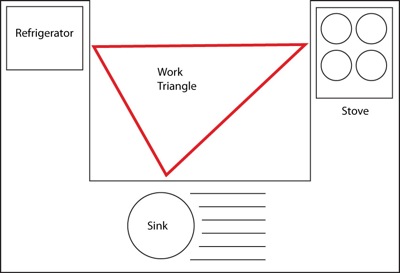
kitchen work triangle evolution kitchen remodel

Kitchen work triangle / Wikipedia image

Also referred to as the more glamorous “golden triangle”—the kitchen work triangle emphasizes easy movement and clear traffic lanes between the room’s three essential areas. These are the refrigerator, where food is stored; the sink, where food is prepared, and the stove, where food is cooked.

The space between the three points must be uninterrupted, and short enough that the cook doesn’t spend too much time walking. But if the sides of the triangle are too short, the space gets too crowded.

The National Kitchen and Bath Association guidelines recommended that each leg of the triangle measure between four and nine feet. This allows a cook to reach their cooking, cleaning, and food storage areas with ease.

Some kitchens, such as the slender galley kitchen, can’t accommodate these measurements. But in such spaces, it is still worth keeping in mind the basic kitchen triangle principles.

Kitchen work triangle: How cooking has changed

There is wide agreement that the fundamental principles of the kitchen triangle remain valid. However, the evolution of the modern family—and recent trends in how living spaces are used—warrant reconsideration of the model.

For example, the kitchen island, increasingly popular as a food preparation space, has expanded the triangle. Adrian Bergman, senior designer at British Standard by Plain English, refers to “the kitchen rhomboid.”

Also, in the modern household, cooking is no longer the exclusive responsibility of one person.

See also: Our post, Guide to Kitchen Sinks.

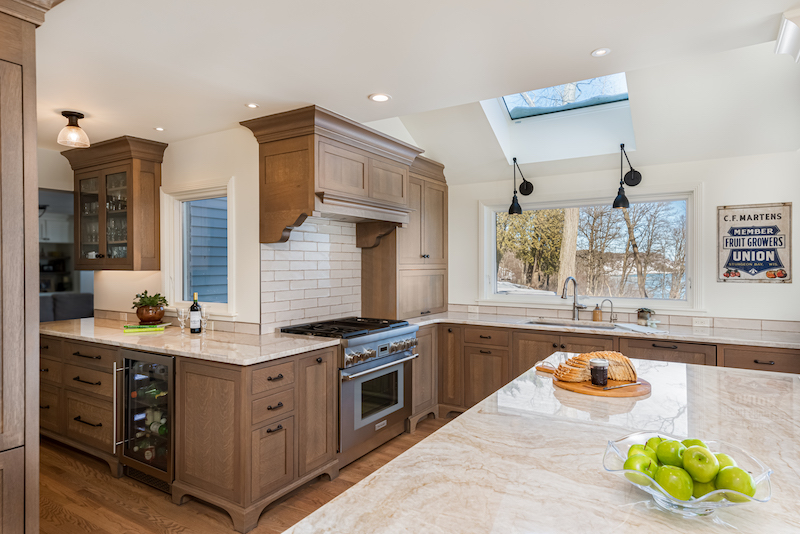
Beautiful Remodeled Kitchen in Wisconsin

A range oven in a kitchen remodel in Bayside, WI / LaBonte Construction

And because many families have more than one cook operating at a time, the three points of the triangle are now likely to be broader, self-contained “working zones.” This often resembles the layout and zoning of commercial kitchens.

For example, a baking zone would contain everything you would possibly need to bake—measuring cups and spoons, rolling pin, baking sheets—and ideally be located near both your pantry and your oven.

Your preparing “zone” would include everything you need for preparation: knives, colander, peeler, trash or disposal, etc.

Further blurring the lines of the triangle are busy family schedules that often require preparation of multiple individual meals.

Recognizing the changes in traditional cooking roles and kitchen usage, the National Kitchen & Bath Association in the early ’90s introduced the multiple rectangle concept—where the microwave or separate ovens were considered a fourth or fifth element.

Custom Countertops in Remodeled Milwaukee Kitchen
See also: Our post on 10 Different Types of Countertops for your Kitchen Remodel.

How the kitchen has evolved

Besides changes in the nature of food preparation within a kitchen, the role of the kitchen within the household itself has evolved—influenced in no small part by the housing boom and the expanding wealth of the Baby Boomers.

Kitchens are no longer a closed-off space for only behind-the-scenes cooking tasks. Now they’re frequently part of an open home design. Kitchens have become as important of a social gathering place as living rooms and outdoor patios.

Dirty kitchen

In fact, in some households the kitchen has become so popular as a social gathering place that homeowners have created a second area—a “dirty kitchen”—to assume the role of the original cooking-only space.

Also known as a caterer’s kitchen, back kitchen, or scullery kitchen, a dirty kitchen includes all the major appliances found in the main kitchen, such as a refrigerator, stove, microwave, and dishwasher.

It can also provide additional storage space for small appliances or specialized cooking equipment.

The Perfect Layout for Your Kitchen Remodel

Of course, if your existing home can’t accommodate an upgrade like a dirty kitchen, you still have many options for improvement.

For some fresh ideas to make your kitchen a more efficient space, or remodel it to better accommodate your family’s lifestyle, contact us at LaBonte Construction.

We were voted Best of Milwaukee 2024 by Shepherd Express readers in the Home Remodeling, Basement/Rec Room Remodeler, Bathroom Remodeler, and Kitchen Remodeler categories.
See also: Our post on Appliances For Your Next Kitchen Remodel.

9 Types of Plumbing Pipe and Where They are Used

In this post, we explain the different types of plumbing pipe frequently found in your home and where they are used. In our bathroom remodeling or kitchen remodeling projects, we end up tying into the existing plumbing in the house.

Plumbing pipes perform two basic functions in your home:

  • Supply lines, which are pressurized and distribute potable water from the main water utility service line to your faucets, showers, toilets, and appliances.
  • Waste or sewer lines, which carry used water out of the home.

We work primarily on older homes. They were typically built with copper or galvanized steel pipe for the pressurized lines and cast iron for the waste lines.

Types of Plumbing Pipe: Supply Lines

Metal

Metal piping owes its popularity to its longevity and durability. The primary disadvantage of some types of metal piping is that they corrode over time and can flake off rust.

The following metals contain negligible amounts of iron, so iron oxide, or rust, does not form.

Copper

Copper Plumbing Pipes in New Homes

While copper can be used as both supply and waste lines, it is most commonly used in supply lines. There are four major types of copper pipes:

  • Type M: The most common, used to carry domestic water. Type M pipe commonly supplies toilets, sinks, and faucets.
  • Type L: Thicker and more frequently seen as boiler piping and in commercial fire protection applications.
  • Type K: The thickest pipe, and overkill for our home remodeling projects. It can be used for main water lines and underground.
  • DWV (drain, waste, and vent): Used for waste, drains, and vents in some midcentury and older homes. When we encounter this type of plumbing during a home remodeling project, we usually replace it with a more modern pipe to save on cost.

Stainless steel

Stainless steel is generally not used in remodeling projects.

But some stainless-steel alloys—a nickel-steel alloy, for example—offer even more corrosion resistance than stainless steel alone.

Other materials—such as molybdenum—strengthen steel, which reduces the amount of material used and yields a lighter-weight finished product.

Brass

Brass is most commonly used between two dissimilar metals to stop a dielectric reaction. An example would be transitioning from old galvanized pipe in the wall to copper stub outs when remodeling a bathroom.

Brass costs less than other metals such as stainless steel or copper. But it can be difficult to work with because of its high melting point. In addition, it’s susceptible to tarnishing over time if exposed to certain elements.

Galvanized

Galvanized Steel Plumbing in Remodeled Homes

Galvanized steel pipes have been dipped in a protective zinc coating to prevent corrosion and rust. Commonly installed in homes built before 1960, galvanized pipe was an alternative to lead pipe for water supply lines.

Galvanized steel is not often used for water anymore because the galvanizing process is not as good as it used to be, and the pipes do not hold up. We use it only for small repairs of existing galvanized plumbing.

Long-term exposure to water causes galvanized pipes to corrode and rust on the inside.

However, galvanized steel is much more resistant than copper to freeze damage.

Plastic

Plastic pipes are generally lighter, easier to work with, and less expensive to install. They are also easier to cut and fit into tight areas. In addition, it’s generally easier to find odd or unusual plastic pieces.

On the downside, plastics are not as heat resistant and require more frequent replacement than metal piping. Also, use of some plastic pipes is restricted in some municipalities.

PEX

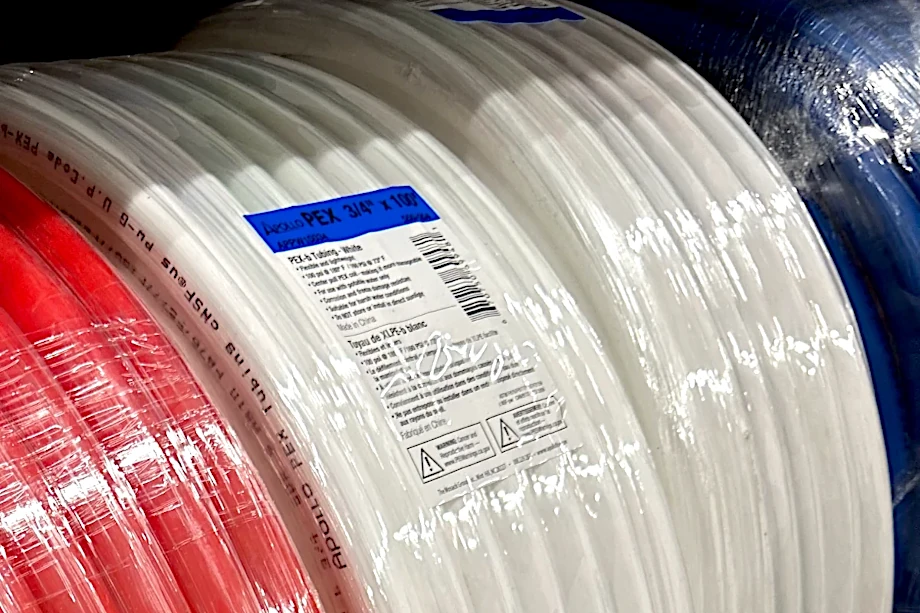
PEX Plumbing Pipes in Bathroom Remodeling

PEX—declared by Family Handyman magazine as the “biggest revolution since the flush toilet”—has been a game changer for us as remodeling contractors.

Short for cross-linked polyethylene, PEX is much cheaper and freeze-resistant than copper pipe. It also installs faster, and Its flexibility can sometimes save us from having to open walls during remodeling.

PEX comes in rolls, 20’ sticks, and 10’ sticks. Because PEX has a “memory”—it tends to return to its original shape—the sticks can be easier to work with in a wall cavity.

The rolls are superior for long runs because there are no joints that could be potential failure points.

PEX pipe is available in three main colors for indoor plumbing: red (for hot water), blue (for cold water), and white. While the chemical structure is the same between the colors, color coding makes it easier to trace a line for repair or make the final connections to a kitchen sink or a shower valve during a bathroom remodeling project.

CPVC Plumbing Pipes in New Bathrooms

CPVC

An upgrade from PVC, CPVC (chlorinated polyvinyl chloride) can withstand higher temperatures—up to 200°F—than PVC.

Also, it is more durable than PEX and less susceptible to damage from hazardous materials or extreme heat.

Downsides of CPVC: It is not resistant to UV rays; it has to be glued at every joint (more potential failure points); it can become brittle.

Types of Plumbing Pipe: Waste Lines

If you have an older home, you may see a mix of pipes manufactured from cast iron, plastic, copper and galvanized pipe. Here are the general kinds of waste line piping you can choose from.

PVC

PVC Plumbing Pipes in Remodeled Bathrooms

PVC (polyvinyl chloride) is generally the go-to material for waste lines. It’s highly resistant to chemicals, it’s easy to cut, and it resists heat.

Using a chemical solvent and plastic fittings, your plumber can create a lasting seal where cuts need to be made.

Cast iron

Cast iron is a very durable and highly sanitary material for use in the home. The reason to use it: it is quiet; PVC is loud.

The reasons to not use it: it is heavy and expensive, can corrode over time, and is harder to work with. Today, most plumbers use PVC to replace waste line piping.

Chromed brass

Chromed brass is an effective alternative to PVC piping in areas where the pipes are exposed or in municipalities where PVC is not allowed. Its enhanced visual appeal makes it popular for exposed drains.

Types of Plumbing Pipe: Conclusion

As you can see, there are many different options for replacing the plumbing in your home.

If you are still unsure about what plumbing options are right for your kitchen or bathroom remodeling project, feel free to contact us at LaBonte Construction—voted Best of Milwaukee 2024 by Shepherd Express readers.

Guide to Kitchen Sinks

During kitchen remodeling, the sink isn’t just part of the kitchen work triangle—It’s an essential element of design and style. We hope this guide to kitchen sinks will help enhance your home.

When selecting a kitchen sink, our home remodeling clients often consider the unit’s aesthetic, budget, depth, number of compartments, material, and optional accessories.

After reviewing this article, talk with your builder and interior designer about which sink will work best for your space.

Many of the major brands are available at your local plumbing supply house, so you can try the sink before you purchase it for your remodeling project.

Guide to Kitchen Sinks: Sink Styles

Top Mount Sink

The top mount sink, also known as a drop-in sink, is the most common sink in the United States. As the name implies, these sinks are installed from the top. The sink manufacturer will provide a paper template in the box for the remodeling company to cut an appropriate hole in the countertop. The sink is secured by a sealant or plumber’s putty, along with steel clips.

See also: Our post on 10 Different Types of Countertops for your Kitchen Remodel.

Pros

  • Many budget-friendly options.
  • Fabrication of the opening can be done at the construction site.
  • The sink opening does not have to be perfect.
  • DIY friendly.

Cons

  • The rim can collect debris and bacteria, making it harder to clean.
  • Considered by some to by an eyesore.
  • Unable to sweep items from the countertop into the sink.
  • Faucet must be mounted in specific holes.

Undermount Sink

Most commonly paired with solid-surface countertops, undermount sinks are fastened to the underside of the countertop using adhesive and clips and are the most common sinks we see in our kitchen remodels. Undermount sinks are available in many different materials and configurations.

Pros

  • Considered by most to be superior in appearance to top mount sinks.
  • More quality options when compared to top mount sinks.
  • The lack of a rim allows you to sweep water and debris into an undermount sink.

Cons

  • Discoloration and grime can build up in the area between the countertop and the lip of the sink.
  • Can be more costly than their value-oriented, top-mount relatives.

Apron Sink

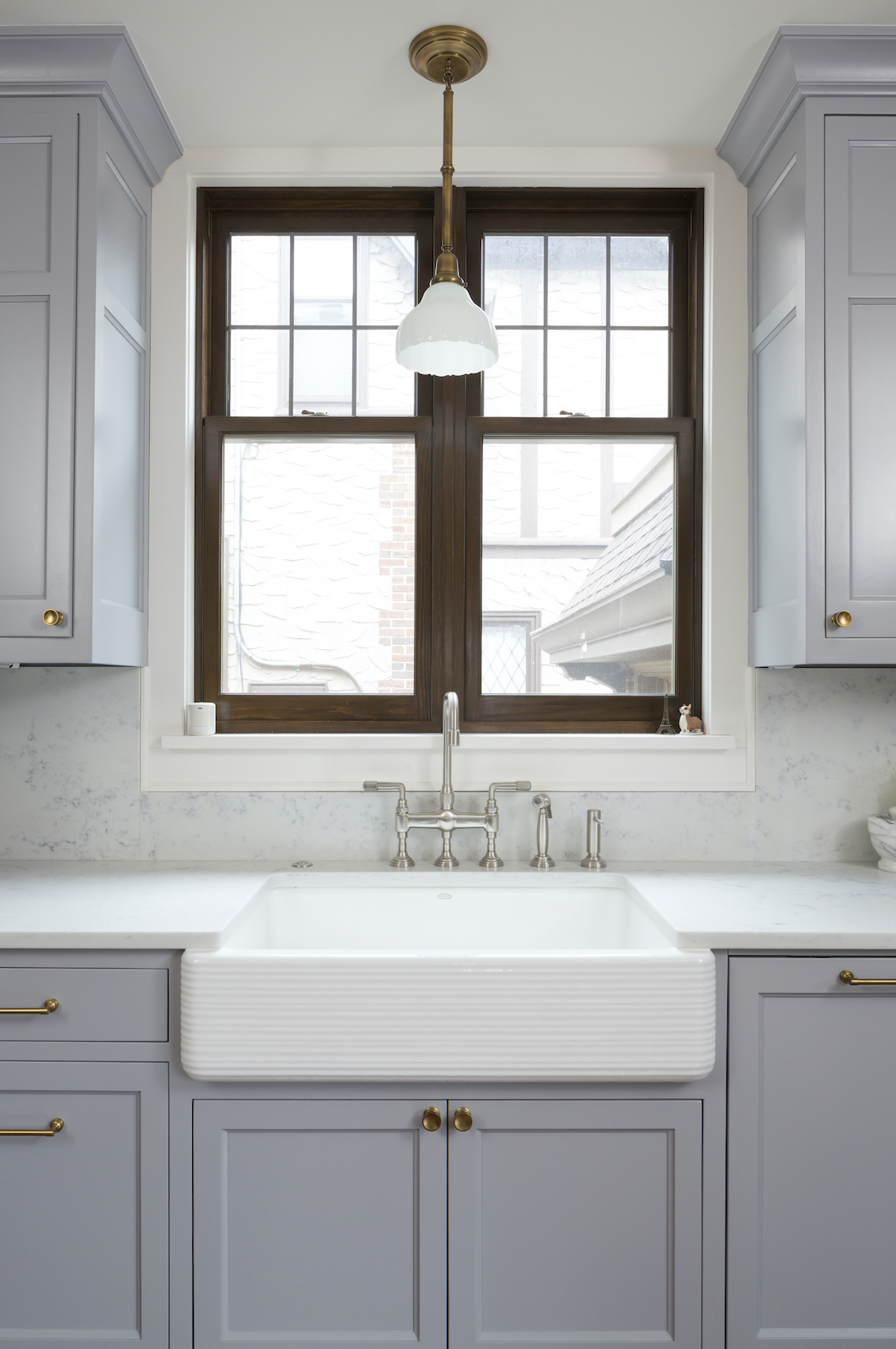
Apron Sink in Remodeled Milwaukee Kitchen

An apron sink in a kitchen remodel in Milwaukee / LaBonte Construction.

Often referred to as farmhouse sinks, apron sinks gained popularity in the late 17th century in England where they were found in butler’s pantries. The sink was mounted further forward to reduce strain on rural users and staff before the widespread availability of running water. These somewhat forgotten sinks would gain popularity again in the United States in 2014, when HGTV influencers popularized Americans turning their home into a farmhouse. Although this fad has passed, some of our remodeling clients who want a French-styled kitchen choose an apron sink.

Pros

  • The sink itself forms the front of the cabinet, which is less susceptible to damage than other materials.
  • The edge of the sink is closer to the user.

Cons

  • Cabinets need to be modified for installation.
  • Considered out of style or dated in many applications.
  • Future remodeling will likely require replacing the cabinets.

Integrated Sink

An integrated sink is most commonly a sink and a countertop in one piece, with a single material. Integrated sinks provide a seamless aesthetic and a feel of additional luxury within a home. In some models, the sink is made of stainless steel or other solid surface materials.

Historically, integrated sinks were available from manufactures like DuPont in their Corian line, but now even brands like Formica offer integrated options.

We most often see integrated sinks in laundry rooms or basements where clients have selected a less expensive or more durable countertop material, but the kitchen is becoming a more popular choice with many homeowners.

Pros

  • Considered better looking in an application that would traditionally have a surface mount sink.
  • More hygienic because there is no rim for bacteria to accumulate.
  • Easier to clean.

Cons

  • More expensive than top-mount sinks.
  • Only available with certain types of countertops.
  • Limited sink options.

Prep Sink

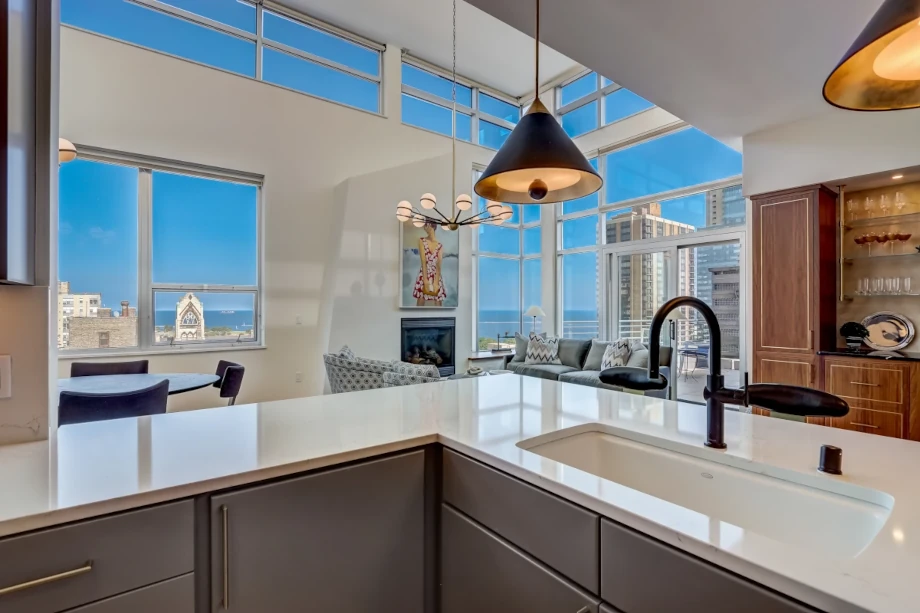
guide to kitchen sinks

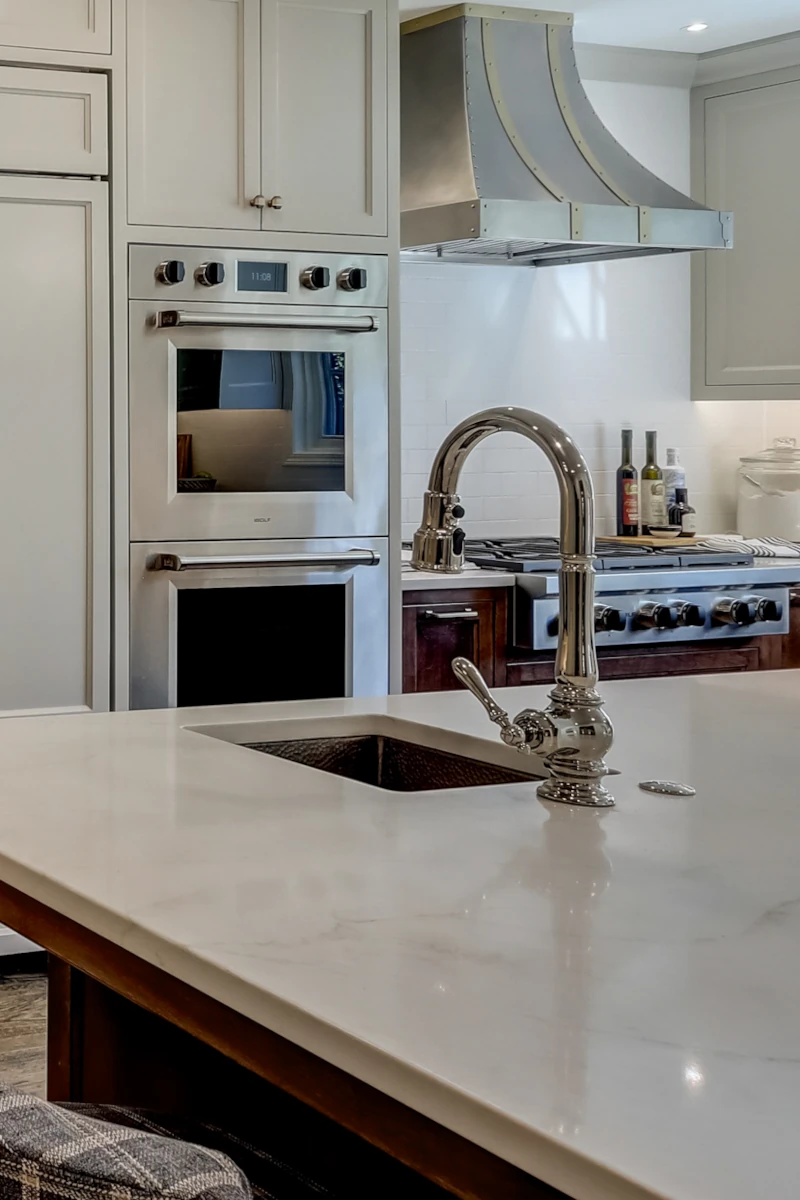
Prep sink in an Elm Grove kitchen remodel / LaBonte Construction.

A prep sink—also known as a bar sink—is generally a secondary sink that is smaller than a traditional kitchen sink.

Interior designers often specify these sinks on a kitchen island, in a butler’s pantry, or for a wet bar.

Our remodeling clients often use them for food preparation, storing drinks on ice for a party, or as a hand-washing sink.

These sinks can come in unique shapes such as round, square, or rectilinear and are almost always single basin.

Sink Materials

When choosing the right material for your kitchen sink, consider how it will be used. If your family accumulates a lot of dishes, you’ll need a deeper basin. If you maintain a busy lifestyle, you may not have the time to properly maintain a special surface. A kitchen sink should always be durable and able to withstand deep cleaning. However, it is also important to consider a material that complements the style of your kitchen. Following is a summary of different materials.

Stainless Steel Sinks

The most popular material, stainless steel is available in a wide variety of styles, including drop-in, farmhouse, and undermount.

Its cost, durability and ease of cleaning make it the most common choice. To prevent dents and scratches, choose a higher-gauge stainless steel—18- to 16-gauge. The lower the number, the thicker the material.

To hide water spots and scratches, choose a brushed satin finish.

To reduce the sound of water hitting the bottom of the sink, choose a model with vibration-damping foam insulation or pads on the underside of the bowls.

Granite Quartz Composite Sinks

Available in drop-in, farmhouse and undermount styles, granite quartz composite sinks are a mixture of 80 percent quartz and 20 percent resin.

This sturdy, low-maintenance surface resists scratches, stains, and heat. Available in a range of colors, it can withstand hot cookware.

Fireclay Sinks

As its name suggests, fireclay sinks are a hard-fired, clay material. Similar in appearance to cast iron, it’s mainly used in farmhouse-style sinks.

With a smooth, glazed, non-porous surface, fireclay is an extremely durable material. It resists chips, scratches, and acid damage. We like fireclay sinks from Shaws, a company founded in England in 1897, whose sinks are still in use in 100-year-old English homes.

It is primarily sold in white, but a variety of colors and textures are available.

Cast Iron Sinks

This type of sink is made of cast iron and coated in porcelain enamel to provide a hard, durable surface. Its smooth, glass-like finish is easy to clean, and cast iron is guaranteed not to chip, crack or burn.

In Southeastern Wisconsin, we are fortunate to be near Sheboygan County-based Kohler, an elite manufacturer of cast iron and other kitchen sinks.

Cast iron’s downside is its weight. Upwards of 125 pounds, a cast-iron sink requires two people to install. It is not typically suited for wall-mount installation.

Copper Sinks

Copper is a highly durable metal that does not rust or tarnish. It also requires little maintenance.

Copper’s anti-microbial properties kill bacteria and viruses. Due to oxidation over time, the copper surface gradually takes on an aged patina, which acts as a protective coating.

Each copper sink is individually handcrafted and unique, which provides extra distinction in your kitchen.

Getting the Perfect Kitchen Sink

Picking the right kitchen sink for your home remodeling project can be difficult. There are millions of options from hundreds of manufactures. Finding a qualified builder and an interior designer who understands your family’s needs will help you narrow your search down to the perfect sink. When you’re ready to start your kitchen remodeling process, please contact us at LaBonte Construction.

Common Roof Types

If you’re considering a new roof or building an addition, you may first want to learn about the most common roof types in home remodeling, and how they impact your choice of roofing materials.

Depending on a home’s architecture, a roof can potentially make up 40% of the exterior, often playing a big role in its overall look and curb appeal.

See also: Our detailed explanation of pitch and roofing materials.

So, when the time comes to install a new roof, you’ll want to pick roofing materials and shingle colors that work well with the shape and slope of your roof, as well as complement your home’s exterior design.

Beyond the aesthetic considerations, adding a new roof is also a great opportunity to integrate energy-saving or “green” elements into your house, such as solar panels, a green roof, or a design that collects rainwater or melted snow that you can repurpose for your lawn or garden.

Also, adding a new roof style can increase the amount of living space in your home, which may justify the cost of a more expensive roof.

Moreover, while you may want to make a unique statement with your new roof, remember to make sure it complements your home’s existing design features—and blends in well with the surrounding neighborhood.

Common Roof Types

Gable roof

A gable roof is the most common type of roof in the United States: the classic triangle shape is used across many styles and geographic regions.

The gable roof is very versatile, and its simple design is easy to install and offers a timeless look. The high pitch of a gable roof allows for easy water and snow runoff into gutters and downspouts.

One possible drawback for gable roofs is that they are susceptible to damage by very strong winds.

Hip roof

A traditional hip roof consists of four equal-length slopes that meet to form a simple ridge. There are variations, such as a half-hip that features two shorter sides with eaves.

Although it is slightly more difficult to build than a gable style, the hip roof is a popular choice. All four sides can have gutters and downspouts, improving water and snow runoff.

They also perform better in high-wind areas. However, it may require extra ventilation efforts in the attic.

Also, most of a hip roof is visible when looking at your house, so the type and color of roofing shingles you choose for a hip roof will greatly influence your home’s overall exterior appearance.

Dutch roof

Dutch roof is basically a hip roof with a small gable at either end. The result is easier access to the lower portion of the roof with the added benefits of natural light, extra space, and added interest to your home’s architecture.

They can work great for attic spaces on your home or garage.

Mansard roof

It is a French design and is more difficult to build than the hip or gable roof. The mansard roof actually features two slopes within one on each side.

The bottom part of the roof slope is steeper so that the pitch of the roof barely starts. This allows more room on the inside and in most cases creates an extra space.

It offers a beautiful, elegant aesthetic, but the mansard may require structural changes to your existing house to accommodate.

Perhaps the biggest downside for the mansard roof in the Midwest is drainage.

Flat roof

Flat roofs are not really 100% flat. They must have a slight slope of at least 2% to allow for water and snow run-off.

Used most often in commercial structures like apartment buildings, malls, and office buildings, flat roofs became widely used on residential homes in the 1950s and ‘60s.

The simple design and construction of a flat roof tends to reduce building costs, but especially in Wisconsin, it is essential to hire a quality contractor. A qualified builder will ensure that your flat roof is properly sealed.

A quality flat roof offers many benefits:

  • Distinctive design that separates your property from your neighbors’.
  • Use as a deck or patio in the spring and summer.
  • Potential for adding levels to your home.
  • Adding heating and cooling units that won’t obscure the architecture of your home.
  • Ease of installing PV solar panels, which will improve energy efficiency and make the roof more eco-friendly.

Shed roof

A shed roof is kind of like a flat roof, but it’s at a much steeper incline.

With just a single slope, you will commonly find shed roofs utilized on cabins, barns, and of course, sheds. But It has gained favor on many ultra-modern builds.

Shed roofs allow for interesting window placements, from small rows of glass panes directly beneath the roof to large picture windows across the front of the house.

A shed roof offers many of the same benefits as a flat roof—including lower cost—without the risk of leaking.

But the single slope does require a strong gutter and downspouts system to handle double the water of a more traditional build.

Butterfly roof

In this very modern design, the two roof slopes meet in a trough in the middle rather than a peak.

The crease where the two sides meet creates a natural channel for directing rainwater into a reservoir—which is usually part of the butterfly design.

This eco-friendly feature can be a challenge for Wisconsin winters, but there are materials available—EPDM rubber, TPO, PVC, or some metal and other organic materials—that can work to keep a butterfly roof watertight.

A butterfly roof can greatly reduce water usage for lawn irrigation or gardening.

Also, the high walls on the edge of the roof provide a great opportunity to increase natural light in the home. Finally, a butterfly roof is very aerodynamic and can withstand strong winds.

Gambrel roof

Also called barn roof because of its most common use, a gambrel roof’s main benefit is providing additional headroom in a house’s top level, due to the low slope of the top two of the roof’s four panels.

The design also allows for installation of windows.

Looking a bit like the top half of an octagon shape, the gambrel roof works perfectly for barns with upper-level lofts to hold stacked hay.

Gambrel roofs are relatively easy to install, and can work with just about any roofing material.

On the downside, the high sloping bottom panels can create poor ventilation, are difficult to install on existing structures, and are susceptible to damage from strong winds.

Dormer roof

A dormer is more an addition to an existent roof. It is a window and a roof (gabled, hipped, flat, among others) protruding from the slope of an existing roof.

A functional dormer creates usable space out of the roof, adding natural light and headroom.

A dormer can also increase ventilation in your upper floor living area, and add unique design elements—both interior and exterior.

As with many other roof additions, a properly installed dormer requires a skilled contractor who will ensure the work is done right and not susceptible to leaks.

M-shaped roof

An M-shaped roof could basically be considered a ‘double gable’. It features two sloped sides that meet in the middle with corresponding slopes on each side. This pattern could be repeated multiple times, especially in condominiums or a strip mall.

The obvious downfall of this design would be snow and rain building up in the center where the two slopes meet but this is alleviated by a central gutter running from front to back, perpendicular to the front of the building. Even so, the pitch of M-framed roofs is generally steeper to assist in runoff and to ‘catch’ less rain and snow.

A Remodeled Brick Home in Chicago Pink

The Right Roofing Material for Your Home

Replacing or enhancing your home’s roof is one of the most important investments you can make. Choosing the best remodeling contractor is essential, but it is also important to understand the different roofing styles and material options so you can have an informed discussion.

If you are ready to discuss a new roof for your home, please feel free to contact us at LaBonte Construction.