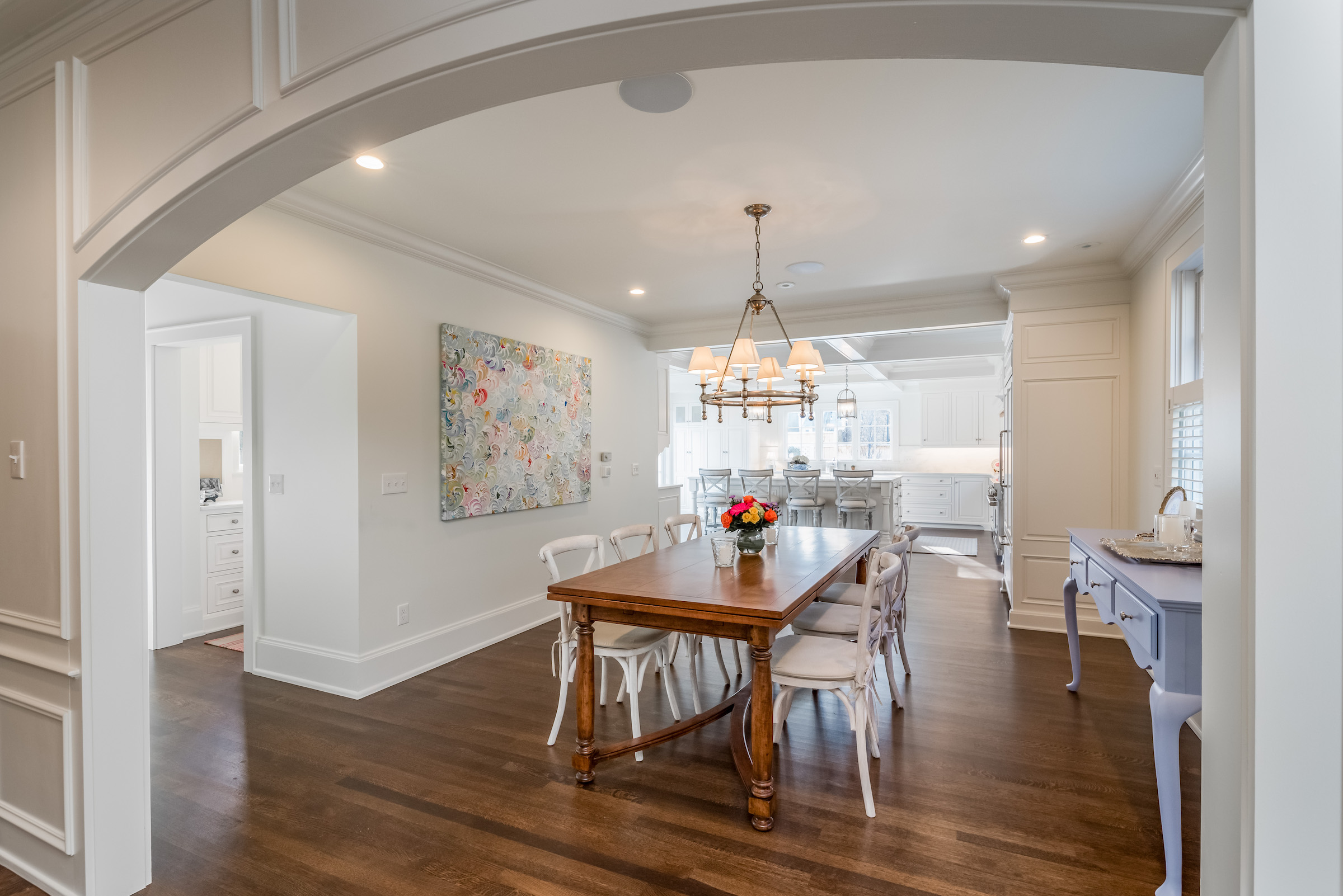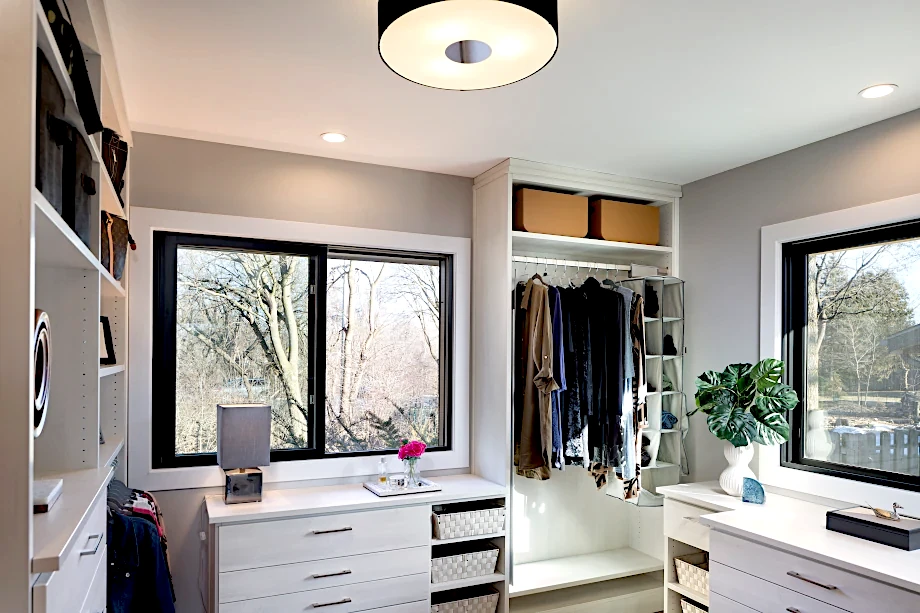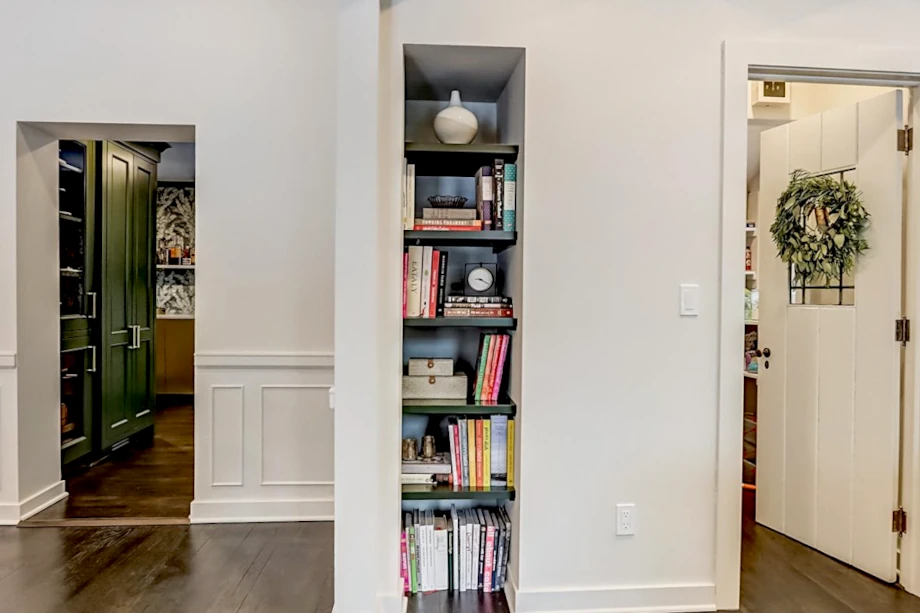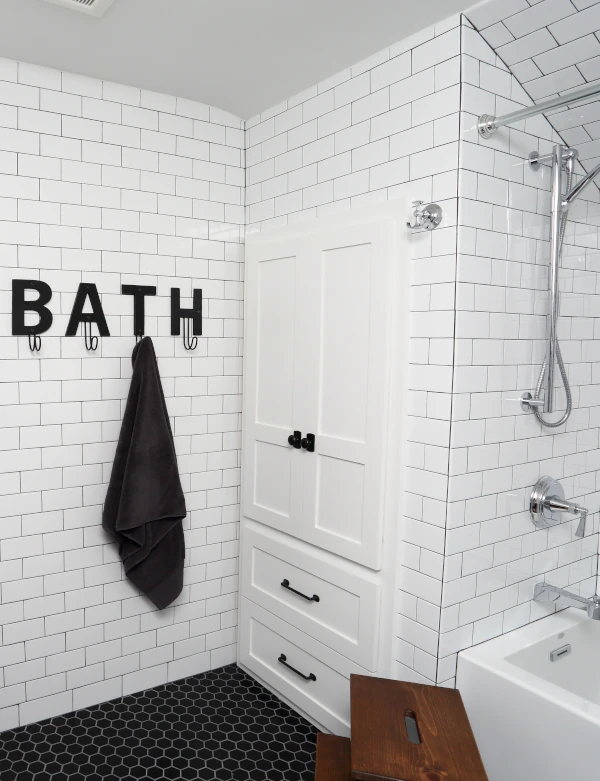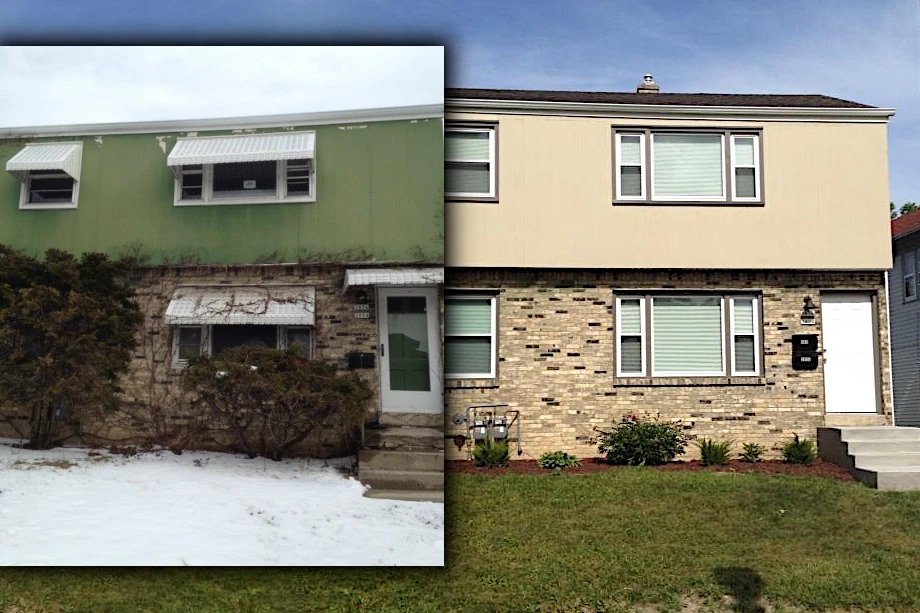
Move or remodel? Weighing the Options

As professional home remodeling contractors, we at LaBonte Construction understand that deciding whether to move or remodel is not easy.

We’ve been transforming houses into dream homes for years. And we’re here to help you make the right decision. Your home is where memories are made, and it’s important to consider all factors before making a choice.

Assess Your Current Home

Evaluate the strengths

Take note of the aspects that you love about your home. Is it the cozy living room, the charming backyard, or the nostalgic neighborhood? These are the features that make your home special and hold sentimental value.

Identify the weaknesses

Consider the space limitations—do you find yourself feeling cramped or wishing for more storage? Think about the functionality and layout of your home. Are there rooms that could be better organized or opened up for a more seamless flow?

Also, take a moment to reflect on the overall aesthetic appeal. Does your home reflect your personal style, or do you find it outdated and in need of a refresh?

And of course, don’t forget to consider the structural integrity of your home. Are there any issues like leaky pipes or faulty electrical systems that require attention?

Consider Potential for Improvement

Imagine your home with upgraded features and a layout that perfectly suits your needs. Think about the rooms that could benefit from a makeover, whether it’s the kitchen, bathroom, or even adding an extra bedroom. Take a moment to envision the possibilities and jot down your ideas.

Adding an addition to your home can increase living space and inject new life into the entire household. And it can also add value to your home if you need to relocate in the future.

Move or Remodel: Weigh the Pros and Cons

Understanding the benefits and challenges will help you make a well-informed decision.

Advantages of Remodeling

Avoid Rising Mortgage Rates and Other Costs

move or remodel interest rates
Mortgage interest rates have risen nearly 175% since March 2022. Source: Federal Reserve Bank of St. Louis.

The recent economic downturn has prompted the Federal Reserve Bank to raise interest rates 10 times since March 2022. Since then, the average 30-year fixed rate mortgage has risen from 3.76% to 6.57% as of May 25—an increase of nearly 175%.

In addition, moving involves realtor fees, transportation expenses, and potential upgrades or customization to make the new space feel truly yours.

Opportunity to Personalize and Customize your Home

Whether it’s creating an open-concept living area, upgrading appliances, or adding a cozy nook, remodeling allows you to tailor your home to your lifestyle.

Preservation of Sentimental Value and Familiarity

Remodeling allows you to keep the emotional connection to your home while enhancing the functionality and aesthetics. You don’t have to say goodbye to the neighborhood you love or the neighbors who have become like family.

Challenges of remodeling

Disruptions During the Remodeling Process

Temporary relocation. Depending on the scope of the project, it may require temporarily relocating or adjusting to living in a construction zone. You’ll need to consider the timeline, coordination with contractors, and potential inconveniences such as noise and dust.

Unexpected issues. Remodeling can also sometimes uncover unexpected issues or delays, affecting both the timeline and budget. Be prepared for such possibilities to help navigate these challenges.

Advantages of Buying a New House

Move-in Ready Condition

With a new house, you can avoid the hassle and time-consuming process of remodeling. Modern features and up-to-date appliances can enhance your daily living experience, providing convenience and energy efficiency.

Finding a Location that Better Suits your Needs

Whether you’re seeking a quieter suburb, a vibrant city neighborhood, or a community with specific amenities, you have the freedom to choose the ideal setting for your lifestyle.

Long-Term Financial Investment

If the real estate market is favorable, you have the potential for equity growth over time.

Challenges of Buying a New House

Moving is stressful. Cleveland-based University Hospitals and mental health website Verywell Mind list only the death of a loved one and divorce or separation as more stressful. Moving is higher on their lists than coping with long-term illness or loss of a job.

Other studies—including one conducted for a moving company—found moving to be the most stressful life event.

Also, it’s essential to carefully consider the financial aspects, including upfront costs like closing fees, down payment, and the overall affordability of a new home.

And remember those rising interest rates.

Move or Remodel: Seeking Professional Guidance

Our team can sit down with you to discuss your goals, preferences, and budget. We’ll review your assessment of your current home, along with your ideas for improvement, and provide valuable input.

Our experience allows us to offer creative solutions that optimize space, functionality, and aesthetics. We’ll work collaboratively to refine the remodeling plan, stay within your budget, and address any concerns or challenges that arise.

Additionally, we’ll provide you with a detailed cost estimate for the remodeling project. This estimate will give you a clearer picture of the financial investment required and allow you to make an informed decision. We’ll discuss potential alternatives and options that strike a balance between remodeling your current home and buying a new one.

Throughout the process, we’ll be by your side, providing guidance, answering your questions, and ensuring transparency. Our goal is to empower you to make the best choice for your unique situation and help turn your vision into reality.

Move or Remodel: Conclusion

Deciding whether to remodel your home or buy a new one is a significant choice that deserves careful consideration. Your home is more than just a building.

By assessing the strengths and weaknesses of your current home, weighing the pros and cons of remodeling, and exploring the option of buying a new home, you are taking the first steps toward making an informed decision.

When you’re ready to discuss windows for your home remodeling project, contact us at LaBonte Construction, voted Best of Milwaukee 2024 in Home Remodeling by Shepherd Express readers.
Adding a Home Addition

A home addition is an ambitious home remodeling project. But with a clear idea of what you want and an experienced contractor providing expert guidance, you can be successful.

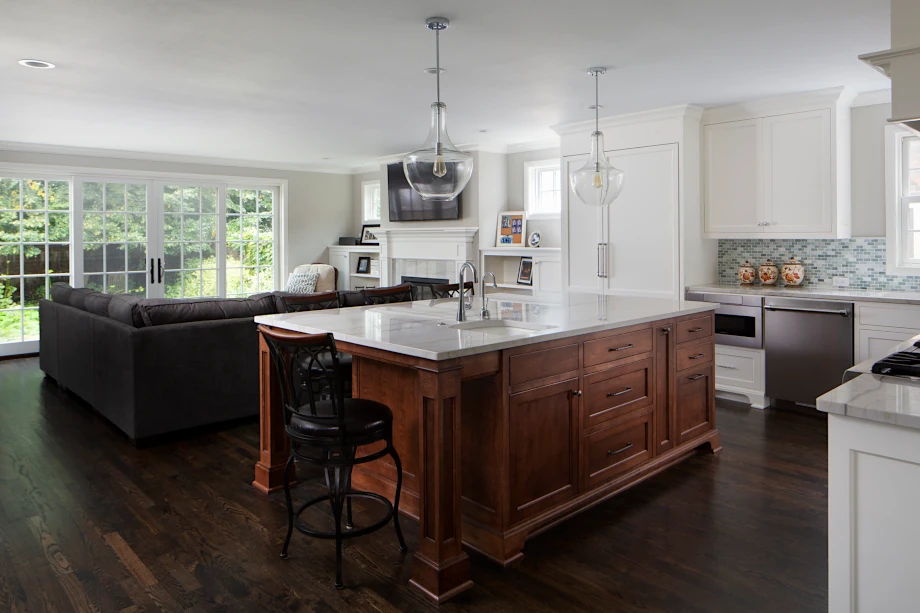
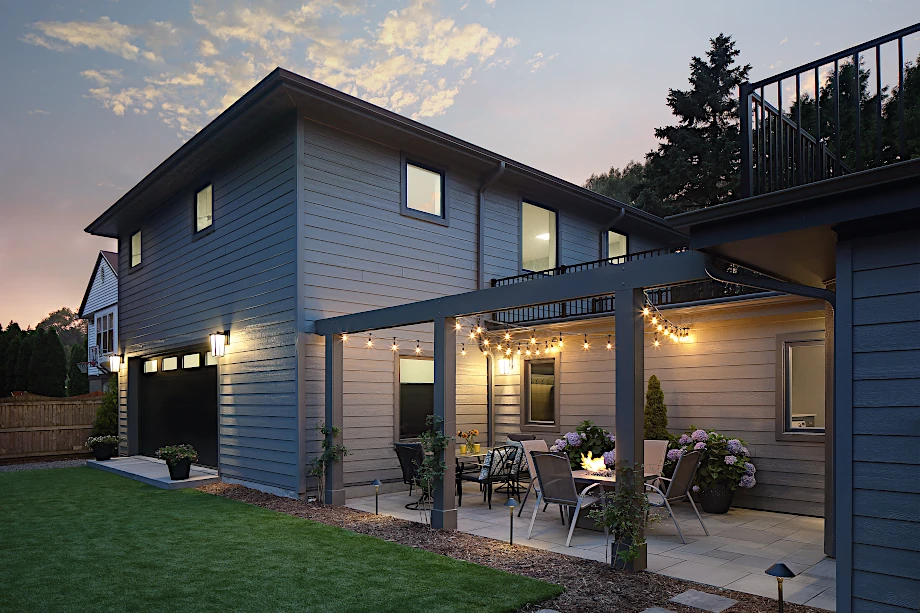
“A gentleman moved in here with his children,” Project Manager Dave LaBonte says of this Whitefish Bay project. “We gutted it almost completely, re-did it, and added a large brick addition onto the house.”

At LaBonte Construction, home additions are among our specialties.

Adding an addition to your home can be a game-changer, giving you the opportunity to create new functional areas and enhance your living space. But where do you start? That’s where we come in. In this article, we’ll explore the most popular uses for the added space and guide you through the process of transforming your home.

Popular Uses for a Home Addition

When it comes to adding an addition to your home, the possibilities are endless. Here are some of the most popular uses for the added space that can transform your home into a more functional and enjoyable space.

Home Office or Study

Having a dedicated workspace within your home offers numerous benefits. It provides a designated area where you can focus and be productive. And it helps separate work from the rest of your living space.

When designing your home office or study, consider factors like adequate lighting, comfortable furniture, and organization solutions.

Guest Suite or In-Law Apartment

If you frequently have guests or family members visiting, a guest suite or in-law apartment can provide them with a comfortable and private space. They’ll have their own area while still being connected to the main house.

When planning this addition, consider options such as a separate entrance, a bedroom, bathroom, and even a small kitchenette. This will ensure convenience and privacy for your guests.

Entertainment or Recreation Room

An entertainment or recreation room is a fantastic addition for families or individuals who love to entertain and have fun. This space can be customized to suit your specific interests.

Maybe you want a home theater for movie nights or a game room with a pool table and arcade games. Or a space for hosting parties and gatherings.

Think about incorporating specialized features and equipment that align with your entertainment preferences.

LaBonte Construction has consistently earned high reviews on Houzz, the home design and remodeling website:

“Dave (LaBonte) took on a very unique renovation and addition that other contractors weren’t able to wrap their heads around. He worked with us to bring our vision to life, which exceeded our expectations.

“He was very honest about the challenges and cost to our project and managed a tight timeline very well. We lived in the house for part of the renovation and Dave’s team were on time, respectful of our space, and effectively communicated each step of the way.”

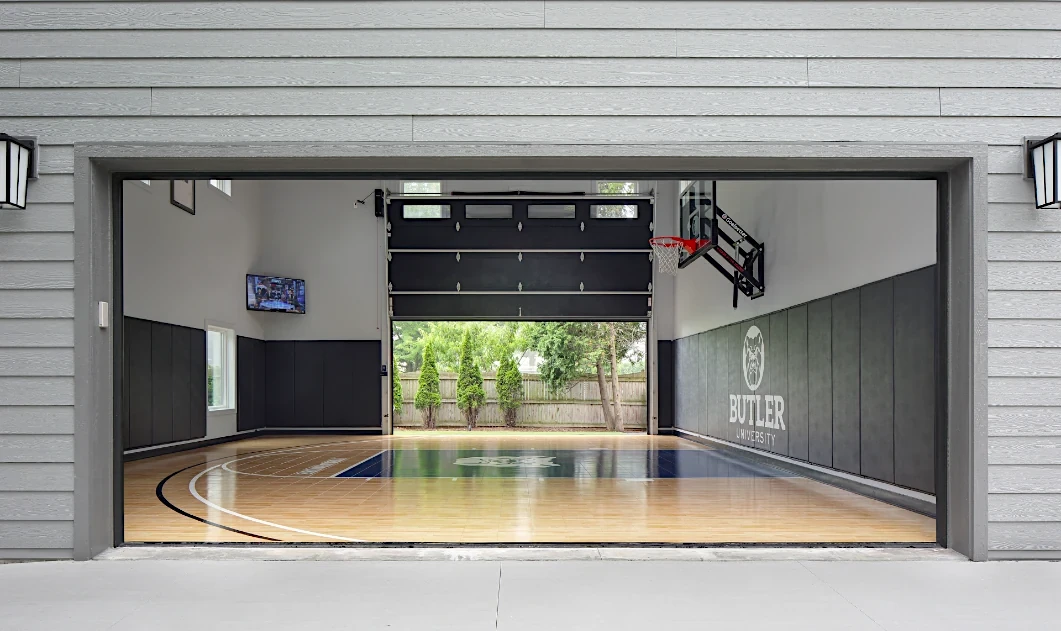
View other exterior and interior photos of this remodel on Houzz: First Floor Remodel. Exterior + Addition. Basketball Court. Glam Bathroom.

Expanded Living Room or Family Room

If you want more space for family gatherings or quality time with loved ones, consider expanding your living or family room. By adding square footage, you create a more spacious and comfortable area where everyone can come together.

Consider versatile design elements such as modular furniture, ample seating, and storage solutions to accommodate various activities and ensure a cozy atmosphere.

Master Suite or Personal Retreat

Transform your bedroom into a luxurious master suite or personal retreat by adding an addition.

This space can be designed to offer relaxation and tranquility, complete with a spacious bedroom, a private bathroom with a spa-like ambiance, and even walk-in closets for ample storage.

Consider incorporating features like soft lighting, comfortable seating, and calming colors to create a soothing sanctuary within your home.

Hobby or Craft Room

If you have a passion for hobbies or crafts, having a dedicated space to pursue them can be a game-changer. Whether it’s painting, sewing, woodworking, or any other creative pursuit, a hobby or craft room allows you to keep your supplies organized, spread out your projects, and dive into your passions without interruptions.

Focus on storage solutions, ample workspace, and good lighting to create a functional and inspiring environment.

Exercise or Fitness Room

If you prioritize fitness and well-being, a dedicated exercise or fitness room can save you time and money. Set up your home gym with the equipment and tools that suit your workout routine.

Consider proper ventilation, durable flooring that can withstand impact, and mirrors to create a motivating and safe exercise environment.

Sunroom or Conservatory

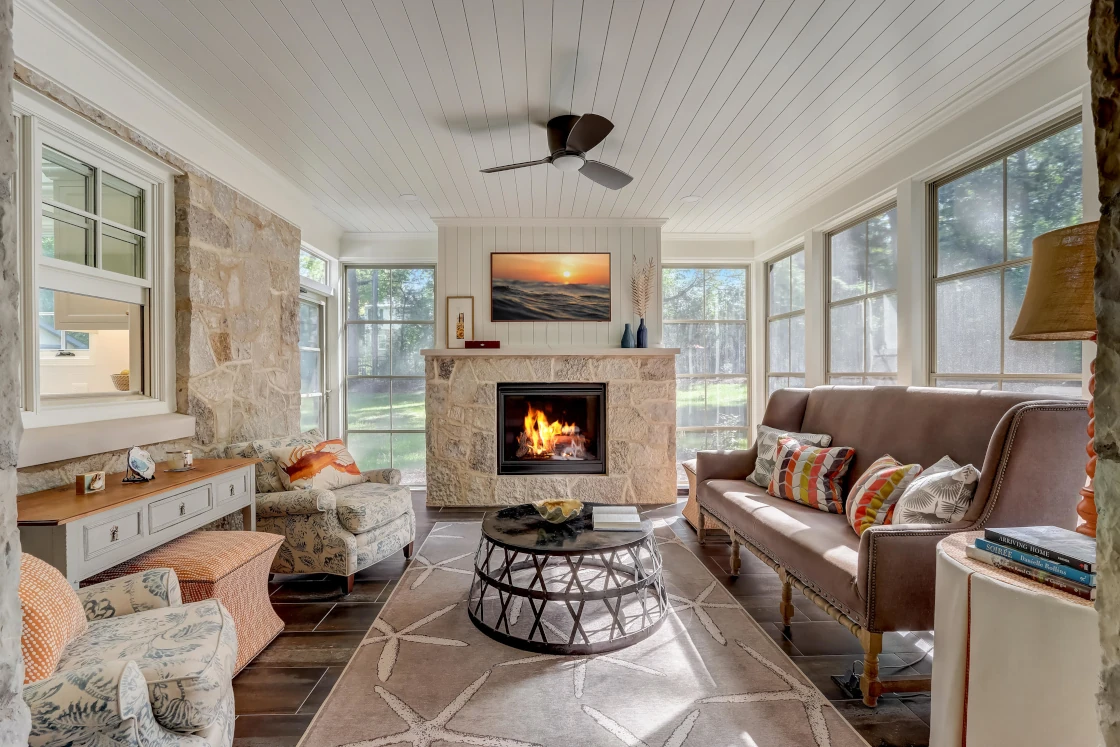
home addition sunroom
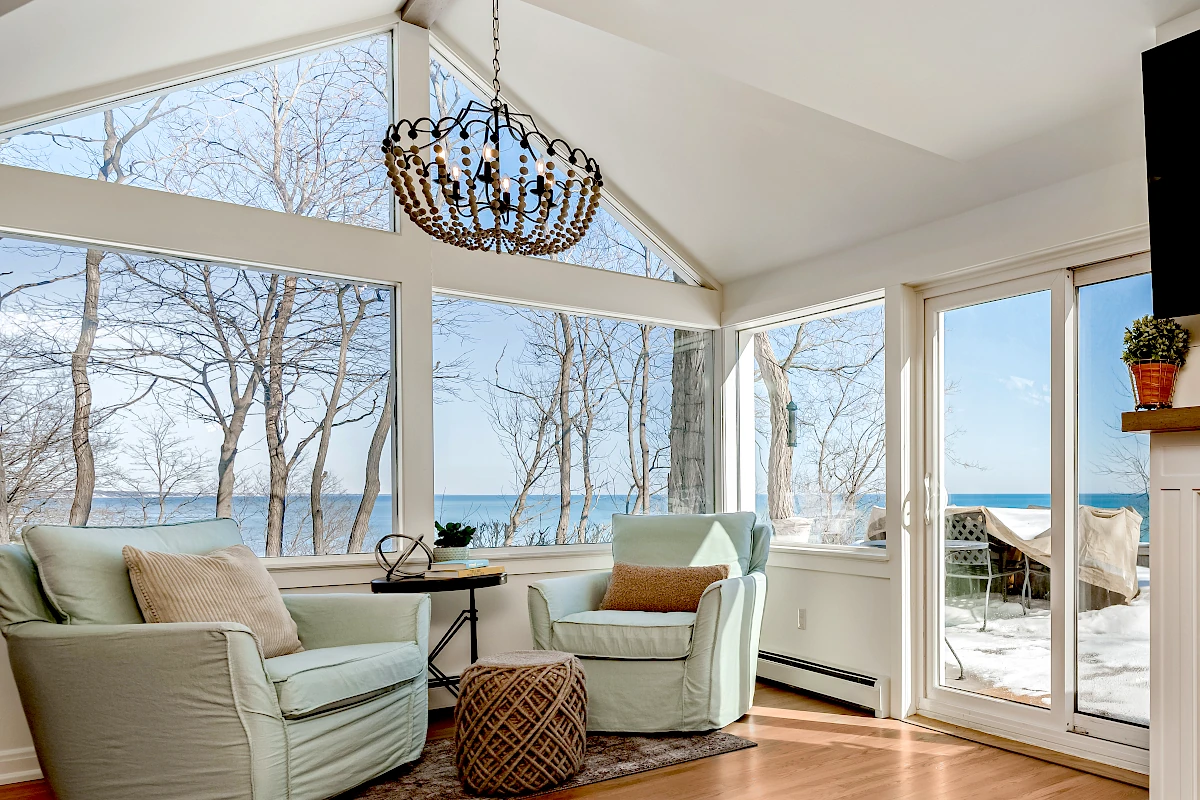
Sunroom addition by LaBonte Construction

Bring the beauty of the outdoors inside by adding a sunroom or conservatory to your home. This space allows you to enjoy natural light, scenic views, and a connection with nature throughout the year.

When designing your sunroom, consider choosing suitable materials that provide insulation and maximize sunlight. Add comfortable seating, plants, and even a small dining area to create a cozy and refreshing space.

Considerations for Adding a Home Addition

Expanding your home with an addition is an exciting endeavor, but it’s essential to consider several factors to ensure a successful and smooth process. Here are key aspects to keep in mind:

Budget and Financing Options

Before embarking on any home addition project, establish a realistic budget. Determine how much you can afford to invest in the addition, including construction costs, materials, permits, and any additional expenses.

It’s also crucial to explore financing options such as personal loans, home equity loans, or lines of credit to help fund your project.

Consult with financial advisors or lenders to assess the best approach for your specific situation.

Permits and Regulations

Adding an addition to your home often requires obtaining permits and complying with local building regulations. Research and understand the specific permits and approvals necessary for your project. These can vary based on the location and the scope of the addition.

It’s important to ensure that your project adheres to zoning restrictions, building codes, and any other relevant regulations. Consulting with a professional home remodeling company can be invaluable in navigating this process.

Architectural and Structural Considerations

When planning an addition, architectural and structural factors must be carefully considered. Assess how the new addition will integrate with the existing structure, ensuring a cohesive and aesthetically pleasing design.

Engage an architect or structural engineer to evaluate the feasibility of the project, assess load-bearing requirements, and ensure that the addition aligns with the overall integrity of your home.

Their expertise will help guarantee that the construction is safe, structurally sound, and harmonious with the existing property.

Home Addition: Conclusion

Adding an addition to your home presents an incredible opportunity to enhance your living space and create new functional areas that align with your lifestyle and needs. Whether you’re in search of a home office, guest suite, entertainment room, or any other purpose, the possibilities are limited only by your imagination.

When you’re ready to discuss adding on to your home, contact us at LaBonte Construction.

We were voted Best of Milwaukee 2024 by Shepherd Express readers in the Home Remodeling, Basement/Rec Room Remodeler, Bathroom Remodeler, and Kitchen Remodeler categories.

Transform your Space with an Open Floor Plan

An open floor plan has become popular in home remodeling for creating spacious environments that bring people together.

Whether you enjoy hosting gatherings, spending quality time with family, or simply want a home that feels more open and connected, open floor plan homes offer a world of possibilities.

What is an Open Floor Plan?

open floor plan home remodeling
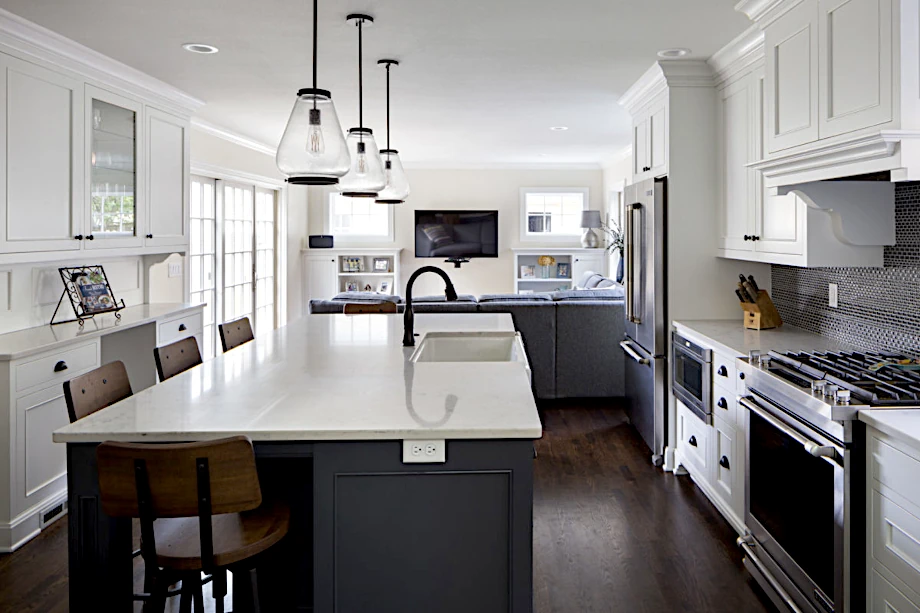
A home remodel in Milwaukee / LaBonte Construction.

An open floor plan is a design concept that removes barriers and walls between different living areas. It creates a spacious and seamless flow throughout the home and embraces a fluid and interconnected approach to living spaces.

Open floor plan homes typically feature the kitchen, dining area, and living room integrated into one expansive space. The uninterrupted sightlines make the entire area feel larger and more connected.

Natural Light

One of the key features of an open floor plan is the abundance of natural light that fills the entire area. Without walls obstructing the flow of light, it can freely travel throughout the space, creating a bright and airy atmosphere. This enhances the overall aesthetics and contributes to a more uplifting and pleasant living environment.

Versatility

Fewer walls and defined rooms means freedom to arrange furniture and create functional zones that suit your needs. You can create a cozy reading nook by the window, a play area for children, or a spacious entertainment zone.

Flow and Connectivity

Furthermore, open floor plans promote better traffic flow within the home. Without walls and narrow corridors, you can move around more freely and effortlessly. It eliminates the feeling of confinement and allows for a more intuitive and efficient use of space.

Enhanced Entertaining and Family Time

open floor plan home remodeling
A home remodel in Whitefish Bay / LaBonte Construction.

Imagine hosting a dinner party where you can prepare meals in the kitchen and still converse with guests in the dining and living areas.

With an open floor plan, you no longer feel isolated in the kitchen, away from the action. Instead, you can be part of the lively atmosphere and interact with your guests effortlessly.

Also, an open floor plan allows for better circulation of guests during parties or events. People can move freely between the different areas without feeling cramped or confined.

The welcoming and inviting atmosphere of an open floor plan will make your home the go-to place for celebrations and get-togethers.

Flexibility and Adaptability

Additionally, the open nature of the floor plan makes it easier to arrange furniture and create different seating areas for various activities.

You can set up a cozy corner with comfortable chairs for intimate conversations or create a larger seating arrangement for movie and game nights. The possibilities are endless, and you have the flexibility to adapt the space to accommodate different types of gatherings.

This flexibility is particularly valuable in growing families, as it allows the home to evolve as your needs change over time.

For example, you can create a playroom for young children where they can be safe and kept within view. As they grow older, the same space can be repurposed as a study area or entertainment zone.

The absence of walls makes it easier to modify the layout and functionality of the space without the need for major renovations.

Additionally, an open floor plan promotes better traffic flow throughout the home. There are no narrow hallways or tight corridors to navigate, which can often feel restrictive.

Instead, you can move freely and seamlessly between different areas, creating a more spacious and interconnected environment.

Improved Safety and Efficiency

open floor plan home remodeling
An open floor plan home remodel in Bayside / LaBonte Construction.

The open layout also promotes better communication and interaction among family members.

Whether you’re preparing a meal in the kitchen while your children play nearby or you’re hosting guests in the living room, the absence of walls allows for seamless conversations and engagement. You can easily participate in discussions, keep an eye on everyone, and foster a sense of togetherness.

To promote safety and privacy in an open floor plan, consider strategically placing  design elements such as furniture placement, area rugs, and decorative screens.

These elements can help define different zones, create visual boundaries, and provide a sense of privacy when desired.

Accessibility

An open floor plan naturally supports accessibility. With fewer doorways and confined spaces, wheelchairs and walkers encounter fewer obstacles. And more natural light throughout the home enhances visibility.

An accessible home can also attract a larger pool of potential buyers when it’s time to sell.

Energy Efficiency

Open floor plans also contribute to improved energy efficiency. Natural light reduces the need for artificial lighting during the day, saving energy and lowering electricity bills. Adequate natural light has been shown to enhance mood, productivity, and overall well-being.

Open floor plans improve airflow and ventilation, promoting a healthier indoor environment and reducing reliance on mechanical ventilation systems.

This natural ventilation helps maintain optimal air quality, prevents the buildup of stale air or pollutants, and enhances the overall comfort of the living space.

Also, an open floor plan distributes heat and cool air more effectively. This improved temperature regulation can result in more efficient heating and cooling, reducing energy consumption and utility costs.

Additionally, open floor plans facilitate passive heating and cooling techniques such as cross ventilation and solar gain.

See also: Our posts on energy-efficient windows and energy-efficient insulation.

Transform Your Home with an Open Floor Plan

An open floor plan improves visibility and safety within your home by allowing for better sightlines, promoting communication and interaction, and reducing potential hazards. It creates a more open and connected living space where you can easily monitor activities, foster family togetherness, and enjoy the benefits of increased natural light.

Transforming your home with an open floor plan offers a multitude of benefits that can enhance your lifestyle and elevate your living space. From the sense of spaciousness and flexibility to improved entertaining capabilities and better visibility, open floor plans have become increasingly popular for homeowners seeking a modern and functional living environment.

When you’re ready to discuss your home remodeling project, contact us at LaBonte Construction.

We were voted Best of Milwaukee 2024 by Shepherd Express readers in the Home Remodeling, Basement/Rec Room Remodeler, Bathroom Remodeler, and Kitchen Remodeler categories.

Custom Closets to Increase Home Storage

Are you feeling cramped and cluttered in your own home, constantly tripping over things or digging through piles of clothes? Home remodeling with custom closets can help solve your storage woes.

At LaBonte Construction, we’ve helped families enjoy the transformative power of custom closets. You can maximize your space, reduce clutter, and make your home feel more organized and comfortable. In this guide, we’ll show you where custom closets can make a big impact. And how we can help you design and install them.

Custom Closets: Bedroom

How you wake up sets the tone for your whole day. And a well-organized bedroom can help you get a great start. Unfortunately, bedrooms can be a magnet for clutter, particularly when it comes to shoes, clothing, and accessories.

One of our home remodeling clients, a couple with a small bedroom, had a closet that was overflowing. And they were constantly digging through piles of clothes to find what they needed. That’s when they decided to invest in a custom closet.

The benefits were immediate and impressive. With shelves and racks designed specifically for clothing and accessories, they could easily organize everything and keep the bedroom clutter-free. Plus, there was even extra space for a reading nook!

If you’re considering a custom closet for your bedroom, here are some tips to keep in mind:

  • Assess your storage needs: Take stock of what you have and what you need to store. Do you have a lot of shoes? Dresses? Sweaters? This will help determine what type of storage options you need.
  • Think vertical: Utilize the full height of your closet space with shelves, racks, and hanging rods.
  • Customize to your preferences: Do you prefer drawers or shelves? Open or closed storage? Customize your closet to fit your specific preferences and needs.

With a custom closet in your bedroom, you’ll be able to start and end each day in an organized and stress-free environment.

Living Room

custom closets living room
Even a narrow closet can have a big impact (Click to view larger image) / LaBonte Construction.

As a focal point for family activities and entertaining guests, your living room should be functional, comfortable, and clutter-free. But with books, toys, games, and other items, it can be tough to keep your living room organized.

A closet with built-in shelves and bins is perfect for storing toys and games. And you may be surprised at the difference effective storage can make in your family’s daily lives.

If you’re considering a custom closet for your living room, here are some tips to keep in mind:

  • Assess your storage needs: What items do you need to store in your living room? Books? Electronics? Toys? This will help determine what type of storage options you need.
  • Think beyond traditional storage solutions: A custom closet can provide unique storage options, such as built-in shelves and drawers.
  • Consider multi-purpose storage: A custom closet can also be designed to serve multiple purposes, such as storage and display.

Kitchen

The kitchen is one area of the home where storage is essential. From pots and pans to pantry items, it’s important to have a place for everything. But with limited cabinet and pantry space, it can be tough to keep everything organized.

If you struggle with finding space for pots and pans, they can end up cluttering your cabinets and counters. Consider a custom closet with deep shelves and hanging racks, perfect for pots and pans and maybe cookbooks and pantry items.

If you’re considering a custom closet for your kitchen, here are some tips to keep in mind:

  • Assess your storage needs: Take stock of what you need to store in your kitchen, from pots and pans to pantry items.
  • Think about accessibility: Design your closet with easy access in mind, so you can quickly grab what you need while cooking or baking.
  • Consider a pantry system: A custom pantry system can provide additional storage and organization options for your kitchen.

Bathroom

custom closets home remodeling bathroom
Click to view larger image / LaBonte Construction

The bathroom is one area of the home where storage is often overlooked. But with toiletries, towels, and other necessities, it’s important to have a place for everything.

A custom closet can include built-in shelves for towels and toiletries, as well as additional drawers and cabinets for extra storage.

If you’re considering a custom closet for your bathroom, here are some tips to keep in mind:

  • Assess your storage needs: Take stock of what you need to store in your bathroom, from towels to toiletries.
  • Think about accessibility: Design your closet with easy access in mind, so you can quickly grab what you need while getting ready.
  • Consider a vanity system: A custom vanity system can provide additional storage and organization options for your bathroom.

With a custom closet in your bathroom, you’ll be able to start your day feeling refreshed and organized.

Home Office

As more people work from home, having a functional home office is becoming increasingly important. But with papers, files, and office supplies, it can be tough to keep everything organized.

A custom closet can include shelves for files and office supplies, as well as additional drawers for extra storage. And you can also add a desk with built-in storage to provide more workspace.

If you’re considering a custom closet for your home office, here are some tips to keep in mind:

  • Assess your storage needs: Take stock of what you need to store in your home office, from files to office supplies.
  • Think about functionality: Design your closet with your work style in mind, so you can easily access what you need while working.
  • Consider a custom desk system.

Garage

custom closets home remodeling hall closet
A custom hallway closet (Click to view larger image) / LaBonte Construction

The garage is often an overlooked area when it comes to organization and storage. But with tools, bikes, sports equipment, and seasonal decorations, it can quickly become cluttered and disorganized.

A custom closet can include built-in shelves and racks for their bikes and sports equipment. And additional drawers and cabinets for their tools and other items.

A workbench with built-in storage can provide a functional workspace.

If you’re considering a custom closet for your garage, here are some tips to keep in mind:

  • Assess your storage needs: Take stock of what you need to store in your garage, from tools to sports equipment.
  • Think about functionality: Design your closet with your hobbies and activities in mind, so you can easily access what you need.
  • Consider a workbench system: A custom workbench system can provide additional storage and workspace options for your garage.

With a custom closet in your garage, you’ll be able to easily find what you need and have a space to work on your projects.

Increase Storage Space and Improve Organization

Home remodeling with custom closets are an excellent way to increase storage space and improve organization in your home. By assessing your storage needs and designing a custom closet system that meets your unique needs and preferences, you can transform any space in your home into an organized and functional area.

When you’re ready to add custom closets for your home remodeling project, contact us at LaBonte Construction, voted Best of Milwaukee 2024 in Home Remodeling by Shepherd Express readers.
We also were voted best in the Basement/Rec Room Remodeler, Bathroom Remodeler, and Kitchen Remodeler categories.

Budget Home Remodeling to Add Value

Budget home remodeling projects can add value to your home without breaking the bank. Let home magazines, remodeling TV shows, books, and websites inspire you with DIY projects.

Instead of taking on some major and time-consuming projects, try tackling some of these simpler ones. With a little effort, goodwill, and some help from family and friends, the value of your home will increase significantly, and you can confidently put it on the market.

Get rid of old carpet

Those old carpets are dated and worn out. And they may also trap contaminants and allergens, degrading air quality in your home.

Tile flooring or laminated floors are environmentally friendly and natural, and therefore always a better solution. Replacing your old carpets with a hard surface will reduce odors, make cleaning easier, and increase appeal to potential buyers.

Add insulation

As we noted in our post on energy-efficient insulation, a home loses as much as 40 percent of its energy due to air infiltration. The right insulation helps retain heat inside of your home while preventing air from leaking in. Apart from maintaining comfortable indoor temperatures, it also helps prevent roof and wall damage, such as leaks and mold.

Add trees and landscaping

Add landscaping.

In addition to adding value to your home through curb appeal, trees provide shade. Well-placed trees can help reduce cooling costs during the summer and lower the surrounding temperature.

Good landscaping design is sure to bring value to your home. See the Department of Energy website for ideas on Landscaping for Shade. If you don’t have the time for gardening, you can add low-maintenance shrubs and other colorful plants to add curb appeal.

Add a water filtration system

A water filtration system on your kitchen faucet is a small, inexpensive addition that will appeal to many home buyers. You can also stop buying bottled water .

Get rid of the popcorn ceiling

budget home remodeling popcorn ceiling
Popcorn ceiling.

Popcorn ceilings were popular in the ’60s and ’70s. Applying texture to drywall and plaster ceilings was a quick and easy way to hide imperfections with no painting required afterwards. However, its rough texture attracts dust and cobwebs and makes patching cracks and holes a headache.

You could remove it yourself, but popcorn ceilings installed before 1980 may contain asbestos. To be safe, have a professional test it first. If it’s asbestos-free, you just need to buy a solution to soften the texture and scrape the popcorn away.

Update your bathroom

Remodeling your bathroom is a great way to add more value to your home. Perhaps a full remodel is not within your budget. But small changes can freshen it up, such as replacing the wallpaper or lighting, add some fancy cupboard knobs, or update the faucet and shower heads.

Add energy-efficient fixtures

Energy-efficient appliances lower utility bills and also increase visual appeal throughout your home. A ceiling fan can enhance a room’s decor while also providing light and a soft breeze during the summer. Ceiling fans can also reduce your reliance on air conditioning.

Update your kitchen

A kitchen update can do wonders for the value of your home. If your sinks and appliances are very old and outdated, look into replacing them first. Next, you can update your cabinets with new varnish or paint and swap out those old handles for modern ones.

Keep up with the maintenance

Perform regular maintenance. Look out for small things that need to be repaired or replaced so they don’t become larger problems. For example, a leak spot on the ceiling can cause great damage to your roof if not taken care of promptly. Even small visible issues can cause potential buyers to worry that there are more issues out of view.

Repaint your home

A new paint job is a simple and cost-effective way to improve your home and increase its value. Freshly painted rooms will look clean and up to date. If your home is up for sale, the best thing to do is to choose neutral colors. You can certainly do the painting yourself. But hiring a professional ensures a high-quality finish.

See also: Our post, Paint Sheens Explained.

Make your home appear more spacious

The bigger the square footage, the bigger the value. However, if you have a smaller home, there are some visual tricks to make it appear bigger. Rooms can be made to appear bigger by strategically rearranging furniture.

Or you can replace heavy closed draperies with blinds or shutters, which will let in more light. Another great trick is to add a single large mirror in a room which will visually double the space.

Clutter also makes a room feel smaller than it actually is. Store your clutter out of sight or add some attractive shelves to an underused space and keep your things organized.

Upgrade your water heater

An old water heater can be a turn off for some home buyers. Tankless water heaters are more efficient—heating only the water you need as you need it—and will certainly leave a great impression on the buyers.

Update your appliances

Today, most homebuyers are looking at energy-efficiency. Appliances with an Energy Star label use 10 to 50 percent less energy and water than other conventional appliances. New models look great, and many are stainless steel which is a bonus. If you do not have the budget for new, modern appliances, at least opt for upgrading your lighting to Energy Star one.


See also: Our post on Appliances For Your Next Kitchen Remodel.

Have a welcoming entrance

The front door and porch are one of the first things that will be noticed as buyers make their way to your home. An old, worn-out front door can be replaced with a new and stronger one. Or you can simply repaint it with an inviting new color.

Add storage space

budget home remodeling closet space
Add closet space in the bedroom.

High on the wish lists of many homebuyers is more storage space. Consider adding closets or a custom-shelving system within existing closets. Areas worthy of special attention may include:

  • The bedroom wardrobe—because people don’t usually complain about having too much space for their clothes.
  • The garage—a good place to store rotating seasonal items.

Update your fixtures

Fixtures in your home include curtain rods, light fixtures, doorknobs, switch plates, outlet covers, etc. Make sure that these are updated throughout your home because sometimes the devil is in the details. Outlets covers and switch plates, for example, look more attractive when made from metal. These changes are easy to do yourself and do not cost that much, just make sure you choose colors that appeal to a larger crowd.

Refresh the exterior

If you’re not inclined to repaint your home’s exterior, at least power wash it to recreate a like-new sparkle. While you’re at it, make sure to give the driveway and patio a wash as well.

Budget home remodeling: Conclusion

When your home is finally on the market, it is vital to keep a tidy and clean house, as an untidy home can give the impression of low maintenance overall. Add some homey touches like flowers, cookies, music that will instantly make the potential buyers feel at home.

If you would like to consult a professional, we would be happy to offer our expert guidance. So please contact us at LaBonte Construction, voted Best of Milwaukee 2024 in Home Remodeling by Shepherd Express readers.
Bathroom Sinks: Types and Materials

This guide to bathroom sinks will help you find the type that matches your style for your home remodeling project.

Here we will show you the drop-in, wall mount, corner, pedestal, undermount, vessel/bowl, console, and trough bathroom sinks. We will also discuss a variety of bathroom sink materials.

Bathroom Sinks: Types

Drop-In Bathroom Sinks

As the name suggests, these sinks fit into an existing hole in a countertop or vanity. Also known as self-rimming sinks, the rim around the edge overlaps the countertop. The weight of the sink, as well as sink clips beneath it, hold the sink in place.

Affordability and DIY-friendly installation make drop-in sinks popular with homeowners.
  • Pros
    • Easy to clean.
    • Affordable.
    • Classic design.
  • Cons
    • Requires a countertop.
    • Takes up valuable counter space.
    • Outer rim can collect grime.

Wall-Mounted Bathroom Sinks

bathroom sinks wall mount home remodeling
A wall-mount corner sink in a Milwaukee home remodel / LaBonte Construction.

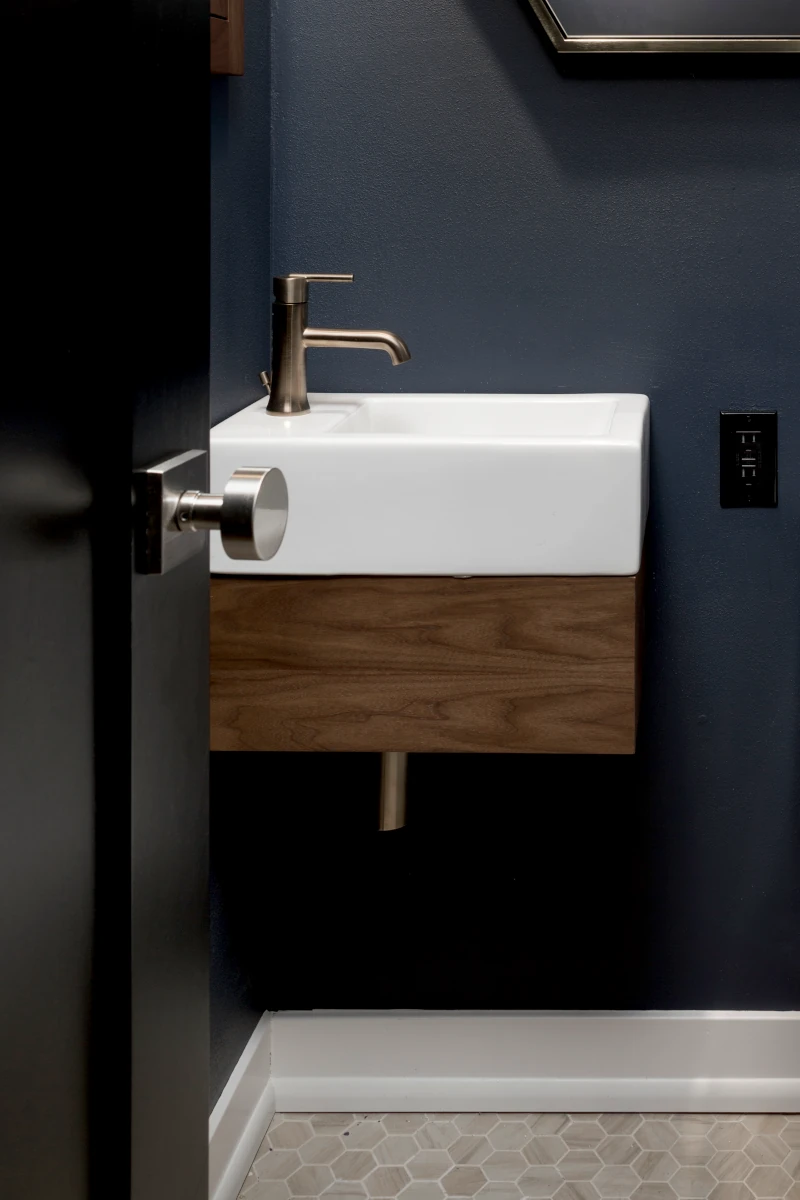
Wall-mounted sinks have no cabinet or countertop and attach directly to a wall bracket. They save space in small bathrooms and can often accommodate wheelchairs.
Wall-mounted sinks are popular with DIYers. But it may be a good idea to have an extra pair of hands for supporting the sink during installation.

  • Pros
    • Space-saving solution.
    • Affordable.
    • Versatile design and material options.
  • Cons
    • Visible plumbing fittings.
    • Lack of storage space.
    • Tends to go in and out of style.

Corner Bathroom Sinks

As the name implies, these space-saving sinks allow for added elbow room in tight quarters. Also, corner sinks fit snugly into the corner of the bathroom and don’t require a countertop.

Corner sinks are commonly found in a half bath that’s been squeezed into a former closet or under-stair conversion.

  • Pros
    • The ultimate solution to limited space.
  • Cons
    • Tend to cost more than a more common sink of the same material.

Pedestal Bathroom Sinks

bathroom sinks pedestal sinks home remodeling
Pedestal sinks in a Milwaukee-area home remodel / LaBonte Construction.

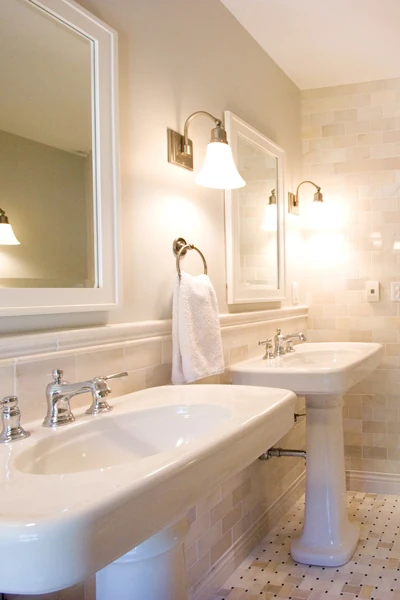
Pedestal sinks are standalone sinks with the basin attached to a base. The pedestal conceals plumbing fittings and connections inside.

Like wall-mounted sinks, pedestal sinks are a good solution for small spaces. But they are not as wheelchair-friendly.

  • Pros
    • Available in modern, trendy designs.
    • Compatible with small bathrooms.
    • Does not require an entire vanity.
  • Cons
    • Lack of storage space.
    • Tends to go in and out of style.

Undermount Bathroom Sinks

bathroom sinks undermount home remodeling
Undermount sinks in a Milwaukee-area bathroom remodel / LaBonte Construction.

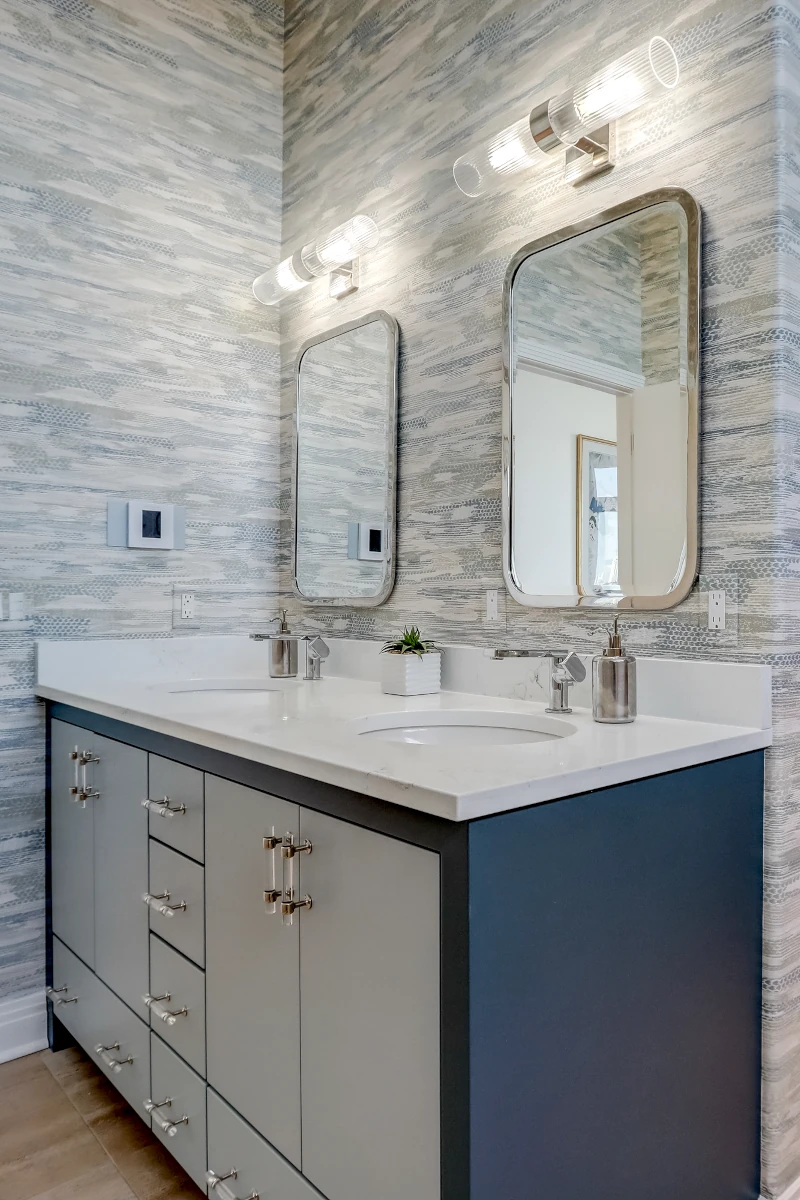
Like a drop-in sink, undermount sinks require a countertop with a hole. But they are mounted underneath the counter rather than dropped into the hole.

This arrangement can increase the total amount of counterpace and create a more modern, elegant look.

  • Pros
    • Offers more counterspace than drop-ins.
    • Modern design.
    • Easy to clean.
  • Cons
    • Works with limited countertop materials.
    • Can allow more water spillage than other sink types.
    • More expensive than drop-in sinks.

Vessel/Bowl Sinks

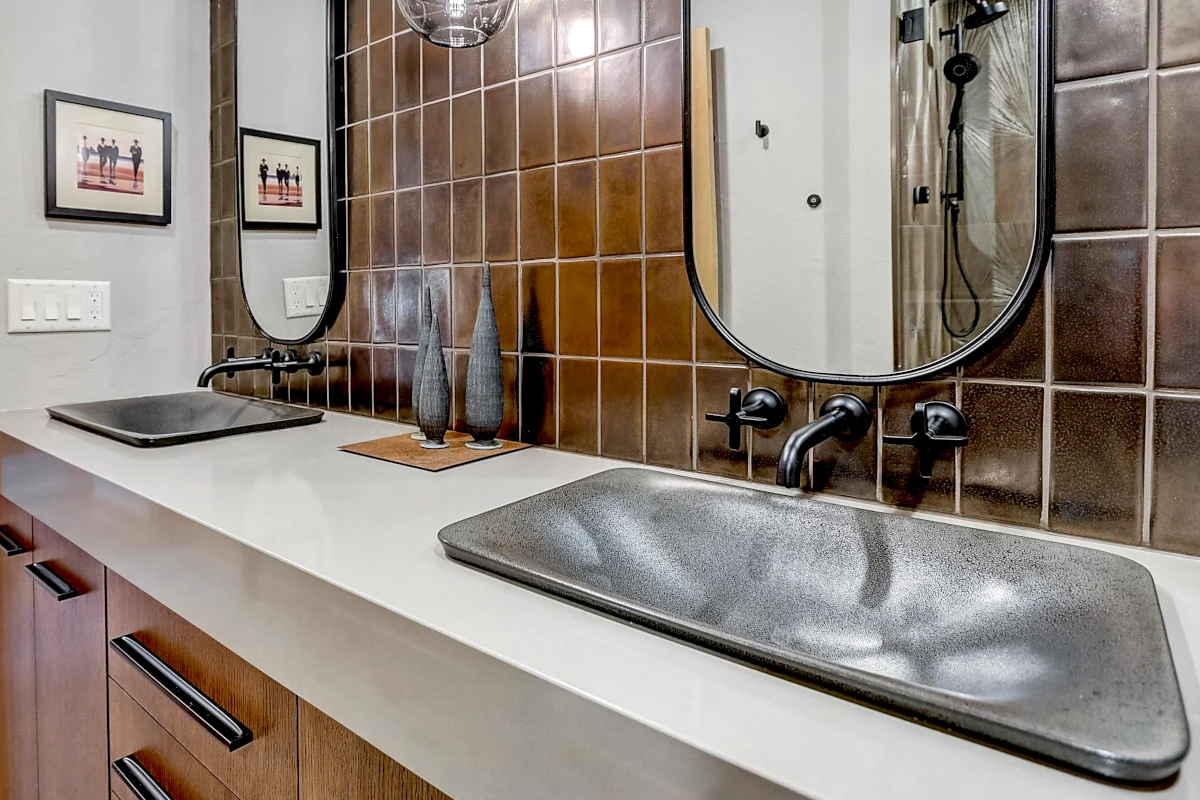
With their bold design, vessel sinks are meant to be noticed. The sit above the counter rather than recessed below it. Homeowners often choose beautiful bowl-like basins made out of natural stone, copper, marble, glass, wood, and other materials.

Vessel sinks are a throwback to sink design from the 1800s, which featured a pitcher of water and a bowl.

  • Pros
    • Statement piece for bathroom remodel.
    • Various basin options.
    • Allows for extra counter space and storage.
  • Cons
    • Possible to cause damage to sides of basin sinks.
    • Can be expensive, depending on materials used.

Console Bathroom Sinks

bathroom sinks console home remodeling
Console sink in a home remodeling project in Whitefish Bay / LaBonte Construction.

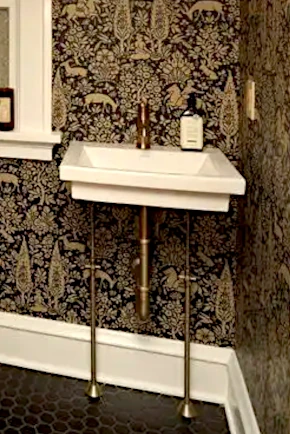
Similar in appearance and installation to wall-mounted sinks, console bathroom sinks have legs that support some of the weight. The legs are usually metal but are sometimes ceramic or porcelain.

Like wall mounts and pedestals, console sinks don’t allow for countertop storage space, but some models come equipped with towel racks or minimal shelving.

Trough Sinks

The old-style trough sink is enjoying a revival with the popularity of the “farmhouse modern” style. Deep and wide, they often have multiple faucets attached to the same basin.

They’re available in a number of types, including undermount, wall mount, drop-in, console, and even vessel.

  • Pros
    • Space-saving alternative to a dual sink.
    • Versatile materials and design options.
    • Usually easy to clean.
  • Cons
    • Takes up a lot of counterspace.
    • Often only an option for larger bathrooms.

See also: Our post on Types of Bathtubs.

Bathroom Sinks: Materials

Bathroom sinks come in a variety of material options.

Ceramic

The most common material used in bathroom sinks, ceramic is a type of pottery comprised of clay, powder, and water. After shaping, it is treated to extreme heat for hardening.

  • Pros
    • Non-porous and smooth surface resists discoloration.
    • Easy to clean; no need for abrasive brushes.
    • Available in a wide variety of shapes and sizes to fit all bathroom designs.
  • Cons
    • Can get chipped and cracked, albeit with significant effort.
    • Can be pricey, depending on design and function.

Porcelain

Commonly found in older homes, porcelain is similar to ceramic but significantly harder.

It is also quite easy to clean, which also explains its popularity as a material for toilets.

  • Pros
    • One of the most affordable types of bathroom sinks in the market.
    • Low maintenance.
  • Cons
    • Not ideal for heavy use. Not as durable as ceramic.
    • Usually comes in plain and simple designs.

Natural Stone

Natural stone is painstakingly carved into its sink bowl shape, so the sinks can be quite expensive. And every natural stone bathroom sink features a unique appearance with various colors and quirks—no two are the same.

Types of natural stone sinks include marble, sandstone, granite, onyx, green jade, and travertine.

  • Pros
    • Unique, earthy appearance fits perfectly with specific interior designs.
    • Highly resistant to heat.
    • Natural stone basins are among the easiest to clean with the least amount of maintenance needed.
  • Cons
    • Unprotected edges are at risk of chipping.
    • Subpar designs could lead to stability issues.
    • Usually have less surface space, which increases water spilling.

Stainless Steel

Along with ceramic, stainless-steel sink is among the most common bathroom sinks. Cheaper but with high durability, stain resistance, and ease of cleaning, stainless steel complements most modern home aesthetics. And its high resistance to bacteria build-up makes it a practical choice overall.

  • Pros
    • The most affordable type of bathroom sink.
    • Easier to maintain while also extremely durable.
    • 18-gauge stainless-steel sinks are more resistant to water stains and scratches; 16-gauge are more durable and resistant to dents but are heavier.
    • Perfect for homes with a contemporary design.
  • Cons
    • Silver finish not visually compatible with traditional interior design.
    • 22-gauge stainless-steel sinks are quite flimsy with a high risk of denting.

Wood

Common wood sinks include teak and bamboo.

  • Pros
    • Wood bathroom sinks are aesthetically unique and pleasing.
    • Wooden sinks are also compatible with a wide variety of designs from traditional to modern.
    • Eco-friendly; wood bathroom sinks are increasingly manufactured using recycled material.
  • Cons
    • Usually high maintenance. Must be adequately pre-treated with proper coating.
    • Must be wiped clean and dried after use.

Resin

Made with a poly-resin combination. resin has stone-like qualities but with a smoother surface and appearance.

Also referred to as “man-made stone,” resin is notable for its evenly colored and unique appearance.

  • Pros
    • Incredibly versatile in terms of shapes and sizes: Available in standard bowl-shaped basins as well as uniquely shaped designs.
    • Scratches can be quickly fixed by applying car-buffing products.
    • Usually lightweight and can be easily installed by a single person.
  • Cons
    • Petroleum-based compounds can damage the surface of the resin.
    • Bolts and screws can sometimes get shaken loose over time.
    • Usually won’t last as long without maintenance compared to stainless steel basins.

Bronze

Bronze is mostly made from copper, but also incorporates other alloys, which enhances its overall durability.

Two types of bronze used in bathroom sinks are polished (with a glossy and shinier finish) and satin (with a matte finish). They will both darken over time, which can enhance its appearance.

  • Pros
    • Highly corrosion-resistant, durable, and long-lasting.
    • Has natural antimicrobial properties, reducing risk of mold and mildew build-up.
    • Develops a unique aesthetic appearance with time.
  • Cons
    • Usually needs specialized treatment for maintenance, which can be troublesome for homeowners.
    • Depending on the finish, bronze basins can be susceptible to scratches and dents.

Tempered Glass

Tempered glass is made with specialized chemical methods and thermal bonds, which makes it more shatter-proof than standard glass.

  • Pros
    • Can offer higher customization options.
    • Can accentuate the overall flow of the bathroom interior.
    • Low maintenance.
    • Dozens of different styles and colors available.
  • Cons
    • Stronger but still breakable if the right amount of force is applied.

Everything You Need for Your Bathroom Remodeling Project

We hope this review of bathroom sink styles and materials has given you some fresh ideas for completing your bathroom remodeling project.

If you would like to consult a professional, we would be happy to offer our expert guidance. Please contact us at LaBonte Construction.

We were voted Best of Milwaukee 2024 by Shepherd Express readers in the Home Remodeling, Basement/Rec Room Remodeler, Bathroom Remodeler, and Kitchen Remodeler categories.

Window Types for your Home Remodel

We hope this survey of window types will help you make the right choices for your home remodel.

Windows are an essential consideration to maximize curb appeal and add character for a home’s exterior. But they also must satisfy the everyday needs of the people living inside. So keep both functions in mind when choosing windows for your home remodel.

See also: Our post on Energy-Efficient Windows.

Window Types: Casement

Casement windows have long been a traditional window style in American home building.

Also known as crank windows for the method used to open them, they swing in or out, attached to the frame by one or more side hinges.

Casement windows can have a tighter seal when locked than double-hung windows.

Popular for:

Kitchens, home offices, bathrooms.

Pros

  • Easy to open and close.
  • Weathertight, energy-efficient seal.
  • Promote great airflow.

Cons

  • Mechanical parts may wear or break.
  • Prone to damage if left open in bad weather.
  • Not suitable for window air conditioning units.

Double-Hung or Single-Hung Windows

Double-Hung Window in Milwaukee Home Remodel

Double-hung window in Whitefish Bay home remodel (Click for larger image) / LaBonte Construction.

Double-hung windows are the most common windows we install in remodeling projects. A double-hung window has two sliding sashes. The bottom panel opens by sliding the sash up, while the top panel opens by sliding the sash down.

The top and bottom sashes fit snugly into the window frame, helping to limit air infiltration into your home.

Double-hung windows are ideal for families, as they’re a safer choice for homeowners with children or pets. You can open the upper sash for necessary venting and close the bottom sash to prevent accidental falls.

Popular for:

Second-story spaces, living rooms, bedrooms.

Pros

  • Offer great ventilation.
  • Widespread retail offerings.
  • Cost-effective.

Cons

  • May develop slipping problems.
  • Require more physical effort to open or close.
  • Seal isn’t weathertight.

Picture Windows

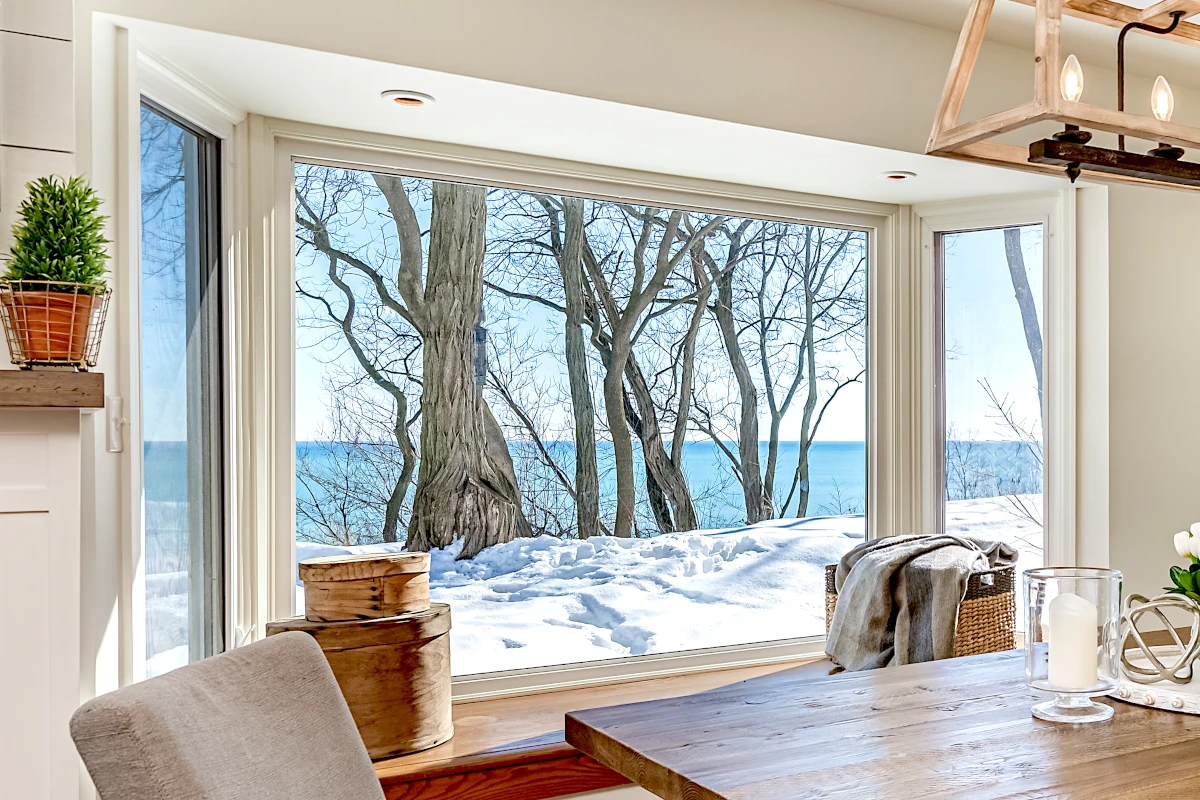
Picture windows are great for providing lots of natural light and unobstructed views of the outdoors. These large square or rectangular windows are a popular option for showcasing spectacular views, such as a lake, mountain, or woods.

As permanent, unmoving windows, they offer a weathertight seal and a lower cost than mechanical windows.

However, picture windows provide no airflow, so make sure the room has other sources of ventilation.

Also, picture windows aren’t always energy efficient. The heat from inside the home may escape during cooler months, while sunlight may overheat the interior space in warmer months.

Popular for:

Living rooms, bedrooms, home offices.

Pros

  • Deliver an unobstructed view.
  • Less expensive than mechanical windows.
  • Weathertight seal.

Cons

  • Outside can be hard to clean.
  • May be an energy drain.
  • No airflow or ventilation.

Bay Windows

Bay Window in Wisconsin Home Remodel

Bay window (Click for larger image) / LaBonte Construction.

Bay windows are generally three separate adjacent windows that extend outward from the wall of a home. This window provides a wider-angle view of the outdoors than a picture window alone. Also, it can provide direct sunlight during more hours of the day.

They are often the visual centerpiece of living rooms, family rooms, and parlors. Usually, the center window is a larger picture window, while the two on each side are casement or single- or double-hung windows.

Bow window

A bow window usually features more than three window surfaces, producing more of an arch shape. Unlike bay windows, all the windows are identical. Due to their complexity, they can be expensive to install.

Popular for:

Kitchens, dining rooms, bedrooms.

Pros

  • Architecturally interesting.
  • Allow a lot of natural light.
  • Can add square footage inside a home.

Cons

  • Expensive.
  • Require skilled installation.
  • May block walkways or exterior space.

Sliding Windows

Sliding Window in Whitefish Bay Home Remodel

Sliding window in a Milwaukee bedroom remodel (Click for larger image) / LaBonte Construction.

Sliding windows are structurally similar to single- or double-hung windows. But their horizontal orientation doesn’t have to overcome gravity.

Two side-by-side pieces of glass slide horizontally along the top and bottom tracks. In some varieties, only one panel slides.

Popular for:

Kitchens, living rooms.

Pros

  • Among the least expensive windows to install.
  • Good options for egress windows.
  • Easy to operate and durable.

Cons

  • May stick over time.
  • Cleaning the outside is challenging.
  • Center frame obstructs views.

Awning Windows

Awning Window in Wisconsin Home Remodel

Awning window below a picture window (Click for larger image) / LaBonte Construction.

Awning windows use a crank mechanism to open, similar to casement windows. But awning windows open up from the bottom.

These windows get their name from the awning-like protection they provide when open. This makes them good options if you like to keep your windows open during rainfall.

Popular for:

Bathrooms, hallways, kitchens.

Pros

  • Can remain open during rainfall.
  • Quite airtight and secure.
  • Easy to open and close.

Cons

  • Mechanical parts may wear or break.
  • Prone to damage if left open in elements.
  • May obstruct exterior spaces.

Decorative Glass Windows

Available in a variety of styles from stained glass to glass blocks, decorative glass windows are generally stationary. They provide light to the inside while also offering privacy and visual appeal.

Although they offer natural light to the interior, decorative glass windows are not the way to go if you want an exterior view.

Glass block windows

Glass block windows are produced with blocks that are mortared in place. The thick blocks are usually semi-opaque glass that allow light to enter the room while distorting the view. So glass block windows are standard in places of high privacy, like bathrooms.

Stained glass windows

With different colors and designs to choose from—such as abstract or pictorial—stained glass windows allow light to pass into your house through a tinted color window pane. They are works of art in and of themselves!

Popular for:

Bathrooms, laundry rooms, entryways.

Pros

  • Offer light and privacy.
  • Can complement historical homes.
  • Weathertight.

Cons

  • No view of the outside.
  • May seem dated.
  • Thinner panes are not energy efficient.

Skylights and Roof Windows

Skylight in a kitchen remodel (Click for larger image) / LaBonte Construction.

Installed in the roofline, skylights and roof windows provide much-needed light for cramped spaces of the home like upstairs and in the attic.

  • Skylights are usually fixed and installed in a roofline.
  • Roof windows open and close for ventilation, using a hinge like a casement or awning window.

Popular for:

Attics, bathrooms, laundry rooms, hallways

Pros

  • Provide natural light to dark or interior spaces.
  • Can help with interior solar heating.
  • Aesthetically appealing.

Cons

  • Susceptible to damage from hail, other elements.
  • Improper sealing can result in leaks.
  • Challenging to clean.
  • Can be challenging to open.

Tilt-Turn Windows

Tilt-turn windows allow you to either tilt them outward or inward for ventilation, or turn them similar to a casement window. These windows are common in Europe, but have also made their way into many Milwaukee home remodels. Tilt-turn windows fit snugly into the frame, and the vinyl frame is an excellent insulator. Because they can be used as a vent, you can leave tilt-turn windows open without sacrificing security.

When you’re ready to discuss windows for your home remodeling project, contact us at LaBonte Construction.

We were voted Best of Milwaukee 2024 by Shepherd Express readers in the Home Remodeling, Basement/Rec Room Remodeler, Bathroom Remodeler, and Kitchen Remodeler categories.

Guide to Kitchen Cabinets

This guide to kitchen cabinets presents a wide range of construction methods, cabinet types, and cabinet styles for your home remodeling project.

Kitchen cabinets cover the most surface area in your kitchen and make the biggest first impression for visitors. They define the room’s character more than any specific item—or even a sink full of dirty dishes.

Fortunately, the huge variety in cabinet construction, designs, and styles can make every kitchen unique and distinctive.

Kitchen cabinets: Cabinet construction

The basic cabinet construction type refers to the cabinet box—before the doors are added.

Framed

Framed and Frameless Cabinets
Left: Framed cabinet. Right: Frameless cabinet.

Framed cabinets have a frame attached to the front of the box. Normally found in traditional designs, the frame provides strength to the cabinet. The extra lip can be an inconvenience when lifting items into or out of high shelves. But it also reduces the risk of accidentally knocking breakable items onto the floor.

Frameless

Without the frame, frameless cabinets offer increased storage space and a sleeker, cleaner design than framed cabinets.

Kitchen cabinets: Types of cabinets

Base cabinets

Base cabinets define the footprint for your floor plan and outline most of the kitchen’s workspace. And they support the countertops and form the foundation of most kitchen islands.

See also: Our post on 10 Different Types Of Countertops For Your Kitchen Remodel.

Standard base cabinets measure 24″ deep by 36″ tall, while custom base cabinets can be as deep as 27″. Base cabinetry rests atop a four-inch recessed riser called a toe kick.

In addition to traditional shelf storage, base cabinets can be customized with myriad storage options to maximize space and efficiency.

You can find pull-out organizing racks for everything from spices to pots and pans. Roll-out drawers store cutlery or support waste and recycling containers.

Custom Kitchen Cabinets in a Milwaukee Remodeled Home

Mission-style wall cabinets with glass panels (Click photo for larger image). / LaBonte Construction

Wall cabinets

Mounted to the wall, wall cabinets are also called upper cabinets or “uppers.” They’re generally 12″ deep, but some custom wall cabinets reach a depth of 17″.

Wall cabinets have the most design flexibility, available in a variety of widths and door styles. They can be stacked and extended to the ceiling for storage of infrequently used kitchen items.

In recent years, there has been a trend to replace upper wall cabinets with floating or open shelves. This trend may be best suited for particularly well-organized households.

Tall cabinets

Tall Shaker Kitchen Cabinets in a Milwaukee Home Remodel

Tall, mission-style, inset cabinets. (Click photo for larger image). / LaBonte Construction

Typically 83.5″ in height, tall cabinets often serve as pantry space or storage for brooms or other tall items.

Like base cabinets, tall cabinets can be customized with many pull-out storage options for easy access to pantry items or even small appliances. And a tall pantry or utility cabinet can extend from floor to ceiling. This provides up to four more cubic feet of storage than a wall and base cabinet in the same space.

Specialty units

Specialty units maximize square footage and organization efforts. Examples include corner cabinets, sink/cooktop fronts, suspended units, hutches, bottle racks, and appliance garages.

Kitchen cabinets: Types of doors or drawers

Partial overlay

Partial overlay cabinetry—also known as “standard” or “traditional” overlay—was the industry standard for many years. In partial overlay, the door only partially covers the cabinet face frame. Since the smaller doors and drawer fronts use less material than full overlay, homeowners often choose this style to save money. Partial overlay appears most often in traditional-style kitchens.

See also: Our post on Appliances For Your Next Kitchen Remodel.

Full overlay

In full overlay, the doors and drawer fronts almost completely cover the cabinet face. This look enhances a contemporary, modern, or transitional style. Using more materials, than partial overlay, full overlay costs more. Full overlay cabinets often do not have a vertical face frame panel between the two doors, making storage of larger items easier.

Inset

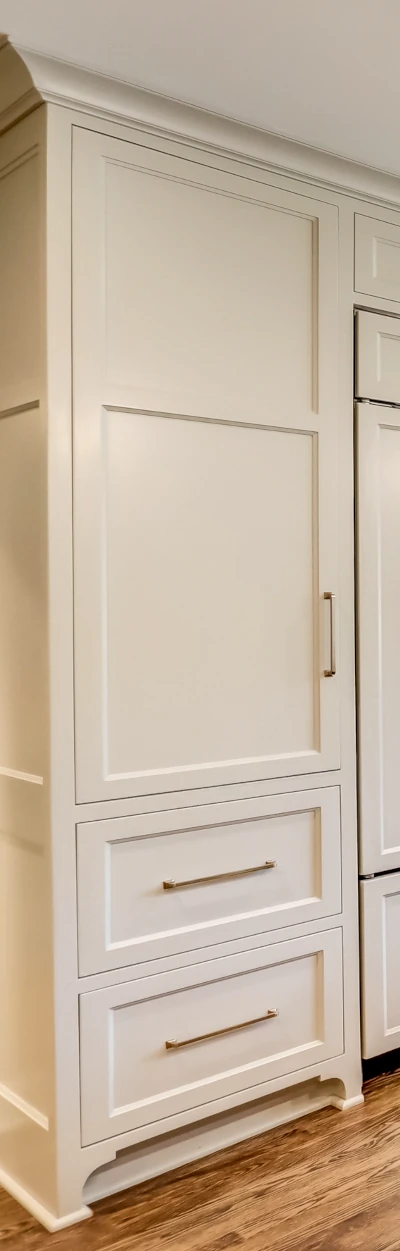
Shown above in the featured image and the tall cabinets photo, inset cabinet doors sit inside the frame openings, flush with the frame.

The high level of craftsmanship and the hardware required make inset the most expensive type of cabinet door. Inset cabinetry looks good in traditional, transitional, and craftsman-style homes.

Kitchen cabinets: Door styles

Shaker: The most popular style of cabinet door, the shaker style features a recessed center panel around a wide rectangular or square frame.

Mission: A minimalist variety of the shaker style, mission has no decoration around the inside of the frame.

Slab or Flat Panel Kitchen Cabinets in Wisconsin Remodeled Home

Slab kitchen cabinets (Click photo for larger image). / LaBonte Construction

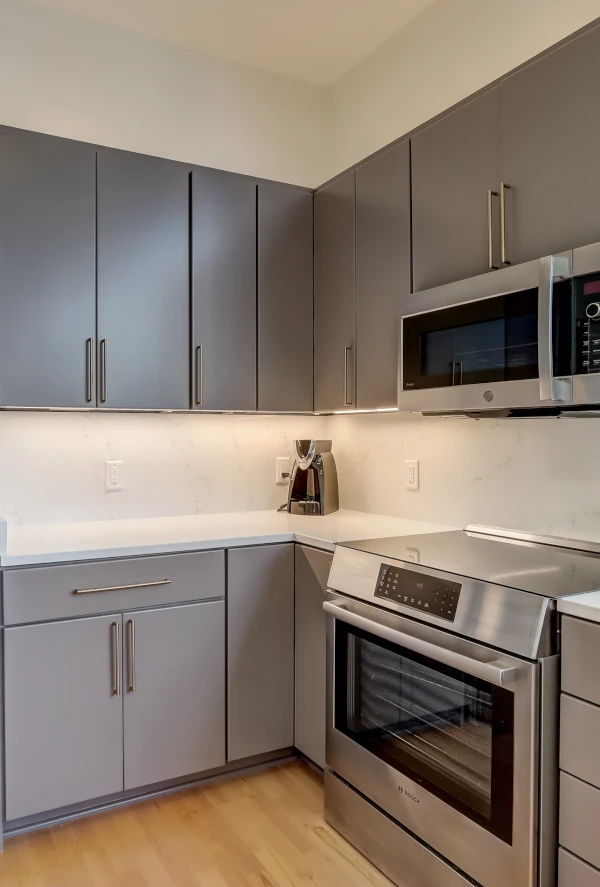
Slab (flat panel): A slab door features a single piece of material with no frame.

Glass front: Homeoweners often use glass front cabinets in combination with solid cabinets to showcase glass or decorative dishes.

Louvered: Louvered cabinet doors feature horizontal slats, similar to venetian blind designs.

Raised panel: Raised panel cabinets resemble shaker style, but the middle panel is raised to the same depth as the outside frame.

Beaded or Beadboard: Similar in appearance to mission style, the part behind the frame features either separate adjacent vertical panels or a single panel with vertical grooves.

Arched Cathedral: These are basically shaker style, but with an arched rather than a flat top frame line.

Kitchen cabinets: Cabinet materials

In its 2023 U.S. Kitchen Trends Study, the home design and remodeling website Houzz found that most homeowners (77%) selected solid wood as the primary material for new kitchen cabinets. Plywood was second-most popular at 20%. Other choices included medium-density fiberboard, glass, particleboard, acrylic, and stainless steel.

The study also found a fourth consecutive annual increase in the percentage of homeowners who hired cabinetmakers during kitchen renovations. This year the number was 32%, compared to 27% in 2020.

Also, custom-built cabinets accounted for 44% of new cabinets in kitchen renovations, followed by 31% “semicustom” cabinets, 12% stock, and 10% ready to assemble.

Creating a More Efficient Kitchen Space

The cabinets in your kitchen make a great starting point for creating a more efficient space. For fresh ideas from a professional kitchen remodeler, contact us at LaBonte Construction.

We were voted Best of Milwaukee 2024 by Shepherd Express readers in the Home Remodeling, Basement/Rec Room Remodeler, Bathroom Remodeler, and Kitchen Remodeler categories.

The Best TV Placement in Your Home

Where is the best TV placement for you? In many home remodeling projects, the TV ends up in the living room.

But maybe you frequently entertain guests in your living room while your TV stays dark. If you play board games or host a sewing circle more than watch TV, perhaps you should consider another room.

Regardless of which room in your home you put the TV, make sure you keep the following items in mind.

Position in room

If watching TV is the primary activity in your TV room, take care to find the best place for it. And when deciding the best position, consider the viewers—not the TV­—first.

Position relative to seating

The Society of Motion Picture and Television Engineers recommends that the TV screen fill at least 30 degrees of your horizontal field of view.

Product ratings website, Rtings.com, features a TV size-to-distance calculator to help determine the best seating distance. For your convenience, a sampling of its calculations are below:

TV size Distance from TV
42” 5.9 feet
50” 7 feet
55” 7.7 feet
65” 9.1 feet
75” 10.5 feet
85″ 11.9 feet

Position relative to lighting

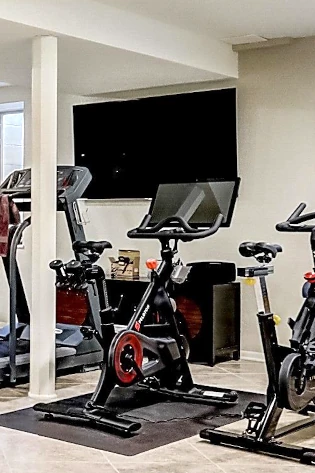
Mounted TV in Fitness Room

Ideally, your TV screen will be untouched by direct light or a significant reflection. That means a window on the opposite wall from the TV would be problematic.

Also, placing the TV directly in front of a window could aim two competing light sources at your eyes. This would cause eye strain and a compromised view of the screen.

The window in your TV room should be perpendicular to the screen and somewhat far from it. Letting your TV light itself will ensure you get the best picture possible.

But it’s also important to have sufficient ambient light. Many viewers’ preference for complete darkness is a poor choice for eye health.

How to mount your TV

Do you want to mount your TV or put it on a media stand? Mounting a TV looks cleaner and frees up surface space for gaming consoles or Wi-Fi routers. A traditional media stand is more straightforward and won’t require any drilling. Then you will have more flexibility to rearrange your living room.

Directly on the wall

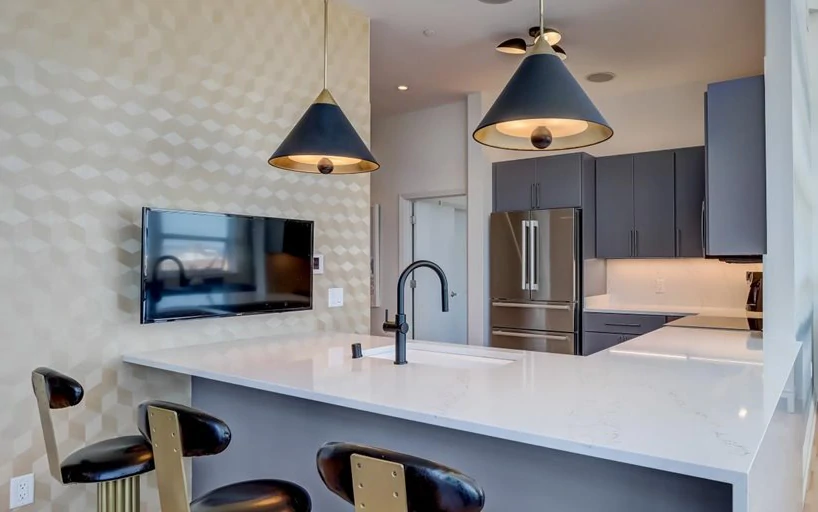
Mounted TV in Remodeled Kitchen Wisconsin

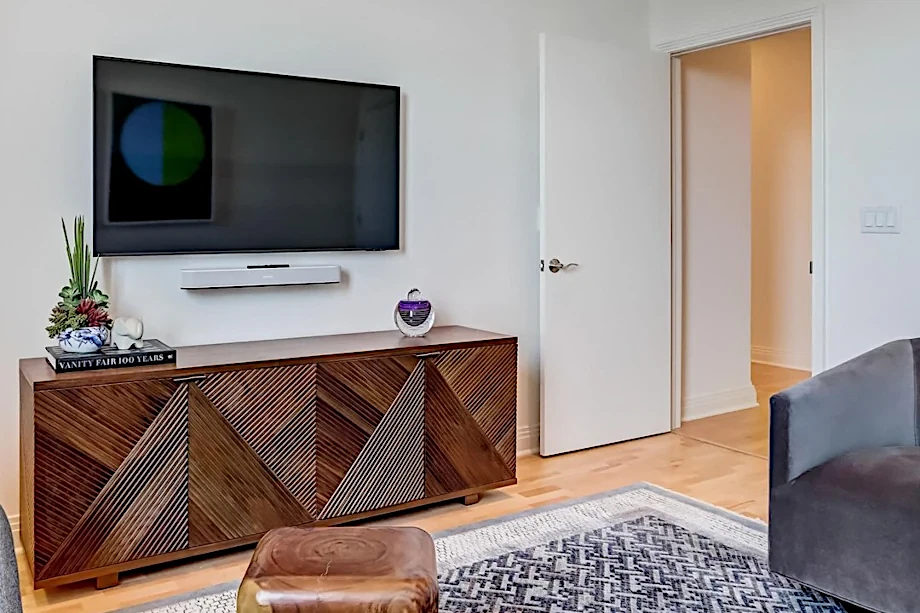
If everyone agrees on the TV placement, mounting it like a picture on the wall may be the tidiest option. In addition to freeing surfaces, it leaves the most square footage for non-TV activities.

A swivel mount

If different viewers have different preferences, of you have a wide seating area with a varying number of viewers, a swivel mount lets you angle the screen in any direction. This customizes the viewing experience for whomever is watching. Depending on the model, you can position the TV a few feet away from the wall. Or fold it in to keep the TV out of the way.

What’s the right height?

In addition to the distance between your TV and seating, it’s important to have your TV at the right height to avoid neck strain.

Experts recommend that the middle of your TV be at eye-level while seated. This is generally about 42 inches from the floor.

Diagonal screen size Screen Height Distance Floor to screen bottom
43” 22” 31”
50” 25-1/2” 29”
60” 29-1/2” 27”
75” 37” 22”
85” 42” 20”

Feng Shui

The Bagua map is the Feng Shui energy map that helps determine positions and directions of objects, furniture, and other inanimate objects in a home. According to Fengshuitricks.com, the Bagua map can instruct us on TV placement:

According to the Bagua map, the north side supports a person’s career and professional goals, and the powerful Yang energy of the TV can support this if you place it on the north side of the room.

You can also put your TV on the south side of the room, which supports fame and recognition according to the Bagua map in the corner.”

If your focus is more on career and success, you can place the TV in the north to bring you luck.

However, if you’re looking for fame, want more followers on social media, or just need some recognition, you can place the television on the south end of the room.

Other Feng Shui TV tips:

Consider the position of the sofa. It must be placed in a commanding position, ideally in the center of the room. Also:

  • The entry to the living room must not be behind the sofa.
  • There shouldn’t be any windows, mirrors, or walkways behind the sofa.
  • The sofa shouldn’t face heavy furniture or staircases.

Cover the screen when not in use. Ideally, store the TV in a cabinet that can be closed when the TV is off. Alternately, you can use a sheet, blanket, or a purpose-built TV cover. Covering the screen prevents the reflection of negative energy into the room.

Avoid clutter around the TV. According to Feng Shui, eliminating clutter ensures the clear flow of energy within the home. This applies to the area around the TV—particularly for any wires connecting to video games or home theater components.

The Best TV Placement For Your Milwaukee Home Remodel

Regardless of your space or needs, contacting a qualified remodeling contractor like LaBonte Construction should be your first order of business after taking inventory.

Contact us today to set up a consultation for your next project.

Check us out on Facebook and Houzz.

Guide to Home Siding

This guide to home siding discusses the most popular types in the Midwest, as well as some popular options nationwide. We hope we can help you choose the right one for your home remodeling project.

The U.S. Census Bureau publishes Characteristics of New Housing, updated monthly and annually. One report tracks exterior siding used on new single-family houses. The table below compares siding types used in the Midwest and nationwide.

Siding Material Midwest US
Vinyl 60% 26%
Wood 17% 4%
Fiber cement 12% 22%
Brick 7% 19%
Other* 2% 2%
Stucco 1% 27%
*Other: concrete block, stone, aluminum siding, and other types.
Source: Primary Type of Exterior Wall Material of New Single-Family Houses Completed, U.S. Census Bureau.


Nationwide, stucco was the most popular siding in 2021, covering 27% of homes. But in the Midwest, stucco adorned just 1% of homes. That’s below the “Other” category, which included concrete block, stone, aluminum siding, and other types.

Another notable difference is the popularity of wood siding in the Midwest. Wood was chosen for 17% of houses in the Midwest—behind only vinyl (60%). Nationally, wood was used in only 4% of houses, ranking just above “Other” (2%).

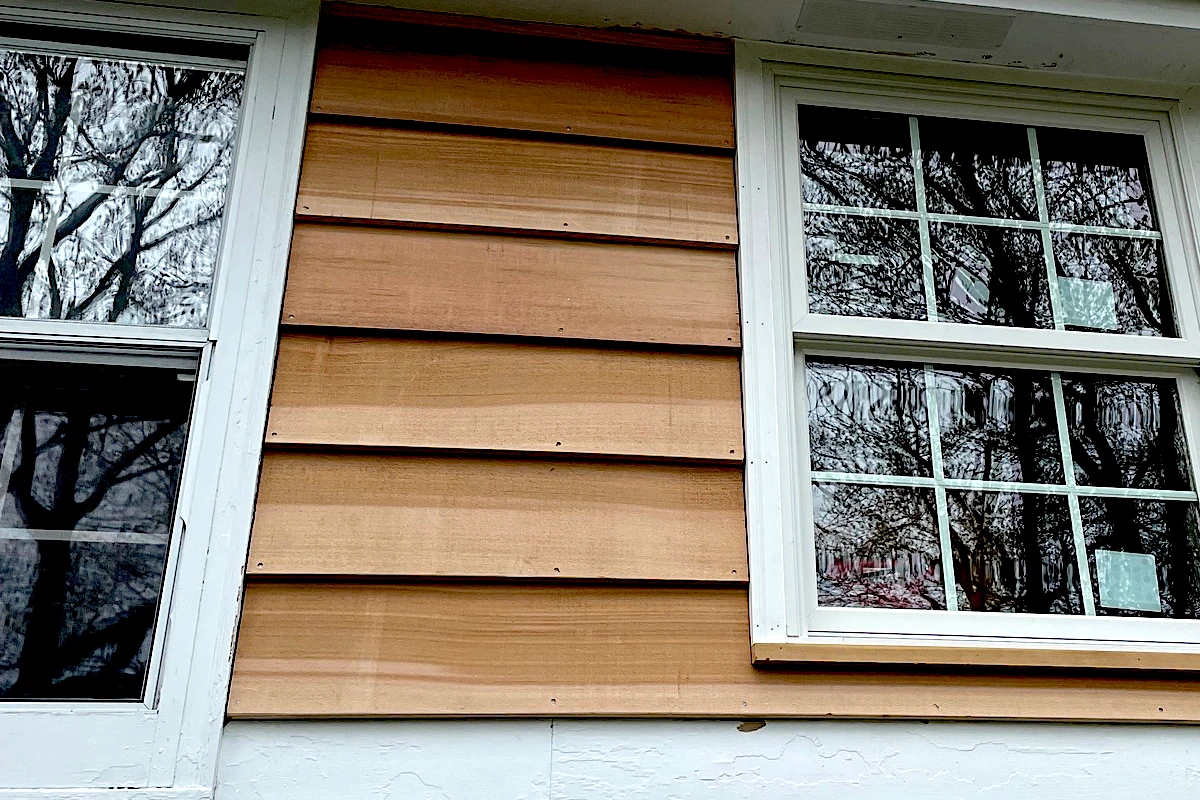
In Southeastern Wisconsin, most of our luxury remodeling projects use cedar siding. When we are remodeling a client’s home, some want us to match their existing siding.

Others elect to upgrade their siding to a newer, lower-maintenance, or more luxurious material.

Guide to Home Siding: Wood

In Milwaukee, we most often see clear cedar siding. Clear means there are no knots in the wood, allowing for a nicer surface finish and a less rustic look if stained.

On the downside, clear siding can double the material budget of an exterior remodeling project.

Wood siding comes in many profiles and patterns. Here are the ones we see the most:

  • Clapboard
  • Bevel
  • Shiplap
  • Nickel gap
  • Dutch lap
  • Tongue & groove
  • Wavy edge

Wood siding also comes in different thicknesses, allowing your remodeling contractor to create the exposure you want. This exposure is referred to as “to the wind” by builders and lumber suppliers.

Most of our home remodeling clients paint or stain their wood siding. To help your siding last longer, we recommend treating it before you install it, so that you can treat all surfaces.

Depending on the thickness of your finish, exposure to the elements, and installation method, paints and stains can last anywhere from a year to 25 years.

Shou Sugi Ban

guide to home siding shou sugi ban home remodeling
Shou sugi ban: Art House Project in Naoshima, Kagawa prefecture, Japan / Wikimedia Commons

If you want long-lasting wood siding without painting or staining, consider shou sugi ban—an ancient Japanese wood-burning process.

The siding’s longevity comes from the residual layer of char left over  from burning and the coating of oil applied afterwards.

Shou sugi ban also creates a beautiful, black finish—which can be a great look for a traditional or modern home.

Here are some advantages of the shou sugi ban-treated siding:

  • Low maintenance
  • resistance to decay and rot
  • insect repellant properties
  • lack of chemicals
  • Sustainability

While shou sugi ban treatment can be done on the home building site, it is best done in a controlled environment with purpose-built machinery to provide a uniform finish.

Guide to Home Siding: Fiber Cement

Modern fiber cement siding premiered in the 1980s. (The original formula—dating to the early 1900s—included asbestos.) It now consists of portland cement, sand, water, and cellulose fibers.

Pros

  • Durable: Some companies offer a 50-year warranty
  • Rigid, while maintaining some flexibility
  • Easy to paint
  • Low maintenance
  • Warp resistant
  • Fire resistant
  • Insect resistant

Cons

  • Heavy
  • More expensive
  • Brittle—may chip or crack
  • Dusty when cut

Fiber cement is long lasting and provides excellent overall value. Generally, it costs less than brick, synthetic stucco and some wood siding options. It’s typically equally or less expensive than hardboard or composite siding, and more expensive than vinyl.

Guide to Home Siding: Metal

Metal siding is becoming increasingly popular among homeowners, including in Wisconsin.

Pros

  • Low maintenance
  • Insect resistant
  • Durable
  • Fire-resistant
  • Recyclable
  • Energy-efficient*
  • Many colors, styles and profiles

*Metal siding reflects heat in summer. But it won’t absorb as much of the sun’s heat in winter, so make sure walls are well insulated.

Cons

  • Expensive:
    1. Vinyl siding = $2.50 and $10.75 per square foot.
    2. Fiber cement = $5 and $15 per square foot.
    3. Metal siding = $7 and $16 per square foot.
    4. Brick veneer siding = $11 and $24 per square foot.

    Prices from Family Handyman website (August 2022).

  • Installation: Generally much heavier than vinyl siding and more difficult to cut.
  • Dents: Hard impacts from tree branches, vehicles, sports equipment and even hammers during installation can dent a metal panel. This kind of damage is a pain to repair or replace.

Guide to Home Siding: Vinyl

A durable form of plastic commonly used on the exterior of homes, vinyl comes in many colors and styles. Some styles imitate the look of wood and other siding materials.

Nationwide, vinyl siding was a close second to stucco for the most popular exterior on new houses completed in 2021. In the Midwest, though, vinyl was easily the most popular, covering the exterior of 60% of new houses.

The US Census survey did not differentiate between insulated and standard vinyl siding, but it’s worth examining.

Insulated vs. Non-Insulated Vinyl Siding

Since its appearance in the 1990s, insulated vinyl siding (also known as foam-backed siding) has solved many of the problems of standard vinyl siding.

  • Provides insulation from the weather.
  • the foam layer also absorbs impacts that could crack or dent traditional vinyl siding.
  • The foam layer can also conceal some of the natural shifting and settling of walls over time.

But standard, non-insulated vinyl siding may be a better choice if you:

  • Have a lower home remodeling budget. Few siding materials are less expensive than vinyl siding.
  • Aren’t concerned about the long-term appearance or durability of the siding, like when flipping a home for quick sale.
  • Plan to install it yourself but have limited installation experience.

Guide to Home Siding: Engineered Wood

Engineered Wood Siding for Home Remodel
Engineered wood siding.

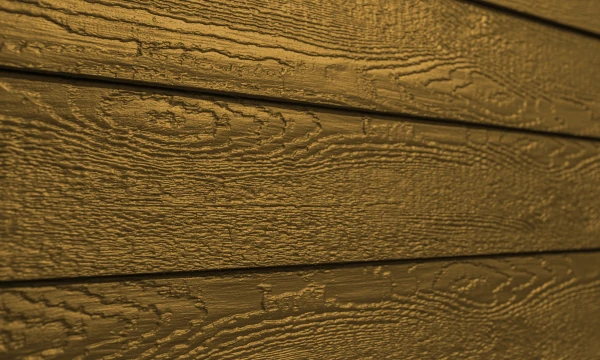
In engineered wood siding, wood strands are broken down and mixed with resins and waxes to improve strength and performance. In addition, it’s also flexible and gives the look of real wood to your home.

Most brands are made with zinc borate. This additive helps the wood resist rot, fungal decay, and termite damage.

Pros

  • Impact-resistant.
  • Weather-resistant (hail damage, wind, moisture).
  • Protection against rotting and termites.
  • Can be installed quickly.
  • Flexible with temperature changes.

Cons

While engineered wood siding has many advantages in durability and aesthetics, its disadvantages are similar to wood siding.

  • Wood can still rot.
  • Water and termite infiltration, if not installed properly.
  • Wood fibers are flammable.

Note: Professional installation can help ensure that your engineered wood siding will last a long time.

Get the Best Siding for Your Remodeled Home

When you’re ready to discuss siding for your home remodeling project, contact us at LaBonte Construction.

We were voted Best of Milwaukee 2024 by Shepherd Express readers in the Home Remodeling, Basement/Rec Room Remodeler, Bathroom Remodeler, and Kitchen Remodeler categories.